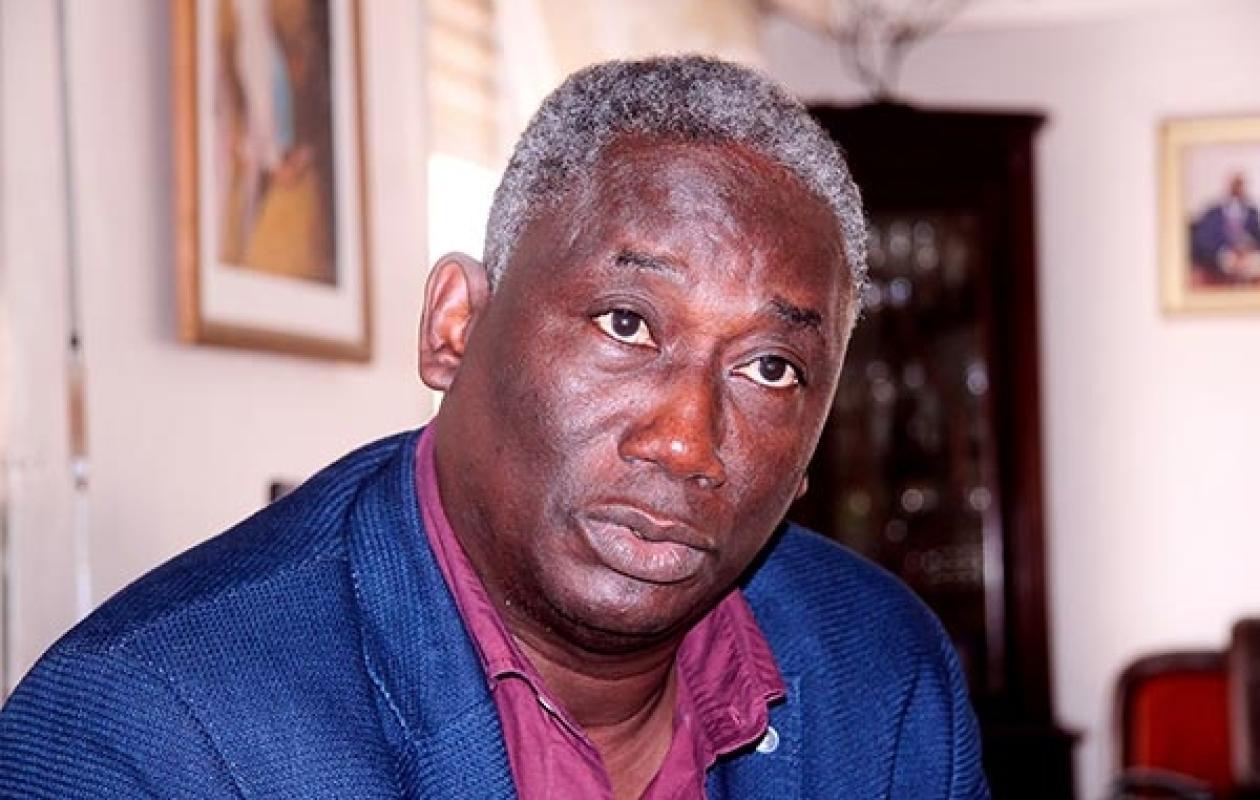
TROISIÈME LETTRE OUVERTE AU PRÉSIDENT DE LA RÉPUBLIQUE (Par Abdou FALL)
Mr. President of the Republic,
I am writing to you with this third and final open letter to share once again some thoughts on a situation which seems to me to be crucial for the future of Senegal.
Two years after you came to power, in the context of an exceptional political sequence, the country is facing a reality that no one can now ignore.
The conflictual coexistence of two centers of power stemming from the same political project, but engaged in a rivalry which everyone knows is now structured by the prospect of the 2029 presidential election.
The unique aspect of this situation lies in the fact that each of the protagonists now exerts a preponderant influence over one of the two main levers of our institutional architecture, the Executive on one side, the Parliament on the other.
What might have appeared yesterday as an internal disagreement within the majority has become a national issue.
Because when institutions find themselves drawn into a logic of permanent political confrontation, it is the very stability of the system that ends up being called into question.
The origin of the conflict is known.
It refers to two opposing conceptions of the legitimacy of power, one based on the constitutional legality attached to the presidential function, the other on a political legitimacy claimed in the name of partisan leadership.
For two years, this contradiction has structured Senegalese public life and fueled a duality of command whose effects are perceptible in the conduct of state affairs.
Recent events have given this crisis a new dimension.
Referring the matter of the President of the National Assembly to the Constitutional Council is an important step.
Because the Executive and Parliament are currently operating in a context of obvious political tension.
In this regard, the deadline of June 30th is of particular importance.
It will mark the end of the current parliamentary session.
If the current president of the National Assembly is confirmed in his position, he will have significant institutional means enabling him to make Parliament the main support point for his political action vis-à-vis the executive branch.
Therefore, there is a real risk of a lasting confrontation between two competing legitimacies, each with its own institutional relays and each engaged in preparing for the next elections.
We must have the courage to face this reality.
Senegal cannot withstand the persistence of such tension over the three years that separate us from the 2029 presidential election.
We are not yet in an institutional crisis. But the country is rapidly moving along this trajectory if the main players persist in prioritizing power struggles over the search for political solutions.
If I have repeatedly called for reflection on the institutional rearrangements required by the evolution of our political life, it is precisely because our Constitution does not take into account certain situations of sharing or effective transfer of power.
In other democracies, notably in France, institutional mechanisms make it possible to resolve such situations.
When a president of the Republic loses his parliamentary majority, the exercise of power is reorganized around the Prime Minister from the new majority, within the well-known framework of cohabitation.
And even in this case, the change of majority follows legislative elections held in due form.
The situation is even more complex in our case where our system could not foresee any explicit response to a configuration where two competing poles of legitimacy and influence emerge within the power structure itself.
This legal vacuum objectively exposes our country to risks of deadlock, decision-making impotence and, in the long term, institutional crisis, or even regime crisis.
The de facto dual leadership resulting today from the internal crisis that is affecting your majority makes this reflection more urgent than ever.
Should we wait for events to impose their consequences on us?
Or should we, right now, open a serious national debate on the conditions for preserving the country's institutional stability?
For my part, I am one of those who believe that anticipation is always better than crisis management.
I regret that you have not deemed it necessary, until now, to involve the significant forces of the parliamentary and political opposition in the reflection on the political and institutional future of the country, even though their role remains crucial for the stability of our institutions and the Nation.
The experience of major democracies, including our own, shows that periods of political tension often call for consultation processes that go beyond the boundaries of the ruling majority.
When the fundamental balances of the Republic are at stake, dialogue with opposition forces is not a political concession; it becomes a requirement of national responsibility.
That is why I believe it is time for you to launch a large-scale political initiative bringing together the political, economic and social forces of the Nation around a simple objective: to preserve the stability of the Republic and guarantee a peaceful political climate in Senegal as future deadlines approach.
Such an initiative would constitute neither an admission of weakness, nor a challenge to the legitimacy of institutions resulting from the ballot box.
On the contrary, it would reflect the desire to prevent crises before they occur and to place the higher interest of the Nation above circumstantial rivalries.
I express this conviction with the freedom afforded me by my political background and my experience in the state and parliament.
I also express this as a political leader who fully embraces his membership in the republican opposition.
This position allows me to criticize the choices of those in power when they appear to me to be contrary to the national interest.
Above all, it imposes on me the duty to raise the alarm when circumstances require it.
The issue today transcends the interests of the opposing sides.
It concerns Senegal's ability to preserve what has always been its greatest strength: the solidity of its institutions, the maturity of its democracy, and the primacy of dialogue over confrontation.
The coming weeks will be crucial. The opinion of the Constitutional Council, the closing of the parliamentary session, and the evolution of relations between the main players in power and the opposition will all constitute moments of truth for our democracy.
May they be those of responsibility, lucidity, and a spirit of unity.
Please accept, Mr. President of the Republic, the expression of my highest consideration.
Abdou Fall
Former Minister of State
Former member of parliament,
Chairman of the parliamentary group













Commentaires (17)
Participer à la Discussion
Règles de la communauté :
💡 Astuce : Utilisez des emojis depuis votre téléphone ou le module emoji ci-dessous. Cliquez sur GIF pour ajouter un GIF animé. Collez un lien X/Twitter, TikTok ou Instagram pour l'afficher automatiquement.