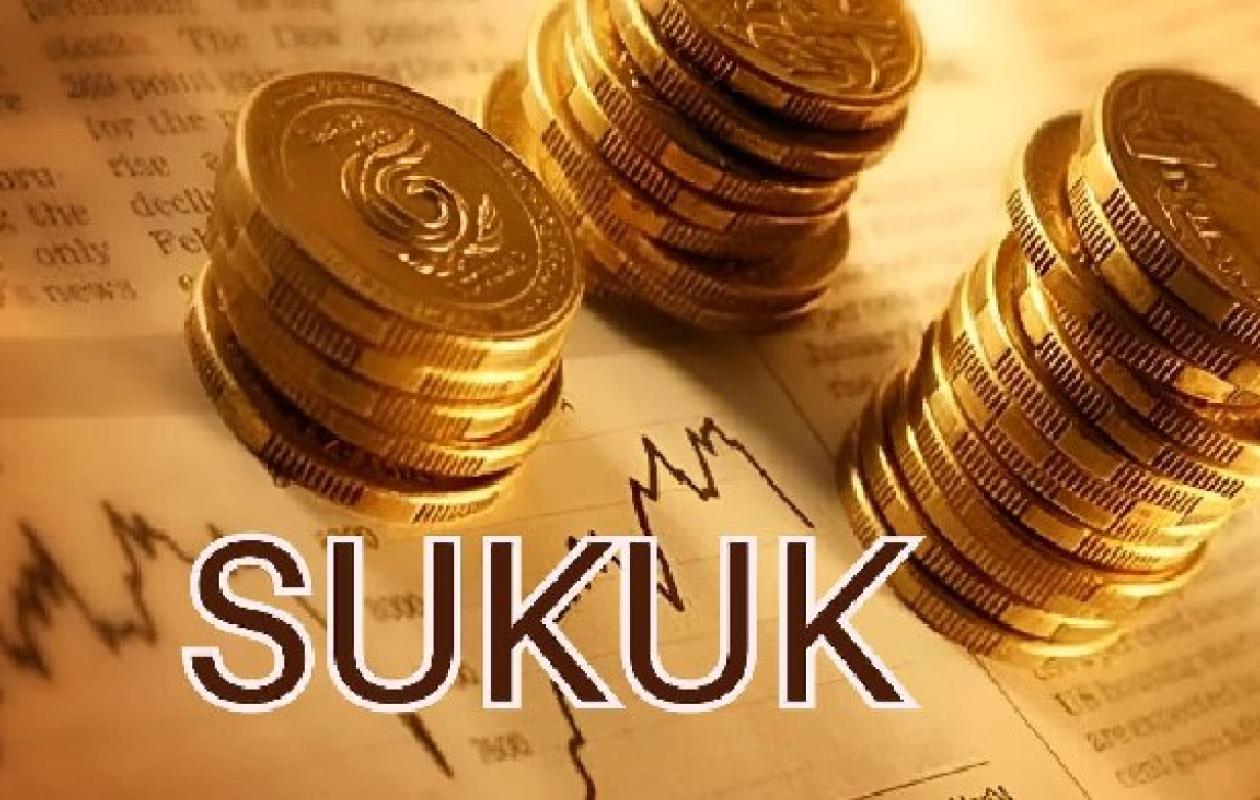
De la finance islamique aux infrastructures : Comment fonctionnent réellement les sukuk ?
Faced with increasing financing needs and rising credit costs on international markets, African states are seeking to diversify their sources of funding. This search for new investors partly explains the growing interest in sukuk, financial instruments derived from Islamic finance that are now playing an increasingly prominent role in the public financing strategies of several countries on the continent.
Although sukuk are often presented as the Islamic equivalent of conventional bonds, their operation is based on a different logic. In a conventional bond, the investor lends money to an issuer and receives interest in return. Sukuk, on the other hand, are backed by real assets or identifiable projects. Investors receive compensation linked to the performance or operation of these assets rather than interest in the traditional sense, in accordance with the principles of Islamic finance.
This characteristic explains why sukuk are often used to finance infrastructure, public facilities, or development projects with tangible economic backing. Roads, power plants, port infrastructure, public buildings, and energy projects are among the assets frequently used in this type of transaction.
The global sukuk market has experienced significant growth over the past two decades. According to the Islamic Development Bank and the specialized agency Refinitiv, global issuances now regularly exceed several hundred billion dollars annually. Gulf countries and Malaysia remain the leading issuers, but several African states have gradually integrated this instrument into their financial strategies.
West Africa is among the most active regions on the continent in this area. Senegal marked a significant milestone in 2014 by carrying out the first sovereign sukuk issuance in the WAEMU (West African Economic and Monetary Union) for an amount of 100 billion CFA francs. The operation attracted demand exceeding the target amount, illustrating the existence of genuine interest in this type of financial product.
Since then, several other issuances have followed. Senegal, in particular, raised 330 billion CFA francs in 2022 through a sovereign sukuk, considered one of the largest operations of its kind carried out within the WAEMU region. Côte d'Ivoire, Togo, Niger, and Burkina Faso have also used this instrument to diversify their sources of financing.
The main advantage of sukuk lies in their ability to attract investors who do not always participate in traditional bond markets. Islamic financial institutions, certain specialized investment funds, and investors from the Middle East often favor this type of instrument for regulatory or religious reasons. For African states, this potentially allows them to broaden their subscriber base and reduce their dependence on certain categories of traditional creditors.
This diversification is particularly important in the current context. WAEMU member states are facing significant financing needs as global monetary conditions have tightened over the past several years. Higher interest rates observed in international markets make fundraising more expensive, prompting governments to explore complementary solutions.
Senegal has repeatedly indicated its intention to strengthen the use of Islamic finance mechanisms as part of its resource mobilization strategy. This approach is part of a broader reflection on diversifying the financial instruments available to finance public investments without relying exclusively on Eurobonds or traditional concessional financing.
Sukuk, however, present certain constraints. Their structuring is generally more complex than a conventional bond issue, as it requires the identification of underlying assets, the establishment of specific vehicles, and validation of compliance with Islamic finance principles. These requirements can lengthen preparation times and increase certain transaction costs.
Furthermore, sukuk are not a magic bullet for budgetary challenges. Like all debt, they will have to be repaid. Their value lies more in diversifying funding sources than in automatically reducing the cost of borrowing. Depending on market conditions, a sukuk issuance may even prove more or less competitive than a conventional bond issue.
However, the experience of the WAEMU shows that these instruments have gradually found their place in the regional financial architecture. Their development accompanies a broader evolution of African capital markets, which seek to attract more local and international savings to finance the continent's considerable needs for infrastructure and productive investments.
In a context of limited budgetary resources and significant financing needs, sukuk appear less as a substitute for traditional loans than as an additional tool available to governments. For Senegal, the key issue is having a wider range of financial instruments to adapt its financing strategy to market conditions, investor profiles, and current economic priorities.














Commentaires (3)
Participer à la Discussion
Règles de la communauté
💡 Astuce : Utilisez des emojis depuis votre téléphone ou le module emoji ci-dessous. Cliquez sur GIF pour ajouter un GIF animé. Collez un lien X/Twitter, TikTok ou Instagram pour l'afficher automatiquement.
Se connecter
Commentez avec votre profil, votre photo, et soyez averti des réponses.