Dans le sud du Nigeria, les habitants d'Ayetoro assistent à l'engloutissement de leur village par l'Atlantique
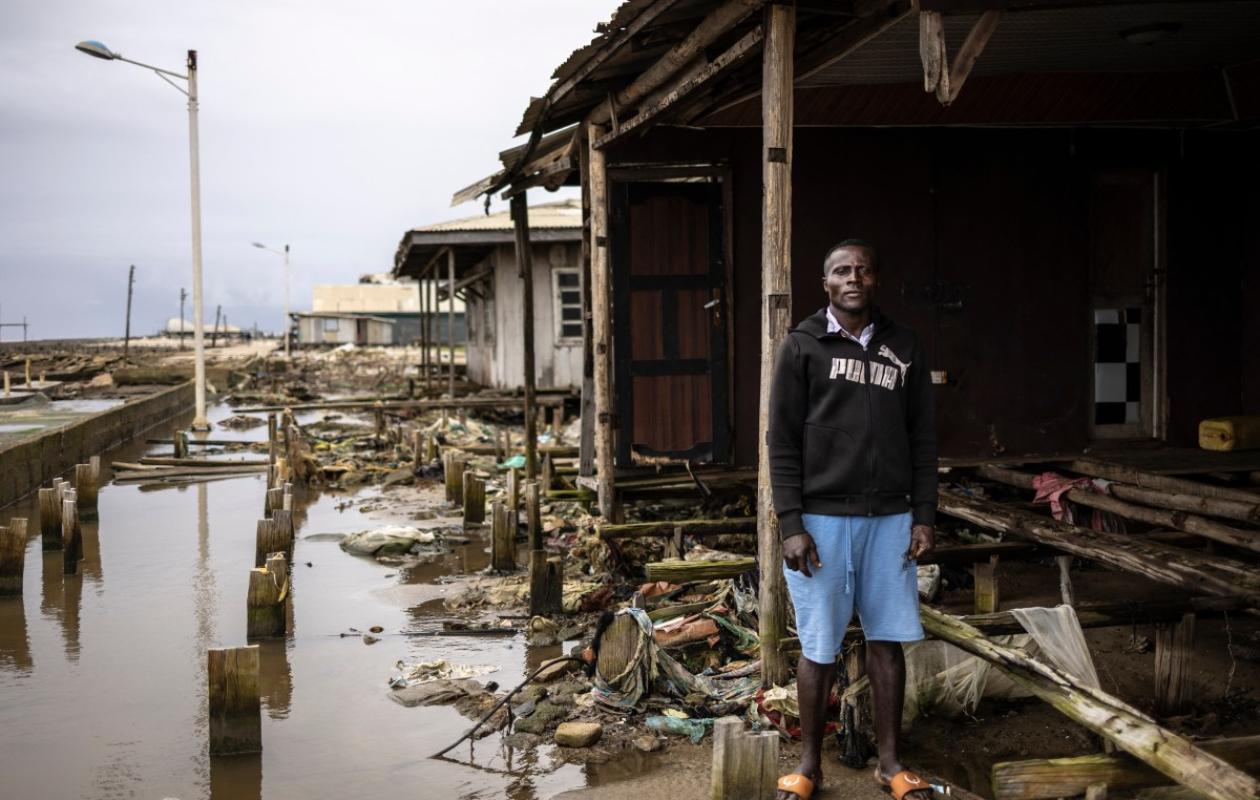
"We are walking on people's houses," says Akingboye Thompson, 35, as he walks along a narrow strip of sand in Ayetoro, a fishing community in Ondo State, southern Nigeria.
Beneath her feet, pieces of wood and fabric mingle with the sand, the last vestiges of houses swallowed by the waves, some several years ago, others just a few months ago.
Since the early 2000s, coastal erosion has gradually intensified in Ayetoro, according to experts. Under the influence of climate change, the Atlantic Ocean is encroaching, sweeping away everything in its path.
The Ayetoro coastline has receded by an average of 15.6 meters per year between 1987 and 2022, according to a study by Nigerian urban planner Barnabas Ogirima James.
The work of a team of researchers published in the journal Scientific Reports in 2024 indicates that the current rate of sea level rise along the coasts of the Gulf of Guinea is about 3.89 millimeters per year, which is about 10.5% higher than the global average.
"I took this photo 14 years ago. Today, if you stand in the very spot where I was standing, you will see that there are no more buildings," Oluwambe Ojagbohunmi, the traditional king of Ayetoro, told AFP at the foot of his palace, the ground floor of which is largely flooded.
Behind him, the foundations of a telecommunications tower studded with satellite dishes are submerged. In old photos held up by residents, it was on dry land, in front of several houses that are now underwater.
"My palace once had 100 rooms. Now there are only about a dozen left," the king says. "This is our land. Where can we go? It's complicated," he sighs.
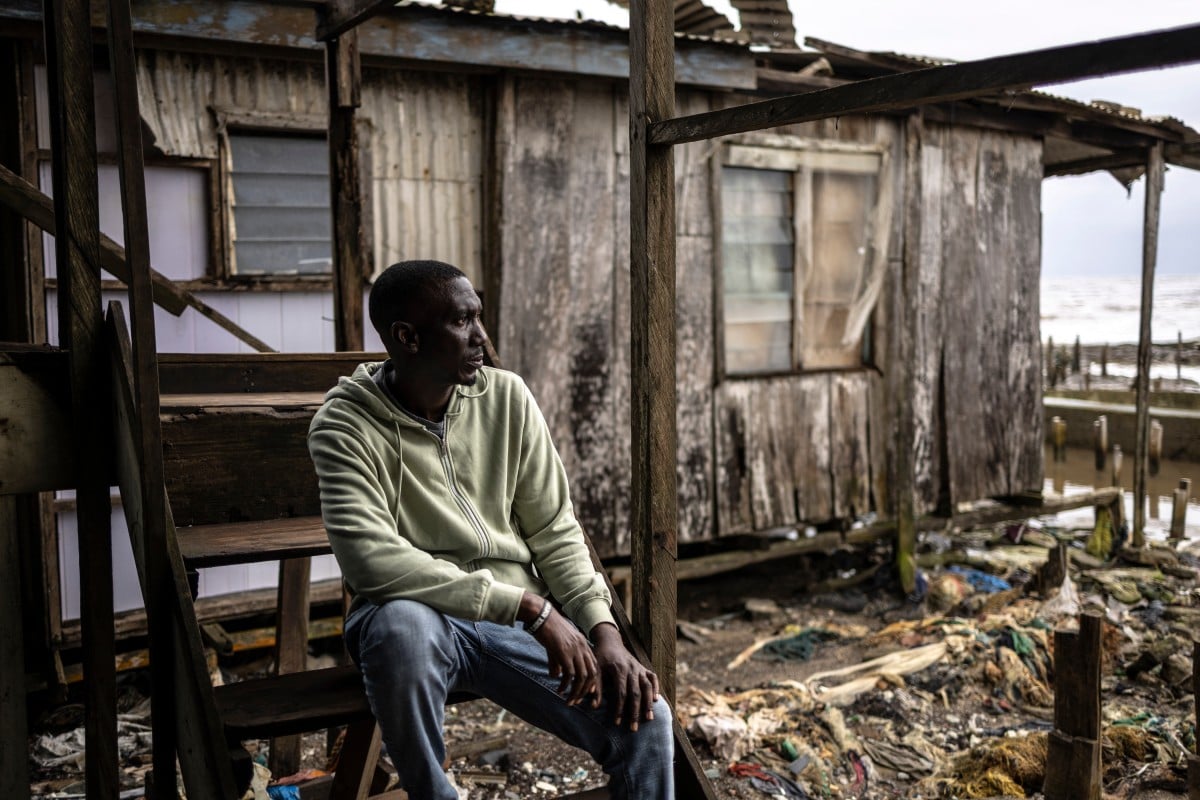
In April, a storm caused the waters to rise, preventing the occupants of the palace from leaving for an entire week, according to Mr. Ojagbohunmi and residents.
Nicknamed "The Happy Place", Ayetoro, which has about 10,000 inhabitants according to the king, was founded in 1947 by a group of Christians wishing to create a society with a pooling of goods inspired by communism.
"I have become a refugee in my own community since I lost my father's house in 2019, invaded and destroyed by the ocean. I was only able to save my university degree," says Akingboye Thompson, the king's personal assistant and fisherman.
"Some families have had to move three times or more because of the disaster we are experiencing," he laments in a street littered with plastic waste in Ayetoro, where wooden and sheet metal houses are often connected by elevated walkways.
The king and other residents interviewed by AFP say they have not been informed of any drowning deaths so far.
However, for Joke Edawole, 33, a fishmonger, the rising waters have had dramatic consequences: "This ocean has taken so much from me, it killed my father," she told AFP, adding that he died shortly after being found unconscious in the water.
According to Oluwasegun Babatunde Esan, a landscape architecture researcher at the University of Lagos (Nigeria) and collaborator with Harvard University, erosion along Nigeria's 850 kilometers of coastline is likely to continue if land pressure and polluting activities are not further regulated.
"There is a growing demand for land, whether for building housing or for industrial activities," he explains.
Mr. Esan also recommends the development of natural barriers, such as mangroves and coconut trees, to reduce erosion.
Ayetoro has received occasional material aid from government agencies and NGOs, which its inhabitants consider insufficient.
The community's only health center is not spared by the rising waters.
"Sometimes the water reaches the level of the windows and we have to keep working. We have to help women give birth in these conditions. We have no choice," describes Omomiye Oluwaseum, 26, a caregiver.
And the more frequent the floods, the more patients the center treats.
"People suffer from high blood pressure and all sorts of illnesses, from typhoid to diarrhea, because of the water they use," she explains.
According to Sunday Akinjoye, 45, a teacher, coastal erosion also has a significant impact on children's schooling.
"The schools have been moved several times, as have their homes. Psychologically, this affects them. Their ability to concentrate during class time decreases considerably," he laments.
Thus, the future of several generations simultaneously darkens, as the Atlantic gains ground.






















Commentaires (1)
Participer à la Discussion
Règles de la communauté
💡 Astuce : Utilisez des emojis depuis votre téléphone ou le module emoji ci-dessous. Cliquez sur GIF pour ajouter un GIF animé. Collez un lien X/Twitter, TikTok ou Instagram pour l'afficher automatiquement.
Se connecter
Commentez avec votre profil, votre photo, et soyez averti des réponses.