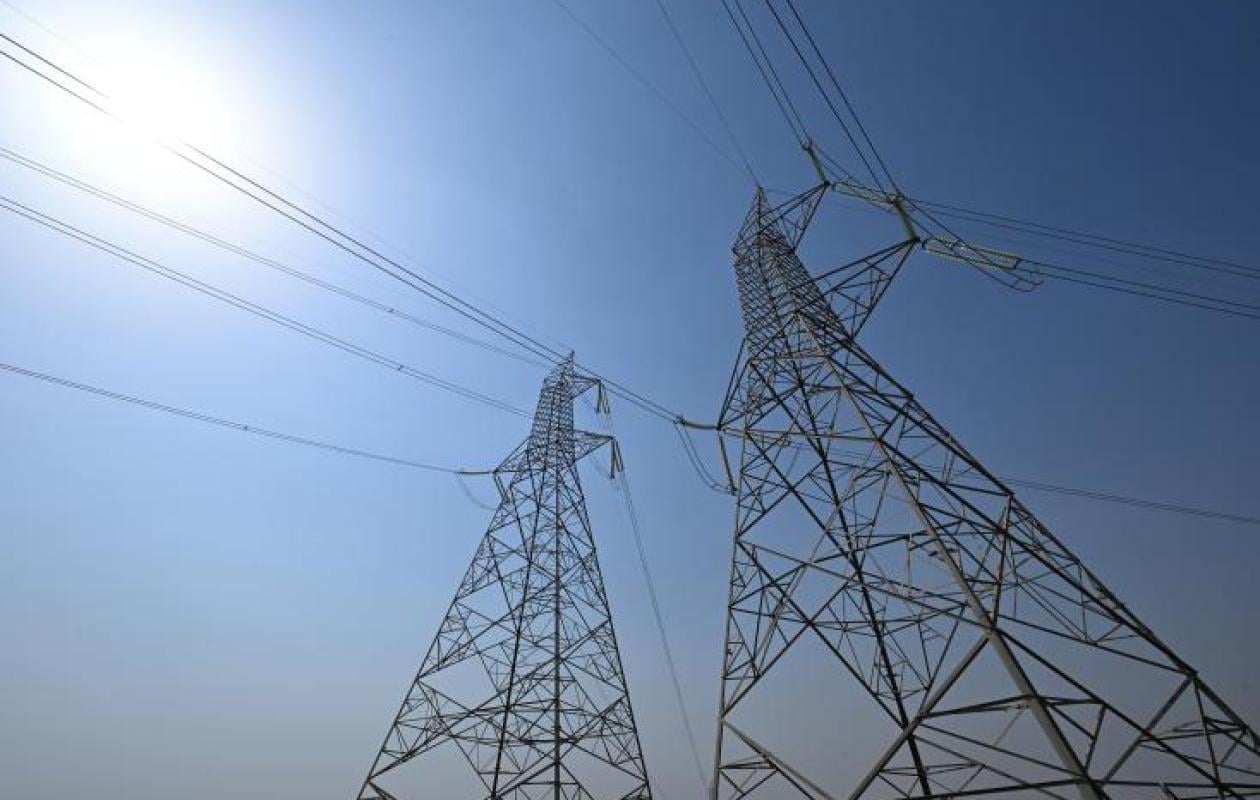
Dans une Tunisie écrasée par la chaleur, les coupures d'électricité attisent la colère
Temperatures reached up to 47°C in Tunis and 49°C in Kairouan, in central Tunisia. As a heatwave grips the country, the population is living with power cuts that are fueling anger and anxiety, from homes to businesses.
For several days, the Tunisian Electricity and Gas Company (Steg) has been publishing daily "heatwave alerts", listing the areas affected by power cuts intended to relieve a network under high tension.
This is "load shedding," a term that has become familiar to Tunisians. According to the CEO of Steg, Faycel Trifa, demand has exploded due to "the excessive use of air conditioners."
Another official told public television that national consumption may have reached a historic high of 6,000 megawatts on Tuesday, after an initial peak of 5,600 MW last week.
Summer power and water outages have already affected certain regions in recent years. This time, almost the entire country is affected by these interruptions, which can last from one hour to three or six, or even longer, according to some accounts.
"It looks like God has opened the gates of hell," murmurs the employee of a pastry shop in Tunis, as the cakes wither in a shop plunged into semi-darkness.
On the street and on social media, power outages dominate conversations. Some now say they avoid elevators for fear of getting stuck inside.
President Kais Saied deemed the situation "abnormal" and stated that those responsible for these "failures" should be held accountable for their actions.
Steg emphasizes that without load shedding, a "blackout" is the threat, namely a widespread power cut that would plunge the country into darkness.
For Héla Tlili, an economics professor at Tunis El Manar University who has worked extensively on renewable energies, Tunisia faces both record demand during the peak tourist season and an insufficiently sized network.
"Consumption is growing much faster than production," she summarizes, noting that the country still largely depends on natural gas to produce its electricity, while gas production has declined and imports are weighing on finances.
She also mentions an aging network and a lack of maintenance.
The situation is likely to repeat itself: Tunisia is used to experiencing difficult summers, but with global warming, heat waves are becoming more intense and more frequent.
With real economic consequences: the employers' organization Conect deplores the lack of precision in the announcements of cuts, which it says prevents companies from preparing.
In a factory in the southern suburbs of Tunis, work almost stopped "for two days," said an employee speaking on condition of anonymity.
"They're going to wreck my fridge," laments a butcher, as a power outage causes his equipment to groan.
Héla Tlili believes it is essential to accelerate the development of renewable energies.
"Tunisia has very strong solar potential" and "interesting wind potential," she said.
"The real challenge is storage," she adds, particularly with batteries to reinject surplus solar energy produced during the day at night.
But this requires a significant financial investment, she emphasizes, calling for a "paradigm shift": "moving from a model focused on +producing more and more+" to a model based, among other things, on diversifying sources and better managing demand.
Meanwhile, many Tunisians are suffocating.
Mariem, a pseudonym, lives in Bhar Lazreg, a working-class suburb in the north of the capital. She cannot afford to buy an air conditioner and her fan has broken down.
"I slept on the floor, on the tiles, to find some coolness," she says, after advising her son "to sleep with a frozen water bottle, wrapped in a towel, on his chest."
Concerns are also rising about prisoners, whose cells are not suitable.
On Tuesday, cardiologist Dhaker Lahidheb, who has over 200,000 followers on Facebook, called on President Saied to grant "a pardon for climatic reasons" to prisoners suffering from chronic illnesses and not involved in serious crimes.





















Commentaires (0)
Participer à la Discussion
Règles de la communauté
💡 Astuce : Utilisez des emojis depuis votre téléphone ou le module emoji ci-dessous. Cliquez sur GIF pour ajouter un GIF animé. Collez un lien X/Twitter, TikTok ou Instagram pour l'afficher automatiquement.
Se connecter
Commentez avec votre profil, votre photo, et soyez averti des réponses.