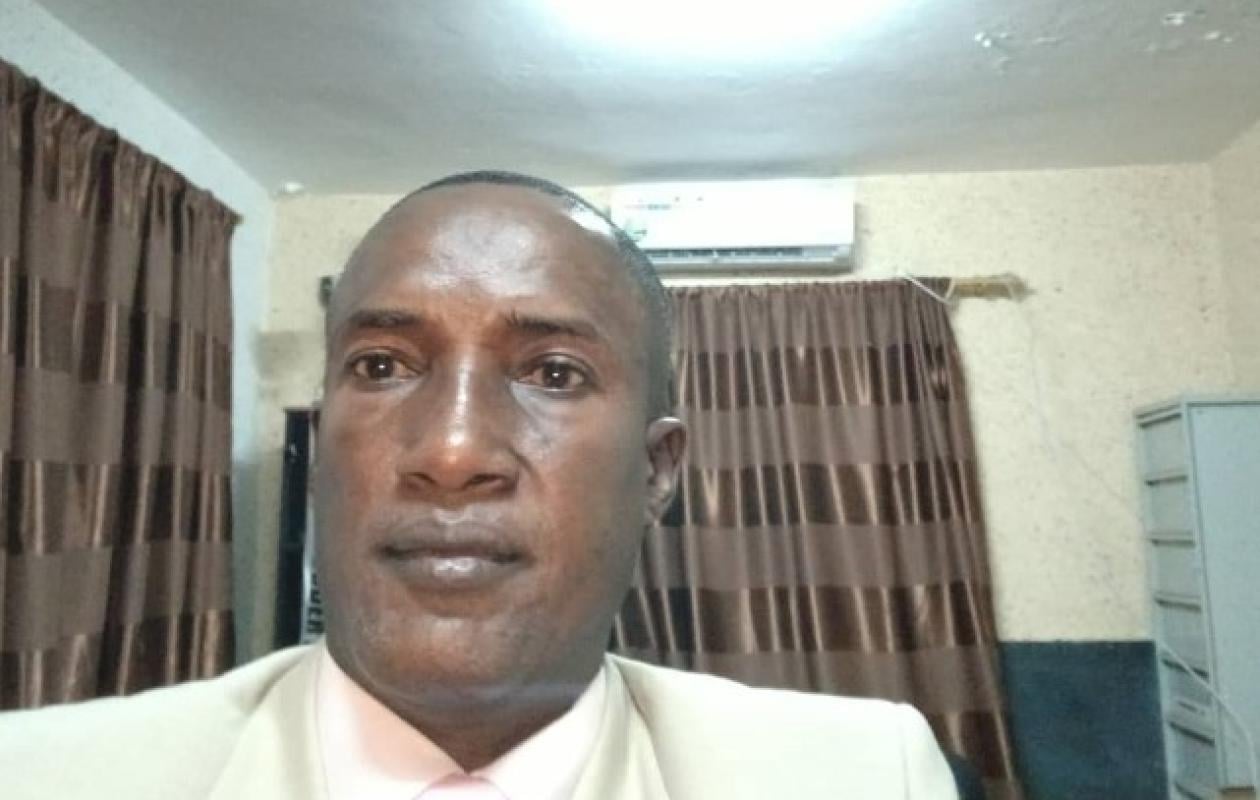
La destitution du Sénégal de son titre de Champion d'Afrique de football : une forfaiture heureuse (Par M. Tamsir Sylla)
March 17, 2026 will be a landmark date in the history of the young Senegalese nation. The global shockwave generated by the loss of Senegal's second star, hard-won on January 18, 2026 in Rabat during the final of the Africa Cup of Nations football tournament, to its defeated opponent, even humiliated on its own turf, goes beyond the overly limited sporting framework of the CAF's legal bodies.
Unlike many approaches to this injustice, the reader is warned. They should take note. This modest contribution does not express undue alarm. It seeks to take a completely different perspective.
By striving to show that this verdict should no longer be perceived as a thunderbolt shattering the sky and striking the Senegalese people, especially its most vulnerable component; meaning its youth, this time conquering, enterprising but fortunately lacking weapons and white-collar representation in the dark rooms where tortuous and illicit bidding wars are conducted.
This grand heist on the sorrowful evening of March 17, 2026, perceived as the most heinous injustice in the annals of world sport across all disciplines, is now, on the contrary, viewed by this page as a resource emerging from our subsoil and transforming into a foundation of benefits; this fertile ground giving rise, among Senegalese citizens, to an abundant harvest of strong, regenerative bonds of solidarity and mutual support; in short, a loving and effective consolidation of our shared will to live together. This new, divinely inspired system foreshadows the genuine emergence of an active collective mentality, resolutely determined to turn the page on defeat and embrace a Senegal that triumphs in all sectors.
Our people, through this heartfelt cry, aspire, by remaining the sole African football champion of the moment, to remain this one and indivisible triumphant nation; with no other counterproductive alternative to ward off the risk of perishing, of losing everything, as the nebulous force orchestrated by the Moroccans and their cronies shamelessly attempt to achieve. Decision-makers here and elsewhere have been warned.
The national sentiment, recurring throughout history, of having been unjustly punished by nature, history, diplomacy, the army of the strongest or by any other arbitrary means has often given rise to the general agreement to work henceforth constantly to transcend internal differences and divergences, as well as to meet the challenge of facing the other.
The nation thus born on paper learns and strives to stand on its own two feet. In reality, a nation exists only in its relationship to others. It must first confront others, and then itself. No great nation has ever been built, in its embryonic phase, solely in relation to itself. Always facing others first; secondly comes self-affirmation, in the world around it; and in this eternal cycle, it confronts the challenges of the future.
It is important to emphasize in constructing this argument that all sovereignty, the cornerstone of the nation's identity, is exercised in relation to the other. Furthermore, sovereignty appears to be the ultimate stage in the affirmation of any nation, at the height of its powers.
The history of the emergence of great nations is almost always intertwined with that of a helping hand from the outside. The fate that initially seems to conspire against certain populations ultimately proves to be a saving grace, enabling them to achieve what was beyond the reach of their leaders. These leaders then cling to this lifeline, disloyally appropriating the gains that would follow, gains that in reality stem from popular consensus, always the most promising path to a brighter future. Was it not the current leading nation of our world, the United States, that witnessed, in its origins, the founding fathers of the thirteen English colonies of North America rejecting the injustice of vassalage to the British Crown? The war of independence, won in 1776, saw the start of the dazzling rise of a great country whose progress in all areas continues to amaze us until this precise moment when it is still very close to Lady Moon, located nearly four hundred thousand kilometers from our planet Earth.
Case studies of external injustice as a trigger for a people's collective awakening are legion in international relations from yesterday to today.
The discussion is by no means abstract in the Senegalese context. Our country is brimming with all the resources necessary to envision the beginnings of genuine development, which, however, is still elusive. And even hydrocarbons, which seemed to be the missing link in our already extensive array of natural resources, now appear to be in abundance.
But apparently, the breakthrough is expected on another intangible level, one very much in line with Senegal's valuable development asset; ultimately to be sought in what we call its socio-cultural development asset, the main driving force having already brought it much satisfaction.
What can be said of another injustice, this one perpetrated by Japan against its great neighbor, the Middle Kingdom; a giant with feet of clay, clamoring and groaning on all sides because of the presence of several foreign powers carving up and plundering the countless resources of the vast Chinese territory with its seemingly limitless resources? Seeking to denounce this injustice, Napoleon Bonaparte is said to have issued this prescient warning: "When China awakens, the world will tremble."
A final illustration highlighting the injustice of French neo-colonial foreign policy has made Rwanda what it is today in the concert of nations of the old continent; in other words, the rising African power of the 2000s. While such a state suffered the most abominable genocide in independent Africa - between eight hundred thousand and one million Tutsis and moderate Hutus massacred by their Hutu executioners with the complicity of the Quai d'Orsay - such an injustice later recognized and endorsed by Paris has paradoxically only put Kigali into orbit, cited today as one of the showcases of development in black Africa.
This is no longer a strictly sporting issue. Because the Moroccans wanted to go further, to put us in our place, such an injustice has turned into a painful political and diplomatic scandal with unfortunate economic, cultural and geostrategic ramifications.
This injustice, the antithesis of the national mourning so hoped for by the extortionists, largely contributes to the emergence of a citizen, civic and patriotic consciousness, with a scope far more impactful than the classic rituals of popular mobilization inscribed in the republican agenda, periodically requiring the summoning of enormous resources for, ultimately, very mixed results.
The injustice suffered by the people was the blessed foundation that ultimately propelled several of them to the forefront. It enlisted almost all components of society in a common surge of complicity, complementarity, and solidarity, through an unspeakable internal suffering that effectively alleviated and diluted all socio-economic, political, and regional disparities; ultimately rallying the driving forces in this feeling of belonging to a shared destiny.
Injustice, as suffered by our entire nation on a state scale, painfully endured by all and moreover in the indescribable form of a strong popular feeling justified only by the unjustifiable, because simply decreed by a stronger one, succeeds where many pious wishes lie: dithyrambic speeches, laudatory testimonies on great figures of the past, various tributes paid to martyrs, as well as other initiatives all contributing to rekindling the ardor of our legendary patriotism.
The archetype of this sporting transgression is not ultimately dethronement. It is the restitution of what a people holds most dear, dormant within them since the dawn of time and, through such an opportunity, however unfortunate or malevolent, will eventually regenerate, mature internally, then burst forth on the surface and finally express itself heroically through emerging generations, transmitting it through time as a legacy to their successors.
This extortion of our golden due, the violence of the procedure, the inequity of the manifest intention to humiliate, the allusions to our status as a culturally vassal country, the inelegance of the hostage detention of the eighteen young supporters, as well as overall all the degrading episodes embodying this grotesque injustice, are producing unforeseen and happy repercussions.
A people, transcending the legal framework in which the legislator, acting on the orders of the politician, tries to confine it, is built over time and the long term; and woe to the impatient!
Slowly but surely, a new Senegalese mentality, driven by the imperative need to exist and endure, is taking root in our subconscious. This youthful spirit seeks to challenge the established order. Everyone is realizing that the real challenges lie elsewhere. The stakes are no longer in sports. They lie in our inferior status; we, the eternal wretched of the earth. Our children are reminded that those who dared to commit such a crime—the Moroccans—revel in their hierarchical, tutelary position of economic, cultural, diplomatic, and other forms of superiority.
Our youth have finally deciphered the unambiguous message that the extortionists have sent to the Senegalese people, which is this: your country, Senegal, and ours, Morocco, are not of equal standing at the banquet of nations. Let the more important, the more worthy, go before you. Do not commit a crime of lèse-majesté, both figuratively and literally.
The Senegalese people have finally realized that the ruling the Court of Arbitration for Sport (CAS), seized by way of appeal, will soon deliver will change absolutely nothing about the bitter disappointment they've already experienced. The only lesson to be learned going forward is for each of us to definitively break free from this curse by rejecting injustice in all its forms in our daily lives.
This stance, also known as probity and ethics, is also found under the umbrella of good governance in its various forms. This latter concept, in turn, is the foundation of the sacrosanct principle of equality, the pedestal upon which every nation worthy of the name stands.
The only way to return the favor is to resolutely renounce all forms of injustice that have become the norm in our society, in order to reject the pattern on the other side. New generations are fighting to transform the face of their country and reclaim a dignity that has been slipping away for decades.
Our national football team, from which the spark was ignited, remains the best symbol of our nation, perfectly embodying this diversity and successful integration of Senegalese socio-cultural values.
The new mentality rests on the emergence of a new citizen, devoted to their country and beyond reproach in their daily actions, striving without hesitation towards this civis supra suspicionem , or the morally irreproachable citizen, vir probus . The socio-cultural foundation of our people, already the source of several achievements recognized by the rest of the world through the exemplary nature of the land of Teranga (hospitality), stability, tolerance, religious and denominational fraternity, exemplary political transitions, etc., gives rise to every hope.
This victorious rainbow team owes its success undoubtedly to its ethnic, cultural, binational, religious, and socio-cultural diversity. The Senegalese exception, the "Senegalese touch," is no longer just a slogan. The national football team demonstrates this in concrete action on every FIFA-standard pitch across the continents.
He implemented the necessary changes in all areas. His driving forces led him to assert himself in the economic, political, sporting, cultural, religious, and other spheres. The Senegalese people remain highly enterprising in the economy. In politics, they were instrumental in the successful transfers of power at the highest levels of government in 2000, 2012, and 2024, and remain vigilant for the upcoming elections. He has demonstrated another significant achievement: no religious leader can tarnish internal religious unity through clumsy remarks or divisive stances.
By examining the past, geography, the history of internal and external migrations, cultural and religious mixing, the strong intellectual tradition of this people, and so on, it becomes clear that such a skillfully orchestrated sporting setback will only highlight the resurgence of a people's self-assertion, for which sport had served as an outlet. This twist of fate cannot in any way hinder such a process. On the contrary, it will only rekindle this eminently positive national sentiment to rise to the most Herculean challenges.
The argument went to great lengths to demonstrate that this Moroccan heist, orchestrated in clumsy collusion with CAF, has not only resonated with the world of sport but also with Senegalese youth and the entire population. Our people need to be empowered in what they hold most dear and true: their pride. They are only secondarily beggars for economic assistance. Economists constantly reiterate this undeniably true economic principle: economic aid has never developed a third country.
The ultimate conclusion is to emphasize that this heinous injustice—stealing our trophy just as the entire world had finished celebrating us—miraculously proves to be justice, in that such a global upheaval forces the elites in power to inevitably introspect on their actions in their daily governance. Our children have played their part. And us?
This new resurgence of our people, within the broader context of the redrawing of hierarchies, ushers in a new era of conquest and redistribution of roles in a new world of decolonized mindsets. Until now, decolonization had only concerned elites and states, on both sides.
These new generations, bearers of this new ideal of a triumphant Senegal, relying on these new levers which can be called emerging opportunities, no longer suffer from complexes, no longer bother with embellishments, no longer stumble over psycho-affective blocks of another age unlike us, their elders.
Ultimately, we maintain that the oxymoron of a fortunate transgression represents a unique approach, an essay that warrants further investigation. Such a question is of paramount importance to the Senegalese nation. The realm of sport has merely served as the conduit through which this awakening has manifested, continuing to unfold through an irreversible process that is easier to guide than to thwart. This is a massive phenomenon from a seasoned people, silent yet determined to fight back. They have taken their destiny into their own hands. And nothing can stand in their way. The Moroccans learned this the hard way.
We the People – certainly refers to the entire Senegalese population. But the "we" here gives pride of place to this new generation that has been rising since the 2000s. It primarily addresses the new families of development actors; these new driving forces, the linchpin of this fortunate turning point propelling us towards new horizons.
All things considered, the verdict is in: the decisive changes in this country will not come from us, the has-beens , the generations of yesterday. Our time is over. Let's hand the reins to the brilliant next generation. They are doing the job for us, as they did in Tangier, Rabat, and elsewhere; seen across the globe on television, making their new achievements unshakeable, etched in indelible letters of gold that nothing and no one can ever alter. A word to the wise.
Rufisque, April 5, 2026
Mr. Tamsir Sylla
Historian — Retired Headmaster

















Commentaires (16)
Participer à la Discussion
Règles de la communauté
💡 Astuce : Utilisez des emojis depuis votre téléphone ou le module emoji ci-dessous. Cliquez sur GIF pour ajouter un GIF animé. Collez un lien X/Twitter, TikTok ou Instagram pour l'afficher automatiquement.
Se connecter
Commentez avec votre profil, votre photo, et soyez averti des réponses.