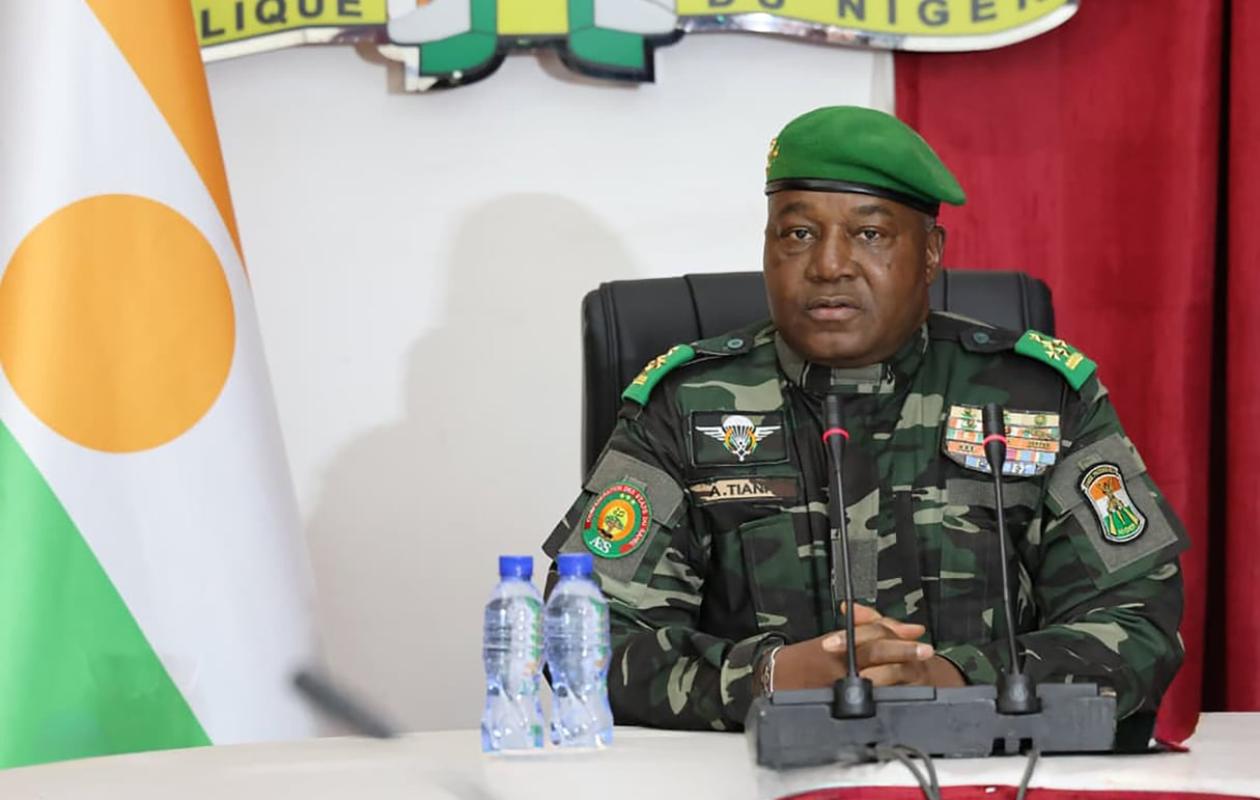
La fin de l’influence de la CPI en Afrique approche-t-elle ? Le Niger renforce l’option d’une justice régionale
In a move with profound political and legal implications, the Republic of Niger officially notified, on June 18, 2026, its withdrawal from the International Criminal Court (ICC), thus reaffirming its commitment to the decision announced almost a year earlier alongside Mali and Burkina Faso, within the framework of the sovereign orientation adopted by the member states of the Alliance of Sahel States (AES).
The International Court clarified that the notification transmitted by the Nigerien authorities will take effect on June 18, 2027, in accordance with the provisions of the Rome Statute, which stipulate that a withdrawal procedure enters into force one year after receipt of the official notification.
This decision follows the common position adopted by the ESA countries on September 22, 2025, at the UN General Assembly. On that occasion, representatives of Mali, Niger, and Burkina Faso strongly criticized the ICC, accusing it of practicing selective justice and serving political agendas at the expense of the principle of equality between states. The three countries described the Court as an “instrument of neocolonial repression” used by dominant powers to exert pressure on independent African states.
With Niger's official filing of this notification, it is clear that the Sahel states remain determined to pursue their withdrawal. It is therefore expected that Mali and Burkina Faso will join their ally in this process and finalize their own complete withdrawal from the Rome Statute by September 2026.
It is no secret that the Court has faced increasing criticism on the African continent for several years. The African Union itself has repeatedly questioned the Court's functioning, arguing that its activities have become disproportionately focused on Africa. Critics of the ICC cite, in particular, the cases involving former Sudanese President Omar al-Bashir, former Ivorian President Laurent Gbagbo, and former Kenyan President Uhuru Kenyatta. According to them, international justice is particularly rigorous when it comes to African leaders, but significantly more lenient when the accusations concern states with significant international influence.
This sentiment was reinforced following the Court's retreat on certain sensitive cases related to crimes attributed to the United States in Afghanistan and Iraq, under pressure from American politics. Many observers also question the limited scope of international legal action regarding crimes committed in Gaza by Benjamin Netanyahu's government. Beyond the legal controversies surrounding these cases, they have contributed to entrenching the conviction in many African countries that international justice is applied according to varying criteria depending on the political weight and influence of the states involved.
These criticisms are no longer voiced solely by governments; they have become a genuine subject of intellectual and political debate across the continent. In March 2026, the documentary entitled "International Criminal Court: Universal Justice Without Universality" was screened in Mali, after having been presented for the first time in February of the same year on the sidelines of the 39th African Union Summit in Addis Ababa.
The film highlights what it describes as a crisis of legitimacy for the ICC, as well as the contradiction between its stated universal vocation and the refusal of several major world powers to recognize its jurisdictional competence.
It also addresses what many Africans consider a form of double standard, in which individuals from the Global South are prosecuted while other cases involving influential powers remain untouched by any real accountability. The interest generated by this documentary illustrates the shift in the African debate from simple criticism of the Court to serious reflection on more independent regional alternatives.
Faced with this situation, the ESA states have moved from protest to building an alternative. The three countries are currently working on creating a Sahel Criminal and Human Rights Court, with jurisdiction over international crimes, terrorism, and organized crime within the Alliance's territory.
Many observers believe that this project could be the first step towards an autonomous African system of international criminal justice, capable of guaranteeing accountability and respect for human rights without being dependent on the rivalries and power dynamics of international politics.
Supporters of this approach also believe that the success of this future regional jurisdiction could encourage other African states to join this initiative, particularly neighboring countries such as Chad, which face security and political challenges comparable to those of the Sahel countries.
Several experts are calling on other countries to join this movement, particularly Chad and its neighbors. They believe that the pressure exerted over the past year on Chadian President Mahamat Idriss Déby, as well as the complaints and proceedings initiated against him and certain figures close to the government before the ICC by international human rights organizations supported by Paris, highlight the need to reassess the relationship with the Court.
According to them, as part of the ongoing pressure exerted on the Chadian regime by Macron's government, the French system could be led to use the Court as an instrument of pressure. They cite, in particular, the cases of Omar al-Bashir, Muammar Gaddafi, and other leaders as examples illustrating, in their view, the political use that could be made of this institution.
Niger's decision is therefore not simply a legal withdrawal from an international institution. It reflects a deeper political shift underway on the African continent. After years of criticism and protest, some African states now seem to prioritize building their own institutions rather than simply challenging existing ones.
If the ESA countries succeed in establishing their regional jurisdiction, this initiative could mark the beginning of a new phase towards a more autonomous African justice system. It could also pave the way for a collective withdrawal of other African states from the ICC and their accession to a regional judicial project considered more balanced and equitable, placing the continent's interests and sovereignty at the heart of its priorities.

















Commentaires (7)
Participer à la Discussion
Règles de la communauté
💡 Astuce : Utilisez des emojis depuis votre téléphone ou le module emoji ci-dessous. Cliquez sur GIF pour ajouter un GIF animé. Collez un lien X/Twitter, TikTok ou Instagram pour l'afficher automatiquement.
Se connecter
Commentez avec votre profil, votre photo, et soyez averti des réponses.