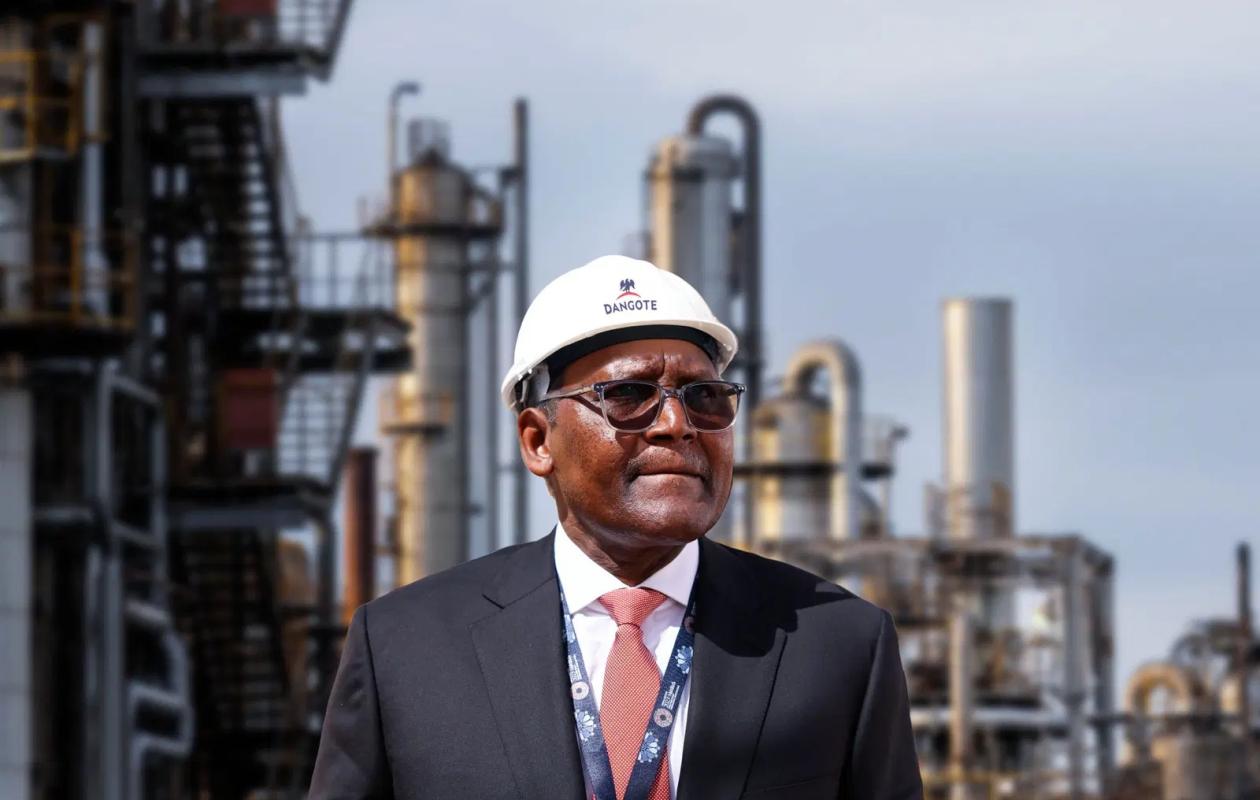
Le projet de méga-raffinerie de Dangote au Kenya menace un "écosystème fragile", alerte Greenpeace
The mega-refinery project planned for the Kenyan coast by the Nigerian Dangote group threatens "a fragile ecosystem", said the NGO Greenpeace Africa on Tuesday, calling for an independent impact assessment prior to any implementation.
The group of Nigerian businessman Aliko Dangote, Africa's richest person, put an end in July to speculation surrounding its mega-refinery project in East Africa, announcing to AFP that it had chosen to locate it in Lamu.
This county on the Kenyan coast includes a vast coastal area - which is home to a deep-water port opened in 2021 - and an archipelago of several small islands.
The refinery's planned capacity - estimated by Mr. Dangote to cost between $15 and $17 billion - is 700,000 barrels per day and its construction is expected to take about 30 months, according to the Nigerian group.
No financing agreement has been reached, according to experts interviewed by AFP, who also question the origin of the crude oil that will supply the facility.
"This project threatens to damage one of East Africa's most fragile marine ecosystems while locking Kenya into a risky future focused on fossil fuels," Greenpeace Africa further denounces.
"The mangroves of Lamu, the coral reefs and the seagrass beds are irreplaceable. They provide for the needs of the fishing sector, ensure livelihoods and the protection of the coast," the NGO continues, for whom the mega-refinery will "destroy natural environments and degrade marine environments", not to mention the risks of oil spills and air pollution.
"This refinery also risks becoming an unrecoverable asset as the world turns to cleaner energy" and will "lock Kenya into decades of high-carbon development, exacerbating climate change and its impacts," Greenpeace warns.
The NGO further observes that "the enormous financial capital" required for such a project should be used to promote Kenya's energy transition, and calls for "an immediate halt to permits until a social and environmental impact study is completed, published and submitted to meaningful public participation."
Kenya has a largely decarbonized energy mix, with some 90% of its energy being green - geothermal, hydroelectric, solar and wind.
In June 2019, the Kenyan National Environmental Tribunal suspended a €2 billion coal-fired power plant project that was already planned for construction in Lamu.
AFP





















Commentaires (6)
Participer à la Discussion
Règles de la communauté
💡 Astuce : Utilisez des emojis depuis votre téléphone ou le module emoji ci-dessous. Cliquez sur GIF pour ajouter un GIF animé. Collez un lien X/Twitter, TikTok ou Instagram pour l'afficher automatiquement.
Se connecter
Commentez avec votre profil, votre photo, et soyez averti des réponses.