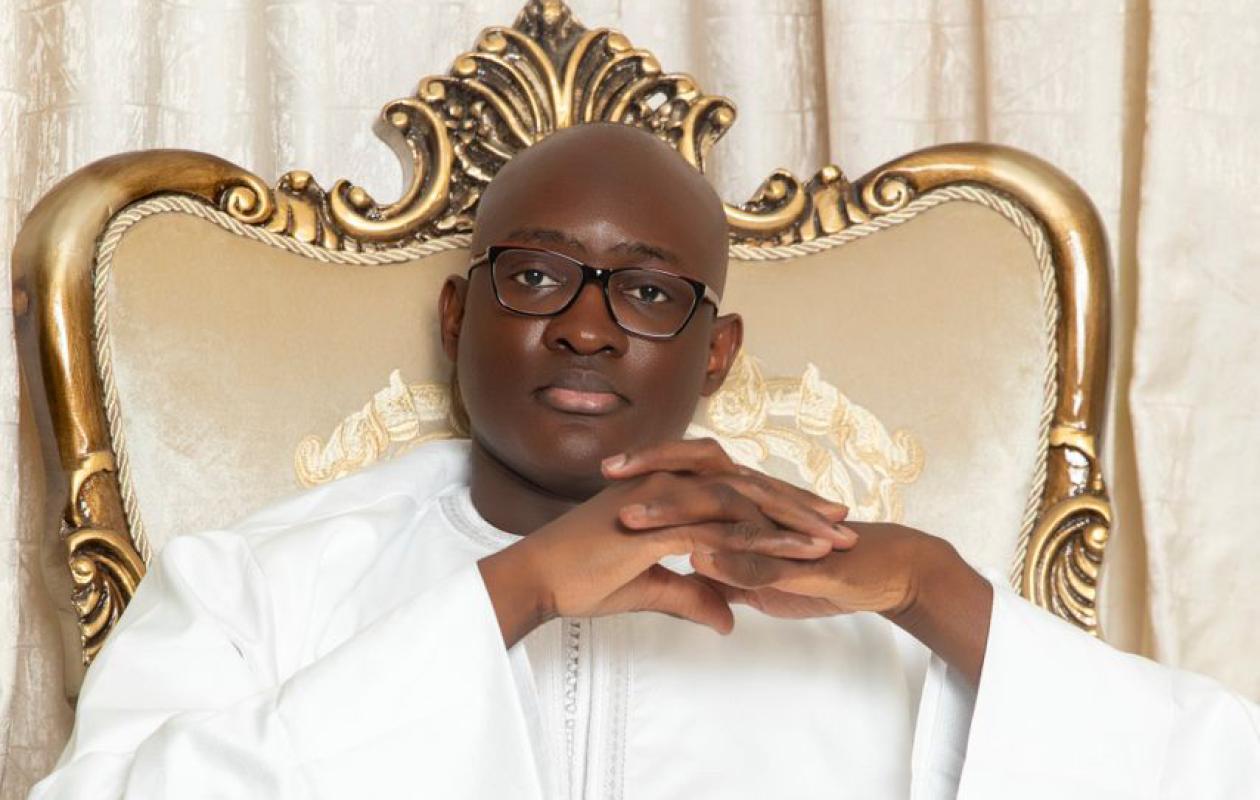
Le Sénégal face à l'urgence financière : conclure rapidement avec le FMI pour éviter le pire (Par Dr Cheikhabdou Lahad MBACKE)
Beyond the political controversies, partisan squabbles, and communication battles, one reality is now clear to all Senegalese: our economy is going through one of the most delicate periods in its recent history. The strain on public finances, the burden of debt, the state's cash flow difficulties, the slowdown in certain investments, and the growing distrust of financial markets are all warning signs that it would be irresponsible to ignore.
Faced with this situation, a central question arises: what should Senegal do?
My conviction is clear: Senegal must accelerate discussions with the International Monetary Fund and reach a credible and ambitious agreement as soon as possible. The longer we wait, the more the difficulties are likely to worsen.
For several months, successive revelations about the state of public finances have profoundly altered the perceptions of international partners, investors, and financial institutions. When confidence is shaken, the cost of financing increases. When the cost of financing increases, the state has fewer resources to invest in education, health, infrastructure, and social policies. The entire economy suffers.
We need to face facts. The problem isn't just budgetary. It's also a problem of financial credibility. And in the modern economy, trust is as valuable as natural resources.
This is precisely why the partnership with the IMF is essential today.
Some voices portray the IMF as a threat or an infringement on national sovereignty. This view seems outdated and counterproductive to me. The IMF is not an enemy of Senegal. It is first and foremost a technical institution whose mission is to assist states facing macroeconomic imbalances. Of course, its recommendations can sometimes be demanding. But they generally aim to restore financial stability in order to prevent more serious crises.
Let's be honest: in the current situation, what does Senegal really have to lose by working closely with the IMF?
Absolutely nothing is more important than what we risk losing by remaining in uncertainty.
An agreement with the IMF would reassure international financial markets, gradually restore donor confidence, facilitate access to other concessional financing, and send a positive signal to all of the country's economic partners. In most cases, when the IMF approves an economic trajectory, other international financial institutions follow suit.
The issue therefore goes far beyond IMF funding alone. The entire financial architecture of Senegal is at stake.
The government must understand that time is working against us. Every month of delay increases the risks. Every hesitation fuels anxieties. Every uncertainty reinforces investor caution.
Admittedly, the decisions that will need to be made will not be easy. It will likely be necessary to streamline certain public expenditures, strengthen budgetary discipline, improve tax revenue collection, combat waste more effectively, and review certain priorities. These measures may be politically costly.
But economic history shows that leaders are rarely judged on their ability to avoid difficult decisions. They are judged on their ability to save their country when it goes through a period of turbulence.
Political courage consists precisely in making the decisions today that will prevent a deeper crisis tomorrow.
Senegal possesses considerable assets. Our country benefits from recognized institutional stability, a strategic geographic location, a dynamic private sector, and now new prospects linked to oil and gas exploitation. However, these opportunities will only materialize if the macroeconomic fundamentals are sound.
No country can build its prosperity sustainably on fragile public finances.
The exploitation of energy resources alone will not be enough to resolve current imbalances. On the contrary, these new resources require even greater rigor, transparency, and good governance in order to avoid what economists call the "resource curse."
More than ever, Senegal needs a clear direction.
This course must be based on four pillars: the truth about the state of public finances, budget transparency, the acceleration of discussions with the IMF and the rapid implementation of structural reforms.
The Senegalese people are capable of hearing the truth. They are capable of understanding that a difficult situation sometimes requires temporary sacrifices. What they expect in return is a sincere message, a coherent vision, and strong leadership.
The time for political communication is over. The time for action is now.
The government must make dialogue with the IMF a national priority. Negotiations must move forward quickly, in an atmosphere of responsibility and mutual trust. Senegal needs a credible technical partner to restore confidence and put public finances back on a sustainable path.
The real risk today is not going towards the IMF.
The real risk would be wasting more time while warning signs are multiplying.
Successful nations are those that recognize their difficulties before they become crises.
Senegal still has a window of opportunity to rectify its public finances in an orderly and responsible manner. But this window is gradually closing. Faced with this urgent situation, political courage must prevail over partisan calculations. We must move forward quickly in discussions with the IMF, restore confidence, and implement the necessary reforms. Because tomorrow, it could be far more costly to repair what we refuse to correct today.
Dr. Cheikhabdou Lahad MBACKE, PhD in Public Policy and Applied Macroeconomics, Specialist in Negotiation and Conflict Management








Commentaires (4)
Participer à la Discussion
Règles de la communauté
💡 Astuce : Utilisez des emojis depuis votre téléphone ou le module emoji ci-dessous. Cliquez sur GIF pour ajouter un GIF animé. Collez un lien X/Twitter, TikTok ou Instagram pour l'afficher automatiquement.
Se connecter
Commentez avec votre profil, votre photo, et soyez averti des réponses.