Mali: les jihadistes du JNIM revendiquent des attaques coordonnées avec la rébellion touareg à travers le pays
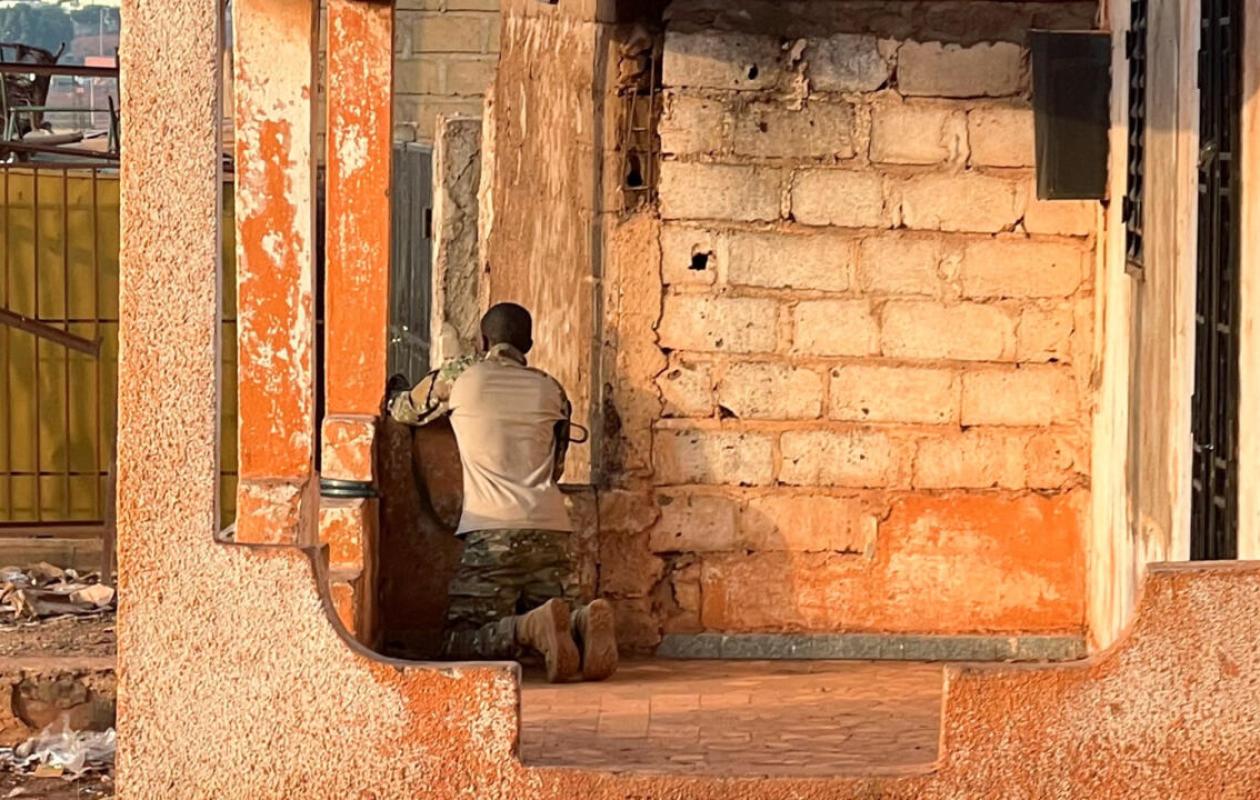
Jihadists from the Group for the Support of Islam and Muslims (JNIM), affiliated with Al-Qaeda, claimed responsibility on Saturday for a series of coordinated attacks with the Tuareg rebellion against strategic positions of the ruling junta in Mali, on the outskirts of Bamako and in several important cities in the Sahelian country.
Mali has been plagued by conflict and jihadist violence for more than a decade, but since the junta seized power in 2020, these attacks by jihadists and the Tuareg rebellion of the Azawad Liberation Front (ALF) are unprecedented.
In September 2024, JNIM claimed responsibility for a double attack of rare magnitude against the military airport in Bamako, the capital, and against the gendarmerie school, which left more than 70 dead and 200 wounded, according to security sources.
The fighting between the army and the attackers, which began at dawn on Saturday, continued intensely in the afternoon on the outskirts of Bamako and in several cities, particularly in Kidal, a historical stronghold of the armed independence groups in the north.
The FLN, a separatist group claiming the territory of Azawad in northern Mali, announced it had taken control of Kidal. The city had been retaken in November 2023 by the Malian army, supported by fighters from the Russian paramilitary group Wagner, ending more than a decade of rebel control.
In a statement released Saturday evening, JNIM, which has been fighting for years against the military in power in Bamako, proclaimed a "victory", believing it to be the result of hard work", coordination with its "partners" and "thanks to the active participation of our brothers from the Azawad Liberation Front".
He declares that he takes "responsibility" for the attacks that targeted on Saturday "the headquarters of Malian President Assimi Goïta, the headquarters of Malian Defense Minister Sadio Camara, the international airport" of Bamako and "military sites in the nearby city of Kati".
Uncertainty surrounds the fate of the Minister of Defense, the head of Malian intelligence, and the head of the Malian junta.
According to residents, the minister's residence was largely destroyed by a powerful explosion. His entourage denied reports that Mr. Camara was injured.
- "Large-scale offensive" -
On Saturday afternoon in Bamako, helicopters—which had carried out airstrikes earlier in the day—were still circling above the capital near the airport, an AFP journalist observed. While the streets had remained deserted since morning, passersby were gradually beginning to emerge to observe the situation.
Several main roads in the capital leading to military infrastructure, the airport and the presidential palace of Koulouba were cordoned off by security forces.
"We are facing a vast coordinated offensive across the country at a level not seen since 2012, when the government lost half the country," Charlie Werb, an analyst at the consulting firm Aldebaran Threat Consultants (ATC), told AFP, referring to "serious security failures in Bamako."
The FLA also claims to have taken control of several positions in the Gao region (north), according to statements on social media. On X, its spokesperson, Mohamed Elmaouloud Ramadane, indicates that "several positions have already fallen under the control of the Azawad forces."
Gunfire also continued, but in a more spaced-out manner, on Saturday afternoon in the neighboring town of Kati, near Bamako, which houses the residence of the head of the junta, General Assimi Goïta, and an attack took place in Sévaré (central), according to an AFP journalist and residents.
No casualty figures were immediately available.
The U.S. Bureau of African Affairs offered its "deepest condolences to the victims and their families" and "strongly condemned today's terrorist attack in Mali."
- What will happen to the Minister of Defense?
For its part, the African Union (AU) said it "strongly condemns" these attacks, believing that they "risk exposing civilian populations to significant dangers".
After announcing that "unidentified armed terrorist groups" had attacked "certain points and barracks in the capital and the interior" on Saturday morning and that fighting was ongoing, the Malian army later stated in a new communiqué that the situation was "under control", despite gunfire still being heard, and that "several terrorists have been neutralized and equipment destroyed".
"JNIM and FLA have launched coordinated attacks in Mali. Many army and Africa Corps (Russian paramilitary organization, ex-Wagner) positions continue to be targeted in Kati, Kidal, Sévaré and Gao," summarized Hasret Kargın, Africa researcher at the intelligence firm Mintel World.
"The chances of retaking cities like Kidal and Gao without military air support are very slim. Air support will be the decisive factor for both sides," he noted.
In its statement on Saturday evening, JNIM, in an unprecedented move, addressed Russia and "announced" its intention to "neutralize the Russian side of the conflict, in exchange for not targeting the latter and for coordination aimed at building a balanced and effective future relationship" - in other words, it proposed not to attack the Russians in Mali in exchange for Moscow's neutrality in the current situation.
Mali has been facing a deep security crisis since 2012, fueled in particular by violence from jihadist groups affiliated with Al-Qaeda and the Islamic State (IS), as well as community criminal groups and separatists.

















Commentaires (7)
Participer à la Discussion
Règles de la communauté
💡 Astuce : Utilisez des emojis depuis votre téléphone ou le module emoji ci-dessous. Cliquez sur GIF pour ajouter un GIF animé. Collez un lien X/Twitter, TikTok ou Instagram pour l'afficher automatiquement.
Se connecter
Commentez avec votre profil, votre photo, et soyez averti des réponses.