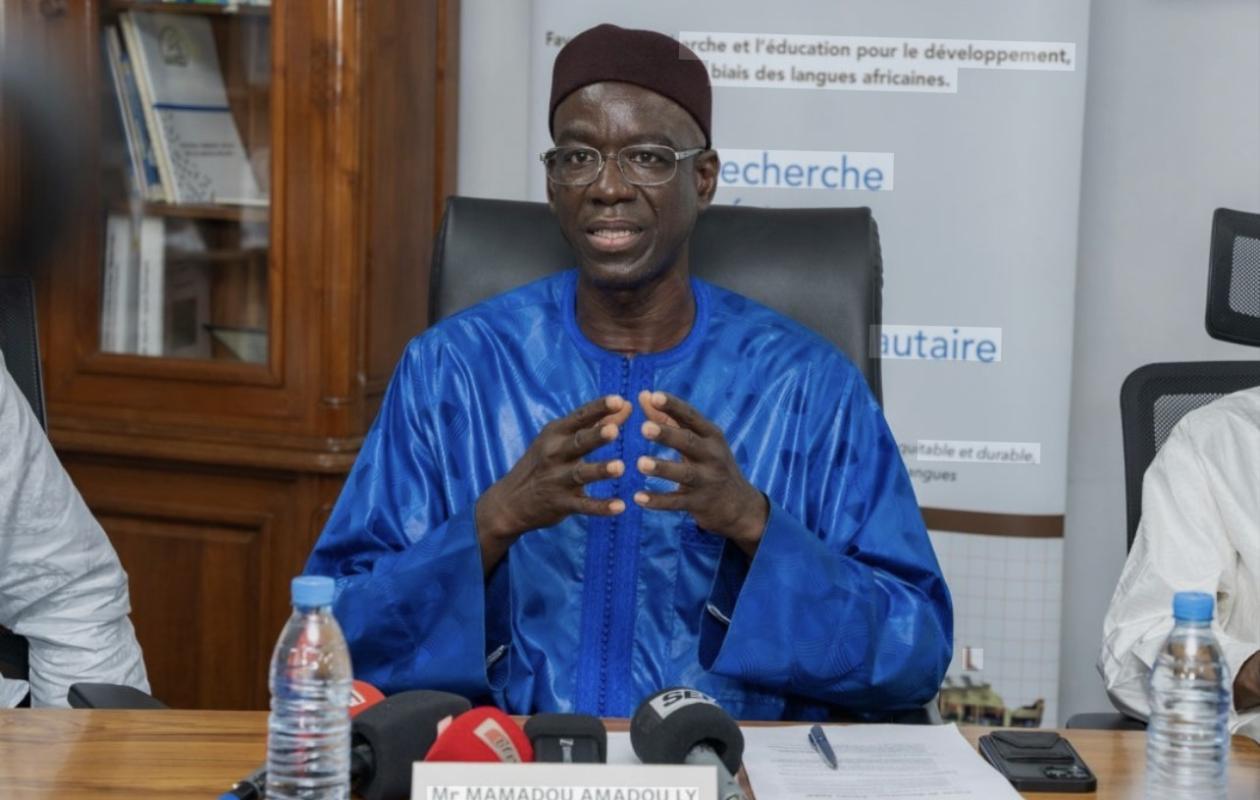
Mamadou Amadou Ly : « Les langues nationales sont la clé d’une éducation inclusive et d’un développement durable en Afrique »
Education is often presented as the engine of development. But what kind of education should be promoted to meet Africa's challenges? For Mamadou Amadou Ly, Director General of the NGO ARED (Associates in Research and Education for Development), the answer is clear: accessible education, rooted in the cultural and linguistic realities of the people and open to all forms of knowledge. A guest on the "Sunday Jury" program on iRadio, Ly, who has dedicated his life to literacy and the promotion of national languages, reflected on his career, his struggles, and his vision of a school system capable of producing autonomous, responsible citizens committed to the development of their communities.
From Podor to education: a journey shaped by values
Born in Podor, in the heart of Fouta, Mamadou Amadou Ly grew up in an environment where education held a central place. Raised by his grandparents, he benefited very early on from a dual education: family and religious education on the one hand, and modern schooling on the other.
“Education is not limited to school. It begins in the family, continues in the community, and accompanies the individual throughout their life,” he explains. After his primary education in Podor, he moved to Saint-Louis to pursue his secondary studies before enrolling at the National Higher Technical School, where he specialized in mechanical engineering.
But beyond diplomas, it is the values acquired throughout his career that profoundly mark him: discipline, rigor, a sense of collective responsibility, respect for others and commitment to serving his community.
The discovery of the transformative power of education
Although he was destined for a technical career, his involvement in associations led him to discover another reality: that of thousands of men and women excluded from economic and social opportunities because they cannot read or write.
In working-class neighborhoods as well as in rural areas, he encounters artisans, shopkeepers, livestock farmers, and informal sector workers unable to access essential information or effectively manage their businesses. This situation acts as a stark reminder of their problems.
“We discovered that education could directly transform people’s lives, especially when it’s delivered through a language they understand,” he says. This conviction led him to gradually leave the technical field to dedicate himself entirely to education and literacy.
National languages: much more than a communication tool
For Mamadou Amadou Ly, national languages represent a powerful tool for empowerment. For a long time, many Senegalese families relied on an outsider to read letters received from relatives living abroad. This situation exposed their privacy and deprived them of some of their autonomy.
“When a person learns to read in their own language, they regain their dignity,” he asserts. Learning in national languages allows people to acquire knowledge much more quickly. In just a few months, an adult who has never attended school can learn to read, write, keep accounts, or manage a business.
But the impact goes far beyond that. Literacy also allows citizens to understand administrative documents, know their rights, participate in collective decisions, and better defend their interests.
Educating citizens and strengthening local democracy
According to the Director General of ARED, national languages also play a vital role in building citizenship. In a context of decentralization, where local authorities are called upon to manage more responsibilities, it is essential that populations understand the laws that govern their environment.
“How can we fully participate in the life of our community if we don’t understand the information that concerns us?” Education in national languages allows citizens to be better informed, to engage in dialogue, and to participate in decisions that affect their daily lives. This approach has also proven effective in conflict prevention.
In several Sahel countries, ARED has supported pastoralist and farming communities facing recurring tensions over natural resources. Through literacy and training, these groups have been able to develop mechanisms for dialogue and mediation, fostering more peaceful coexistence. According to ARED, education thus contributes to building peace as much as it does to developing skills.
Reconciling the school with its environment
One of Mamadou Amadou Ly's main battles is to bridge the gap between formal and non-formal education. In his view, schools remain too insular, while communities possess a wealth of knowledge and experience. He advocates for a more open school system, capable of integrating community members, elders, artisans, local leaders, and cultural associations into the educational process.
Education is not simply the transmission of academic knowledge. It also transmits values, culture, identity, and a sense of collective responsibility. For him, national languages constitute precisely the natural bridge between school and its social environment.
Bilingualism, a solution for the future
Contrary to some preconceived notions, Mamadou Amadou Ly does not advocate replacing French with national languages. Rather, he defends a model of harmonized bilingualism in which children first learn in a language they have mastered before gradually acquiring French.
This approach, tested for several years by ARED in partnership with educational authorities, has produced remarkable results. Students understand lessons better, develop fundamental reading, writing, and arithmetic skills more quickly, participate more in class, and gain confidence.
“Children who learn in their own language progress faster and develop fewer insecurities,” he emphasizes. These results have helped make Senegal one of the most advanced African countries in implementing bilingual education.
When Africa inspires the world
After more than three decades of commitment, ARED's work has transcended Senegal's borders. The educational model developed around national languages has been praised by several international institutions before being recognized in 2025 with the prestigious Yidan Prize, often considered the "Nobel Prize of Education".
That same year, Mamadou Amadou Ly was named one of the world's most influential figures in education. For him, these distinctions primarily recognize a collective vision. "This isn't just ARED's work. It's the recognition of an African experience that shows our solutions can inspire the rest of the world."
This recognition materialized in the organization in Dakar of a major international conference bringing together experts, researchers, policymakers, foundations and education stakeholders from all corners of the world.
Investing in languages to prepare for the future
As Africa seeks to transform its education systems to meet demographic, economic, and technological challenges, Mmadou Amadou Ly remains convinced that national languages must occupy a central place in public policy. According to him, they are neither an obstacle to international openness nor a retreat into identity politics. On the contrary, they represent the most effective means of democratizing access to knowledge, strengthening citizenship, promoting African cultures, and building truly inclusive education systems. “Investing in education is investing in development.”
But investing in education that speaks to the people is a lasting investment in Africa's future." For this advocate of national languages, the continent's transformation will begin with a long-neglected truth: we learn better when we understand the language in which we are taught.
Yande Diop
Mamadou Amadou Ly: "National languages are the key to inclusive education and sustainable development in Africa."
Education is often presented as the engine of development. But what kind of education should be promoted to meet Africa's challenges? For Mamadou Amadou Ly, Director General of the NGO ARED (Associates in Research and Education for Development), the answer is clear: accessible education, rooted in the cultural and linguistic realities of the people and open to all forms of knowledge. A guest on the "Sunday Jury" program on iRadio, Ly, who has dedicated his life to literacy and the promotion of national languages, reflected on his career, his struggles, and his vision of a school system capable of producing autonomous, responsible citizens committed to the development of their communities.
From Podor to education: a journey shaped by values
Born in Podor, in the heart of Fouta, Mamadou Amadou Ly grew up in an environment where education held a central place. Raised by his grandparents, he benefited very early on from a dual education: family and religious education on the one hand, and modern schooling on the other.
“Education is not limited to school. It begins in the family, continues in the community, and accompanies the individual throughout their life,” he explains. After his primary education in Podor, he moved to Saint-Louis to pursue his secondary studies before enrolling at the National Higher Technical School, where he specialized in mechanical engineering.
But beyond diplomas, it is the values acquired throughout his career that profoundly mark him: discipline, rigor, a sense of collective responsibility, respect for others and commitment to serving his community.
The discovery of the transformative power of education
Although he was destined for a technical career, his involvement in associations led him to discover another reality: that of thousands of men and women excluded from economic and social opportunities because they cannot read or write.
In working-class neighborhoods as well as in rural areas, he encounters artisans, shopkeepers, livestock farmers, and informal sector workers unable to access essential information or effectively manage their businesses. This situation acts as a stark reminder of their problems.
“We discovered that education could directly transform people’s lives, especially when it’s delivered through a language they understand,” he says. This conviction led him to gradually leave the technical field to dedicate himself entirely to education and literacy.
National languages: much more than a communication tool
For Mamadou Amadou Ly, national languages represent a powerful tool for empowerment. For a long time, many Senegalese families relied on an outsider to read letters received from relatives living abroad. This situation exposed their privacy and deprived them of some of their autonomy.
“When a person learns to read in their own language, they regain their dignity,” he asserts. Learning in national languages allows people to acquire knowledge much more quickly. In just a few months, an adult who has never attended school can learn to read, write, keep accounts, or manage a business.
But the impact goes far beyond that. Literacy also allows citizens to understand administrative documents, know their rights, participate in collective decisions, and better defend their interests.
Educating citizens and strengthening local democracy
According to the Director General of ARED, national languages also play a vital role in building citizenship. In a context of decentralization, where local authorities are called upon to manage more responsibilities, it is essential that populations understand the laws that govern their environment.
“How can we fully participate in the life of our community if we don’t understand the information that concerns us?” Education in national languages allows citizens to be better informed, to engage in dialogue, and to participate in decisions that affect their daily lives. This approach has also proven effective in conflict prevention.
In several Sahel countries, ARED has supported pastoralist and farming communities facing recurring tensions over natural resources. Through literacy and training, these groups have been able to develop mechanisms for dialogue and mediation, fostering more peaceful coexistence. According to ARED, education thus contributes to building peace as much as it does to developing skills.
Reconciling the school with its environment
One of Mamadou Amadou Ly's main battles is to bridge the gap between formal and non-formal education. In his view, schools remain too insular, while communities possess a wealth of knowledge and experience. He advocates for a more open school system, capable of integrating community members, elders, artisans, local leaders, and cultural associations into the educational process.
Education is not simply the transmission of academic knowledge. It also transmits values, culture, identity, and a sense of collective responsibility. For him, national languages constitute precisely the natural bridge between school and its social environment.
Bilingualism, a solution for the future
Contrary to some preconceived notions, Mamadou Amadou Ly does not advocate replacing French with national languages. Rather, he defends a model of harmonized bilingualism in which children first learn in a language they have mastered before gradually acquiring French.
This approach, tested for several years by ARED in partnership with educational authorities, has produced remarkable results. Students understand lessons better, develop fundamental reading, writing, and arithmetic skills more quickly, participate more in class, and gain confidence.
“Children who learn in their own language progress faster and develop fewer insecurities,” he emphasizes. These results have helped make Senegal one of the most advanced African countries in implementing bilingual education.
When Africa inspires the world
After more than three decades of commitment, ARED's work has transcended Senegal's borders. The educational model developed around national languages has been praised by several international institutions before being recognized in 2025 with the prestigious Yidan Prize, often considered the "Nobel Prize of Education".
That same year, Mamadou Amadou Ly was named one of the world's most influential figures in education. For him, these distinctions primarily recognize a collective vision. "This isn't just ARED's work. It's the recognition of an African experience that shows our solutions can inspire the rest of the world."
This recognition materialized in the organization in Dakar of a major international conference bringing together experts, researchers, policymakers, foundations and education stakeholders from all corners of the world.
Investing in languages to prepare for the future
As Africa seeks to transform its education systems to meet demographic, economic, and technological challenges, Mmadou Amadou Ly remains convinced that national languages must occupy a central place in public policy. According to him, they are neither an obstacle to international openness nor a retreat into identity politics. On the contrary, they represent the most effective means of democratizing access to knowledge, strengthening citizenship, promoting African cultures, and building truly inclusive education systems. “Investing in education is investing in development.”
But investing in education that speaks to the people is a lasting investment in Africa's future." For this advocate of national languages, the continent's transformation will begin with a long-neglected truth: we learn better when we understand the language in which we are taught.





















Commentaires (19)
Participer à la Discussion
Règles de la communauté
💡 Astuce : Utilisez des emojis depuis votre téléphone ou le module emoji ci-dessous. Cliquez sur GIF pour ajouter un GIF animé. Collez un lien X/Twitter, TikTok ou Instagram pour l'afficher automatiquement.
Se connecter
Commentez avec votre profil, votre photo, et soyez averti des réponses.