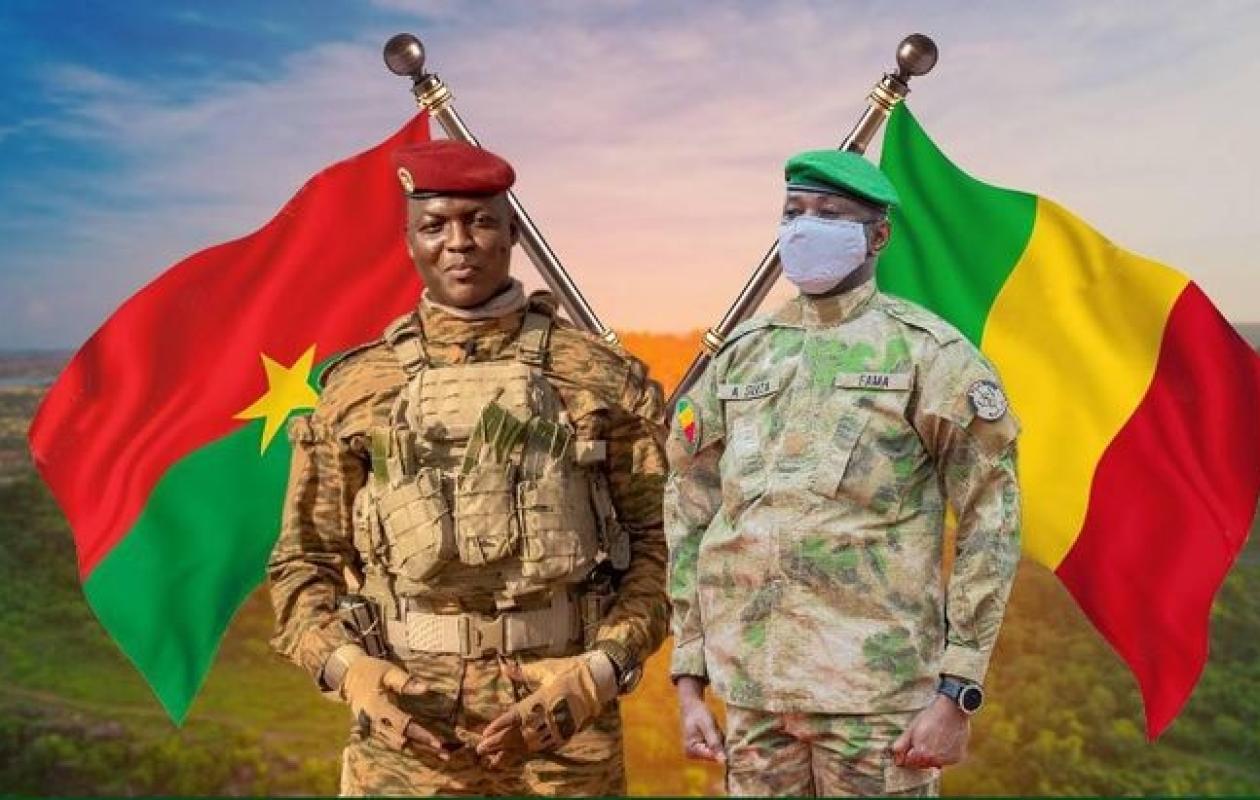
Rapport du COAPP : Le Mali et le Burkina Faso champions des dépenses militaires, mais à quel prix ?
Since 2020, military spending has skyrocketed in the Sahel without managing to curb the violence. This is the alarming conclusion of the latest report from the West African Centre for Public Policy (COAPP) on defense and security policy, published this week. The document highlights a dramatic increase in security budgets in Burkina Faso, Mali, Niger, and Nigeria between 2020 and 2024. Faced with the intensification of terrorist attacks and internal conflicts, these states have massively redirected their budgetary priorities toward the defense sector, to the detriment of other social sectors.
The figures revealed in the report demonstrate that security budgets now weigh heavily on national economies. Burkina Faso allocates an average of 17.5% of its national budget and over 4% of its GDP to security. Mali demonstrates an even greater commitment, allocating 18.9% of its national budget and 4.2% of its GDP to security, a situation directly linked to the resurgence of attacks by armed groups since the 2021 coup. Niger follows this trend, with 10.4% of its national budget dedicated to security. As for Nigeria, while its relative share is expected to decrease slightly to 7.1% in 2024, it maintains the largest defense budget in the region in absolute terms to combat the Boko Haram insurgency.
However, according to COAPP, this lavish spending has not led to a significant decrease in violence on the ground. The center's experts emphasize that increased expenditure is not a magic bullet against widespread insecurity. Several factors explain this paradox, notably an approach deemed too exclusively military, to the detriment of political and socio-economic aspects. The report also points to poor resource management, endemic corruption, and the persistent weakness of state institutions, all of which hinder the effectiveness of the investments made.
Faced with this acknowledgment of partial failure, the COAPP calls on states to adopt a comprehensive security strategy. This strategy should integrate the strengthening of democratic institutions, the promotion of social justice, and genuine national reconciliation. For the research center, it is imperative to address the root causes of conflict, namely social inequality, poverty, political marginalization, and ethnic tensions. Governance and transparency are presented as essential conditions for defense resources to finally produce a real and lasting impact on the security of populations.



















Commentaires (16)
Participer à la Discussion
Règles de la communauté
💡 Astuce : Utilisez des emojis depuis votre téléphone ou le module emoji ci-dessous. Cliquez sur GIF pour ajouter un GIF animé. Collez un lien X/Twitter, TikTok ou Instagram pour l'afficher automatiquement.
Se connecter
Commentez avec votre profil, votre photo, et soyez averti des réponses.