Terrorisme, AES-Cédéao, cartels de drogue… Les grandes alertes du patron de l’AFRICOM
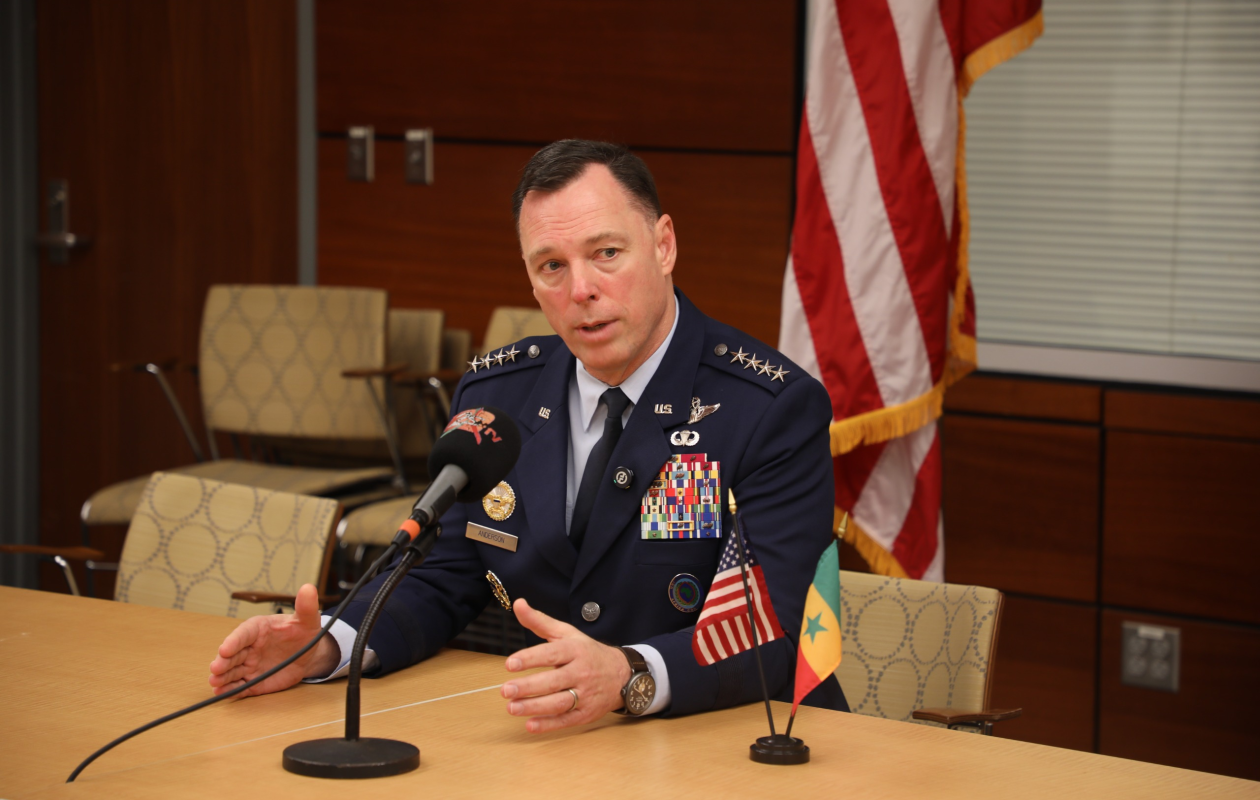
The fight against terrorist networks, the rise of international drug trafficking and tensions between the countries of the Alliance of Sahel States (AES) and those of the Economic Community of West African States (ECOWAS) were at the heart of the discussions between General Dagvin Anderson and some Senegalese media.
The commander of the United States Africa Command (AFRICOM) addressed these issues in an interview with Seneweb on Thursday, November 12, in Dakar. Present at the official Veterans Day ceremony organized by the U.S. Embassy in Senegal, the senior American military official also discussed prospects for security cooperation with Senegalese authorities.
Prior to this exchange with the press, General Anderson had held discussions with several Senegalese military and government officials. He notably announced upcoming meetings with the Chief of the General Staff of the Armed Forces and the Minister of the Armed Forces, focusing on common interests between the two countries.
In his press conference, the AFRICOM commander answered questions about the threat posed by international terrorist organizations, including the Islamic State and Al-Qaeda in the Sahel. “What we are most concerned about is the threat from terrorists, particularly global terrorist networks, the Islamic State in the Greater Sahara (ISGS) and Al-Qaeda. We are also concerned about the growth in crime and illicit activity, including the increase in narcotics coming from South America to Africa and other parts of the world,” explained Dagvin Anderson.
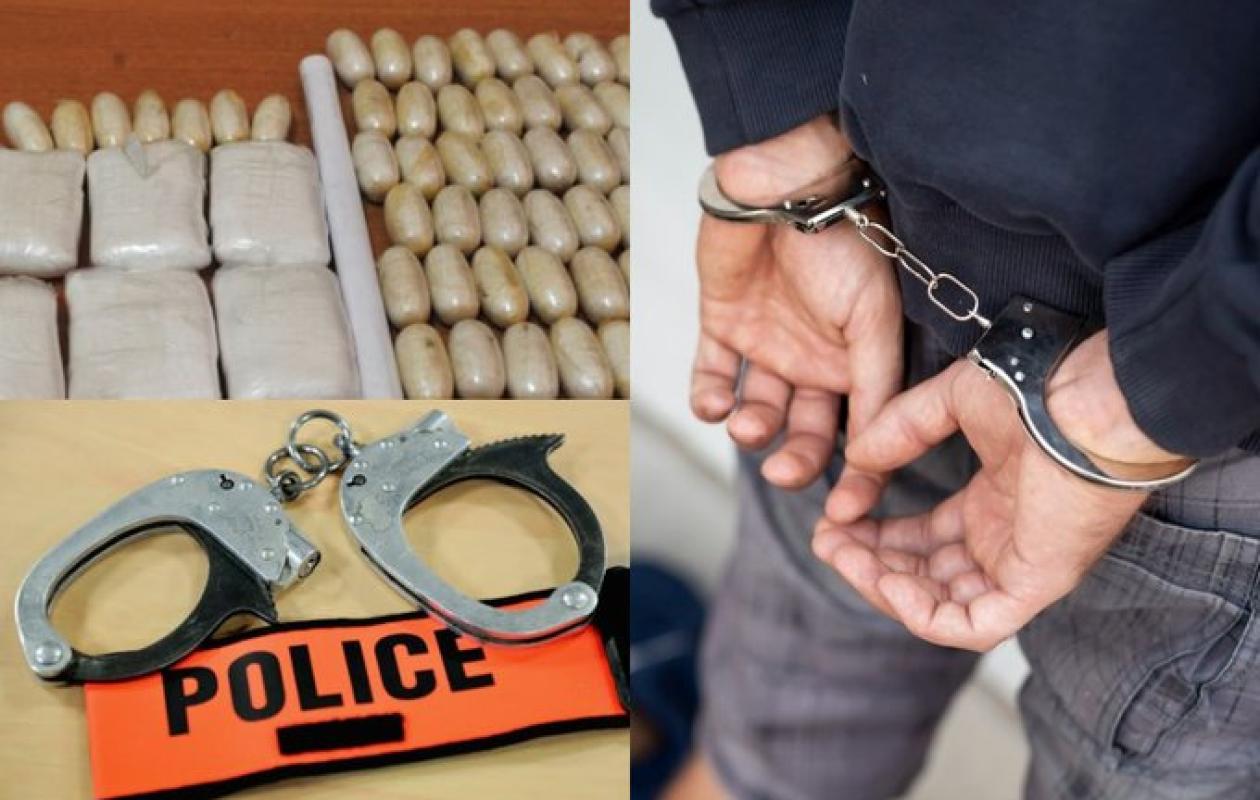
The US military official considers this development a top priority for both African partners and the United States. "We've seen a sixfold increase in these narcotics, including Mexican cartels setting up drug labs in various locations across Africa. So, this is one of our concerns, and we're exploring different ways to address it with our partners," he added.
Mali at the center of security concerns
General Dagvin Anderson discussed his meeting with the Malian transitional president, General Assimi Goïta, on Tuesday, November 10. According to him, this visit was undertaken to better understand the threats facing Mali and to explore opportunities for cooperation with the authorities in Bamako.
The commander of AFRICOM acknowledged that Mali is heavily affected by terrorism. He specifically cited Al-Qaeda, the Group for the Support of Islam and Muslims (JNIM), and the Islamic State in the Greater Sahara (ISGS) as organizations that pose a threat to the country. According to the American general, these organizations do not constitute merely a local threat. Their international dimension, he argued, necessitates a response that transcends national borders and diplomatic differences. He believes that the United States and the Sahelian countries share common security interests, despite the political developments in the region. "We understand that this is a common threat. How can we work together to address this threat? There are things we can contribute that could help the security of both Mali and the United States, because these threats are global," he asserted.
To justify this approach, Dagvin Anderson cites the September 11, 2001 attacks against the United States. He draws a parallel between the threat Washington faced and the one Malian authorities must combat daily.
"Al-Qaeda attacked New York. They still intend to attack the United States and the West. Mali faces these attacks every day," he said.
This assessment of the security situation, he argues, explains the need to maintain communication channels with the authorities of the Sahel-African Alliance (SAA). General Anderson states that he has also spoken with other members of the organization, without specifying the nature of the planned engagements. He advocates for a dialogue that would allow the various parties to formulate joint responses to the armed groups.
Washington wants to facilitate dialogue between the ESA and ECOWAS
Beyond strictly military matters, the AFRICOM commander addressed relations between the ESA countries and ECOWAS (Economic Community of West African States). Diplomatic tensions between the two regional blocs have profoundly affected cooperation mechanisms in West Africa. Given this situation, Dagvin Anderson believes that dialogue remains essential to address cross-border threats.
He reveals that he also spoke with the president of the ECOWAS Commission, General Birame Diop.
The American official said he was aware of the efforts made by ECOWAS to maintain a constructive dialogue with the ESA authorities. "I think we need to have a dialogue to understand the threat and find ways to counter it. That's why I went to Mali. I also spoke with the other ESA members," he explained.
Furthermore, Dagvin Anderson assures that the United States is willing to facilitate discussions between the parties concerned in order to promote a concerted response to security challenges.
Mexican cartels and synthetic drugs under surveillance
The other concern raised by the AFRICOM commander relates to the expansion of international drug trafficking networks. Activities attributed to Mexican cartels in Africa, particularly in Nigeria and South Africa, are receiving special attention from U.S. intelligence services.
General Dagvin Anderson acknowledges, however, that the contours of this new dynamic are not yet fully understood by U.S. authorities. Washington is particularly focused on determining the supply chains, the destinations of the products, and the operational mechanisms of these criminal organizations. "This is a threat to many nations around the world. Synthetic drugs, or any drugs for that matter, create instability that fosters crime. And we are very concerned about this," he admitted.
General Anderson indicates that the United States has engaged in discussions with several international partners to improve intelligence sharing. These discussions include U.S. law enforcement agencies, South American partners, as well as actors in South Africa and Europe.
According to him, the objective is to better identify networks, track the movement of drugs, and enable the countries concerned to take the necessary measures. The AFRICOM commander believes that the international flow of narcotics requires close cooperation between states. "We are engaged in the United States, with our partners in South America, as well as South Africa and Europe, to better share this information, to understand what is happening, where these threats are, and to enable partners to intervene and participate," he explained.
He also draws attention to the precursor chemicals used in the manufacture of synthetic drugs: “We know that there is, for example, synthetic drug that comes from Asian countries and passes through the African continent. We also know that there are South American cartels that bring in cocaine. But all this testifies to the scale of these situations, hence the need for close and increased collaboration between the United States and African countries.”
This observation leads Dagvin Anderson to believe that international cooperation must be accompanied by mobilization at the national level. He therefore emphasizes the need to involve young people in efforts to prevent and combat drug use.
"Ultimately, each nation will have to engage locally, particularly with young people, to try to eliminate drugs. We can help understand where they come from, how these cartels are international, and how they operate, and we must work together on this threat," he said.













Commentaires (3)
Participer à la Discussion
Règles de la communauté
💡 Astuce : Utilisez des emojis depuis votre téléphone ou le module emoji ci-dessous. Cliquez sur GIF pour ajouter un GIF animé. Collez un lien X/Twitter, TikTok ou Instagram pour l'afficher automatiquement.
Se connecter
Commentez avec votre profil, votre photo, et soyez averti des réponses.