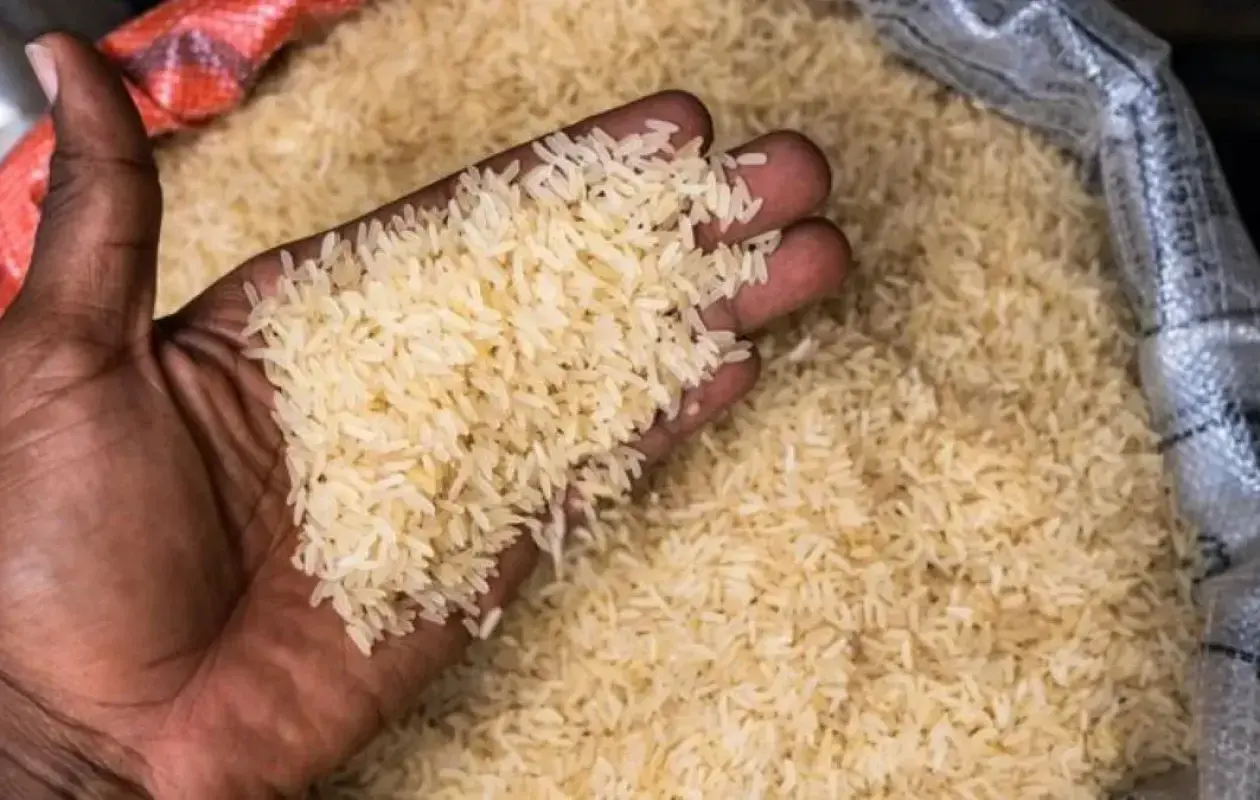
Affaire du riz contaminé : Les précisions du ministère du Commerce
In response to the controversy sparked by recent publications alleging widespread aflatoxin contamination of rice, the Ministry of Industry and Trade has issued a firm statement. In a press release published on Friday, July 24, 2026, the ministry refuted reports of abnormally high aflatoxin levels in rice and the associated health risks to the population, while also providing clarifications to reassure Senegalese consumers.
The ministry reminds that "all foodstuffs marketed in Senegal, whether produced locally or imported, are subject to a conformity check prior to being placed on the market, supplemented by regular monitoring operations once the products are in circulation."
Between January and June 2026, the Consumer Affairs and Consumer Safety Division of the Directorate of Domestic Trade had "2,059 test results" for various products. These tests were carried out by a network of recognized reference laboratories, including LANAC, ITA, the Pasteur Institute, ESP, and CERES-Locustox.
Regarding rice in particular, the authorities specify that "the risk of aflatoxin contamination was not considered a priority parameter when establishing the health profile of staple foods in Senegal, due to its typically low frequency in this food, unlike in peanuts." For this reason, monitoring plans have "focused on parameters deemed more relevant, notably heavy metals, including arsenic, without this implying a relaxation of health controls."
To explain the discrepancy between the alerts relayed in the media and the reality on the ground, the ministry offers several technical clarifications regarding the scientific study that sparked the rumors. First, this information comes from a "pilot monitoring plan, funded by the FAO and managed by the National Codex Committee." Based on only 200 samples taken primarily from restaurant owners in Dakar, Thiès, and Kaolack, this study is "one-off and geographically limited." According to the press release, "under no circumstances does the small size of this sample allow for drawing conclusions of national scope regarding the quality of rice consumed in Senegal."
The ministry then emphasizes that "the major point of divergence lies in the reference framework used." While the results were compared to European standards (4 micrograms per kilogram), "Senegal refers to the international Codex standard (CXS 193 - 1995), which is the authoritative standard for global food trade." This standard sets the maximum limit at 20 micrograms per kilogram for husked rice. However, "the maximum value recorded during the study (18.6 micrograms per kilogram) remains compliant with the international standards of the Codex Alimentarius."
Finally, the text specifies that "no samples for the study came from national production areas (Senegal River Valley)." Therefore, the information claiming 50% contamination of local rice is deemed "devoid of any scientific or factual basis."
Reaffirming its commitment to food safety, the Government assures the public that market surveillance has been "intensified to prevent the sale of any products unfit for consumption." Authorities urge the public to remain calm and reiterate that "any product that does not meet food safety standards is systematically removed from the market, and those that do not comply are penalized according to current regulations."




















Commentaires (6)
Participer à la Discussion
Règles de la communauté
💡 Astuce : Utilisez des emojis depuis votre téléphone ou le module emoji ci-dessous. Cliquez sur GIF pour ajouter un GIF animé. Collez un lien X/Twitter, TikTok ou Instagram pour l'afficher automatiquement.
Se connecter
Commentez avec votre profil, votre photo, et soyez averti des réponses.