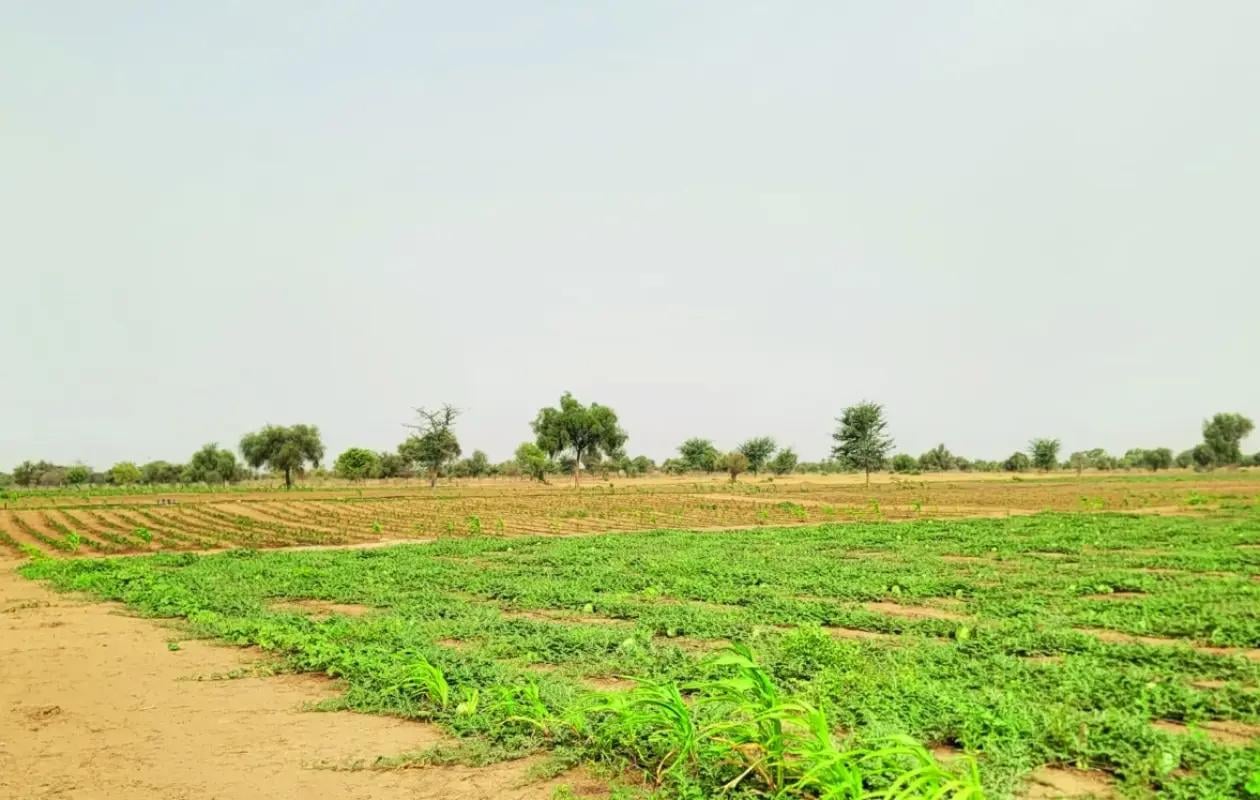
Campagne agricole à Kédougou : un déficit pluviométrique qui inquiète
The 2026-2027 agricultural season continues amidst a worrying rainfall situation in the Kédougou region. As of September 30, 2026, twelve of the fifteen monitored rainfall stations recorded total rainfall lower than that recorded during the same period in 2025. This situation contrasts, however, with some areas experiencing above-average rainfall, notably Ethiolo, Dakately, and Salémata.
Rainfall remains generally deficient in the Kédougou region. This is one of the main findings of weekly report no. 17 on monitoring the 2026-2027 agricultural campaign, covering the period from September 24 to 30, 2026.
According to data collected from the fifteen rain gauge stations monitored in the region, twelve recorded total rainfall lower than that of the previous season. The most significant deficits were recorded in Saraya, with a difference of -291 mm, Fongolimbi (-287.7 mm), Laminya (-246 mm), Missirah Sirimana (-243.5 mm), Khossanto (-212.3 mm) and Bembou (-200 mm).
Conversely, some localities show a more favorable situation compared to the same period in 2025. This is notably the case for Ethiolo (+224 mm), Dakately (+213.6 mm) and Salémata (+126 mm).
A situation that is still below normal
Comparison with the reference rainfall normal, established over the period 1991-2020, also confirms an overall deficit trend.
With the exception of Ethiolo, which shows a surplus of +193.5 mm, and Salémata, with +165.5 mm, all the other monitored stations remain in deficit.
The variations range from -14.6 mm in Saraya to -383.2 mm in Sabodala. These data reflect a heterogeneous rainfall situation, fluctuating between normal conditions and sometimes significant deficits.
Faced with this situation, the regional directorate of rural development (DRDR) implicitly calls for increased vigilance in conducting the campaign, particularly due to the risk of water deficit in certain areas.
Cultures that are evolving despite the deficit
Despite the rainfall deficits observed, the overall development of crops remains satisfactory in the areas observed.
The first waves of fonio, maize and peanut sowing have already reached the generative stages, with plots at the filling, maturity and even early harvest stages.
The other sowing waves, as well as the rice, sorghum and cotton crops, are mainly at the stages of stem elongation, flowering or vegetative development.
This development demonstrates a steady progress of the campaign, despite the contrasting rainfall conditions recorded in several localities of the region.
The fall armyworm under surveillance
From a phytosanitary point of view, the presence of the fall armyworm (FAW) has been reported in the departments of Kédougou, Saraya and Salémata, particularly on maize crops.
For the time being, the damage is considered moderate and the situation remains under control thanks to ongoing monitoring in the field. However, technical services recommend continued surveillance to prevent any potential spread of the pest and further damage to crops.
As of September 30th, the agricultural season in the Kédougou region presents a mixed picture: crops are developing generally satisfactorily, but rainfall is below average in most of the monitored areas. This situation requires particular attention as the end of the rainy season approaches.






















Commentaires (1)
Participer à la Discussion
Règles de la communauté
💡 Astuce : Utilisez des emojis depuis votre téléphone ou le module emoji ci-dessous. Cliquez sur GIF pour ajouter un GIF animé. Collez un lien X/Twitter, TikTok ou Instagram pour l'afficher automatiquement.
Se connecter
Commentez avec votre profil, votre photo, et soyez averti des réponses.