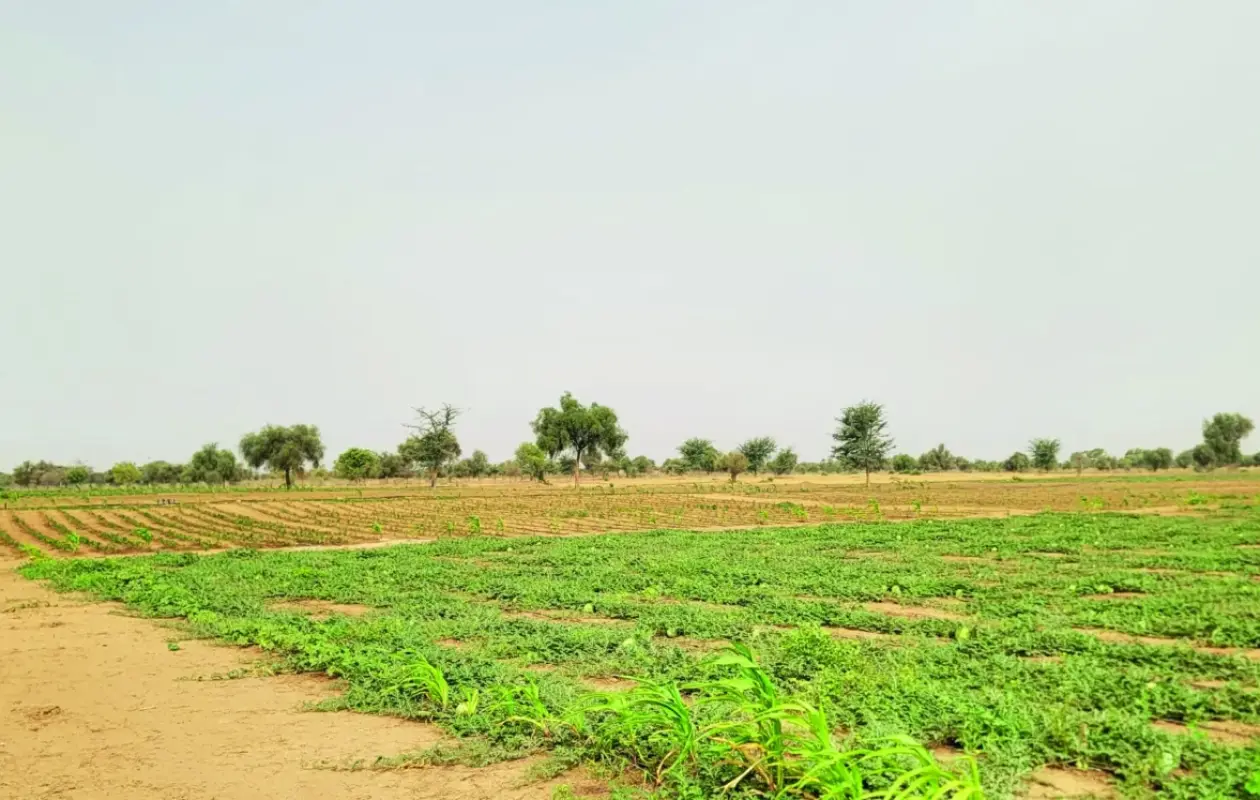
Kédougou : la campagne agricole 2026-2027 progresse malgré un déficit pluviométrique
The 2026-2027 agricultural campaign is progressing well in the Kédougou region. Between August 13 and 19, 2026, seed and fertilizer distribution operations intensified, while crops continue to develop at varying rates depending on the type of crop and the area.
According to the weekly report No. 11 monitoring the agricultural campaign of the regional directorate of rural development, observations made in the field indicate good progress of crops, favored by the wet conditions that accompanied the sowing operations.
For maize and peanuts, the first sowing waves have already reached the generative stages, indicating relatively advanced crop development. The remaining sowing waves, as well as those for fonio, rice, sorghum, and cotton, are primarily in the emergence, growth, and vegetative development phases.
On the ground, producers also continue maintenance operations. Manual and mechanical weeding, spreading of fertilizers and herbicide treatments are regularly carried out in order to maintain the crops in good condition and promote their development.
The fall armyworm under surveillance
This dynamic, however, is accompanied by a phytosanitary risk. An infestation of the fall armyworm has been reported on cornfields in the Salémata department. The damage is currently considered moderate.
In response to this situation, plant protection services have strengthened their control measures. The Directorate of Plant Protection (DPV), through its Phytosanitary Base in Missirah, in the Tambacounda region, has provided the three departments of Kédougou with a stock of 40 liters of Sultan 480 EC each, for a total of 120 liters at the regional level.
The Salémata department also received 50 sachets of Emacot. These products are intended to help strengthen the protection of plots and limit the effects of pest attacks.
For technical services, this allocation aims to ensure effective phytosanitary coverage and to support producers in preserving their crops.
Overall rainfall was below average.
While the plant health situation remains under control, rainfall is a major area of concern. As of August 19, 2026, data collected from the region's 15 rain gauge stations show a cumulative total lower than that recorded during the same period of the previous year.
The largest differences are observed in Fongolimbi (-354.1 mm), Saraya (-249 mm) and Bembou (-233 mm).
Comparison with the 1991-2020 seasonal average also reveals a contrasting situation. Only three stations show a surplus: Salémata (+110.7 mm), Saraya (+52.2 mm) and Bembou (+21.5 mm).
In other stations, rainfall deficits vary from -10.8 mm in Bandafassi to -280.9 mm in Dakatély, confirming an overall deficit trend at the regional level.
A campaign to watch closely
Despite these rainfall deficits, the agricultural campaign is generally progressing under conditions considered favorable, with a well-established agricultural dynamic and regular technical support.
The situation remains heterogeneous across different areas, with some regions experiencing surpluses and others facing significant rainfall deficits. This situation calls for careful planning of agricultural activities and increased vigilance regarding the risk of water shortages.
At this stage, the technical services are therefore continuing to monitor the campaign, particularly in terms of rainfall, phytosanitary and agronomic aspects, in order to anticipate any difficulties and to support producers until the next stages of the agricultural cycle.




















Commentaires (0)
Participer à la Discussion
Règles de la communauté
💡 Astuce : Utilisez des emojis depuis votre téléphone ou le module emoji ci-dessous. Cliquez sur GIF pour ajouter un GIF animé. Collez un lien X/Twitter, TikTok ou Instagram pour l'afficher automatiquement.
Se connecter
Commentez avec votre profil, votre photo, et soyez averti des réponses.