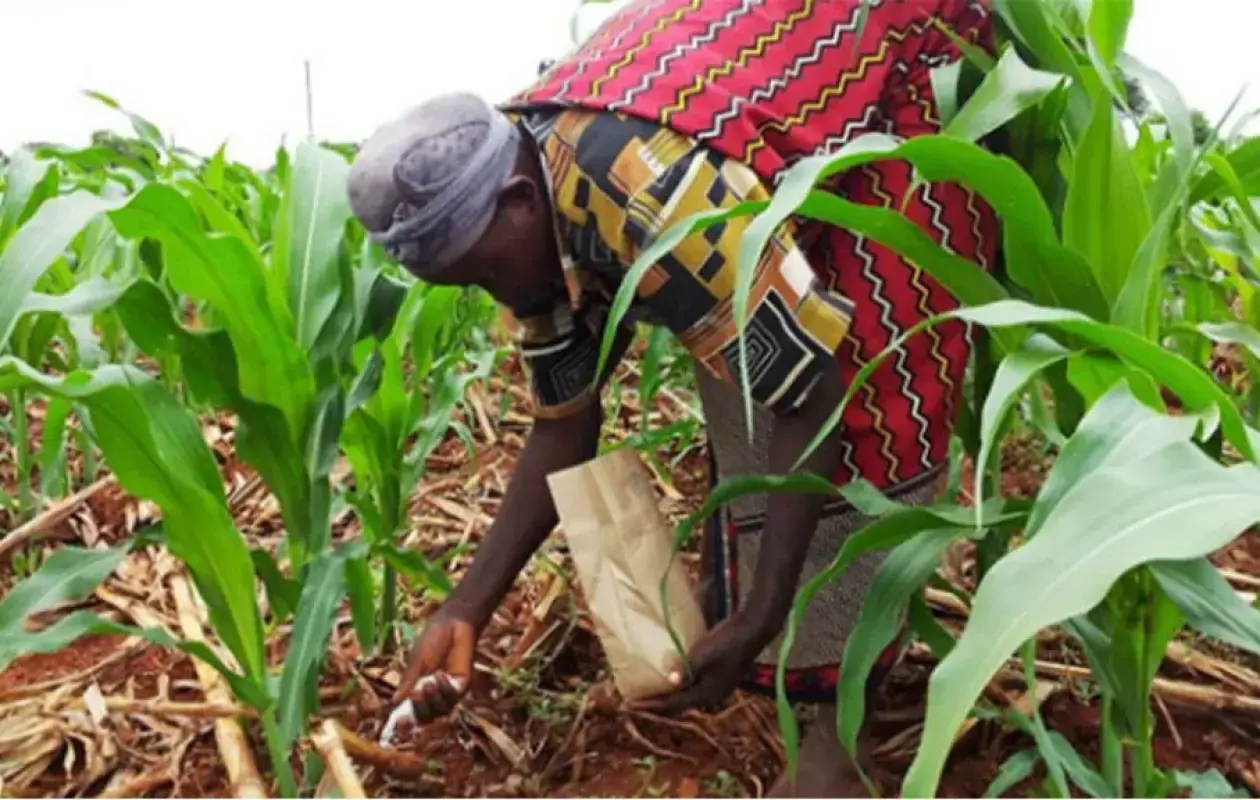
Kédougou : la campagne agricole 2026 confrontée à un déficit pluviométrique, malgré des poches excédentaires
As of September 2, 2026, the agricultural campaign in the Kédougou region is taking place in a context of overall rainfall deficit.
According to the weekly report No. 13 monitoring the 2026-2027 agricultural campaign covering the period from August 27 to September 2, 2026, thirteen of the fifteen monitored stations show cumulative yields lower than those recorded during the same period in 2025. Despite this situation, crops show an overall satisfactory dynamic, although the fall armyworm has appeared on corn in several departments.
Significant rainfall deficits
The rainfall situation observed in the Kédougou region on September 2, 2026, reveals an overall deficit trend, both compared to the previous year and to the seasonal normal established over the period 1991-2020.
The largest deficits compared to 2025 are recorded in Fongolimbi (-347.7 mm), Laminya (-235.7 mm), Missirah Sirimana (-235.5 mm), Saraya (-230 mm) and Bembou (-222 mm).
This situation contrasts, however, with that observed in certain localities. Ethiolo (+224 mm), Salémata (+177.5 mm) and Dakately (+141.4 mm) thus recorded total rainfall exceeding that of 2025.
Salémata marked by a break in rainfall
The bulletin also reports a break in rainfall in the department of Salémata, observed during the week of July 30 to August 5, 2026.
Compared to the 1991-2020 seasonal normal, only three stations show a surplus balance: Salémata (+183.9 mm), Ethiolo (+133.4 mm) and Saraya (+46.2 mm).
The other stations remain in deficit, with particularly large discrepancies, reaching -314.7 mm in Oubadji and -81.1 mm in Bandafassi.
This situation calls for a certain degree of caution in conducting the campaign, particularly in the face of the risk of water shortage.
Crops at encouraging stages of development
Despite the rainfall difficulties, field observations indicate a heterogeneous but overall dynamic cropping situation.
The first waves of maize and peanut planting have reached the generative stages. Some plots are in the heading and flowering stages for maize, while peanuts are in the pod formation and filling stage.
The other sowing waves, as well as fonio, rice, sorghum and cotton, are mainly in the growth and vegetative development phases.
Producers also continue to maintain the plots, including manual and mechanical weeding, spreading of fertilizers and herbicide treatments, contributing to maintaining good crop management.
The fall armyworm under surveillance
From a phytosanitary point of view, the main threat reported concerns the fall armyworm (FAW).
Attacks have been reported on maize in the departments of Kédougou, Salémata, and Saraya. At this stage, however, the damage is considered moderate, and the situation is being monitored by phytosanitary authorities.
A campaign to watch closely
Ultimately, the 2026 agricultural season in the Kédougou region is taking place in an environment marked by irregular and generally deficient rainfall. While some areas are still benefiting from above-average rainfall, the majority of monitored stations are showing levels lower than last year and below the seasonal average.
The progress of crops and the regularity of maintenance operations are nonetheless encouraging signs. Continued monitoring of rainfall and plant health is therefore crucial to anticipate the potential effects of water deficits and control pest infestations.



















Commentaires (0)
Participer à la Discussion
Règles de la communauté
💡 Astuce : Utilisez des emojis depuis votre téléphone ou le module emoji ci-dessous. Cliquez sur GIF pour ajouter un GIF animé. Collez un lien X/Twitter, TikTok ou Instagram pour l'afficher automatiquement.
Se connecter
Commentez avec votre profil, votre photo, et soyez averti des réponses.