Thiès : L’agroécologie au cœur des enjeux de souveraineté alimentaire et de protection de l’environnement
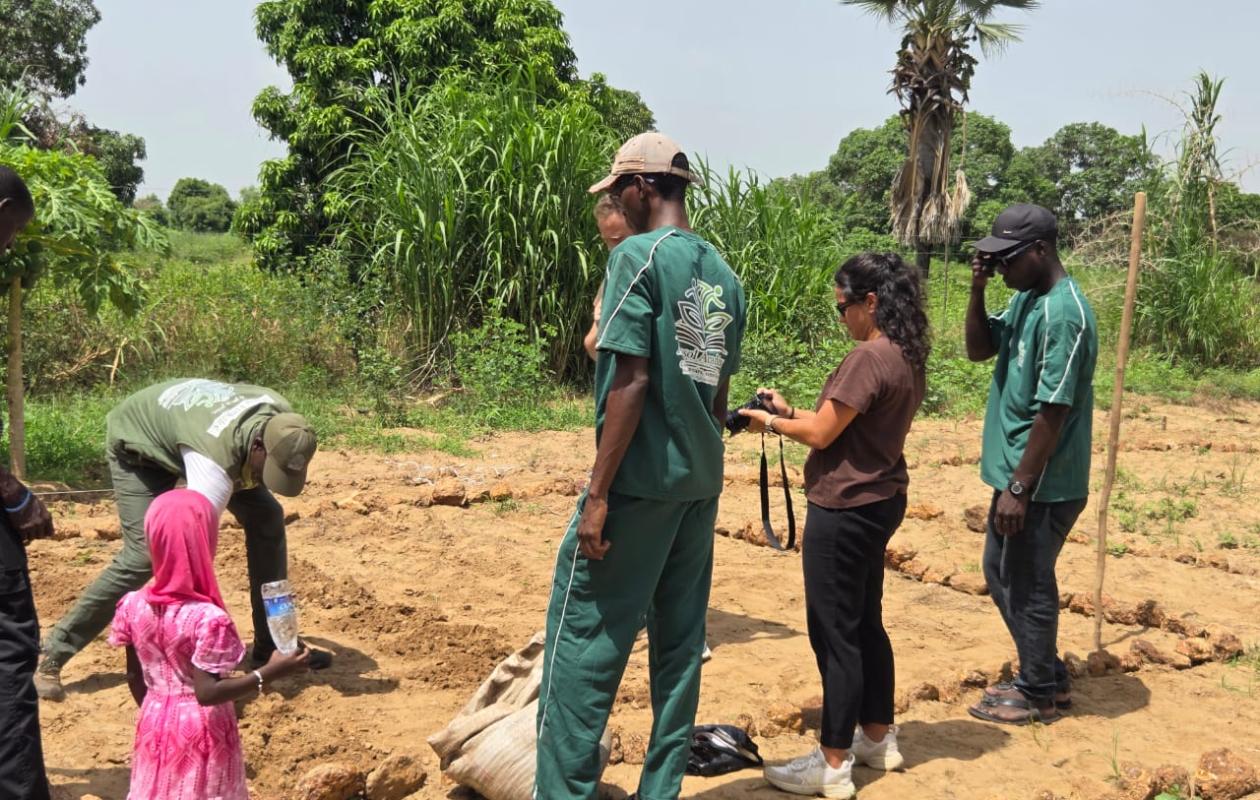
The agroecological transition is emerging as an alternative to strengthen Senegal's food sovereignty while preserving natural resources. This approach was the focus of a workshop on strengthening and disseminating skills related to the agroecological transition in Senegal, held this Monday at the Keur Demba Ngoye farm school in the commune of Fandène, under the banner of promoting sustainable and environmentally friendly agriculture.
For Malick Sow, an agroecology expert, one of the challenges is to move away from peanut monoculture and explore other, more promising agricultural crops. He therefore advocates for crop diversification, capable of meeting the food needs of populations while promoting more resilient production systems.
The expert also emphasizes the need to promote the circular economy and reduce the use of plastic sheaths, whose effects on ecosystems are a cause for concern. He believes it is possible to develop alternative production methods, without systematically resorting to these materials, in order to limit pollution and preserve soils.
For his part, Amadou Kanouté, executive director of CICODEV Africa (Pan-African Institute for Citizenship, Consumers and Development), emphasizes the responsibility of consumers in promoting sustainable food practices.
"As consumers, we promote sustainable consumption, which helps protect soils and ensures that everything we produce today can feed us without harming the environment," he explains.
According to the head of CICODEV Africa, this approach must also guarantee future generations the opportunity to benefit from the same natural resources. It is with this in mind that his organization is focusing on agroecology, considered a lever for adapting to and mitigating the effects of climate change.
This approach is based on the integrated management of several sectors, including agriculture, forestry, livestock, water, and seeds. It contributes in particular to preserving soil fertility, better managing water resources, and promoting carbon sequestration, thereby limiting greenhouse gas emissions.
“If we want food sovereignty and the sustainability of our production models, we need to ensure that we are able to produce without too much ruining of the basis of our productive resources: the land, the soils, the water and others,” emphasizes Amadou Kanouté.
Beyond agricultural practices, CICODEV Africa calls for the adoption of a national policy in favor of agroecology. The objective is to promote sustainable and responsible consumption, while encouraging production systems capable of reconciling food security, environmental preservation, and the needs of future generations.





















Commentaires (0)
Participer à la Discussion
Règles de la communauté
💡 Astuce : Utilisez des emojis depuis votre téléphone ou le module emoji ci-dessous. Cliquez sur GIF pour ajouter un GIF animé. Collez un lien X/Twitter, TikTok ou Instagram pour l'afficher automatiquement.
Se connecter
Commentez avec votre profil, votre photo, et soyez averti des réponses.