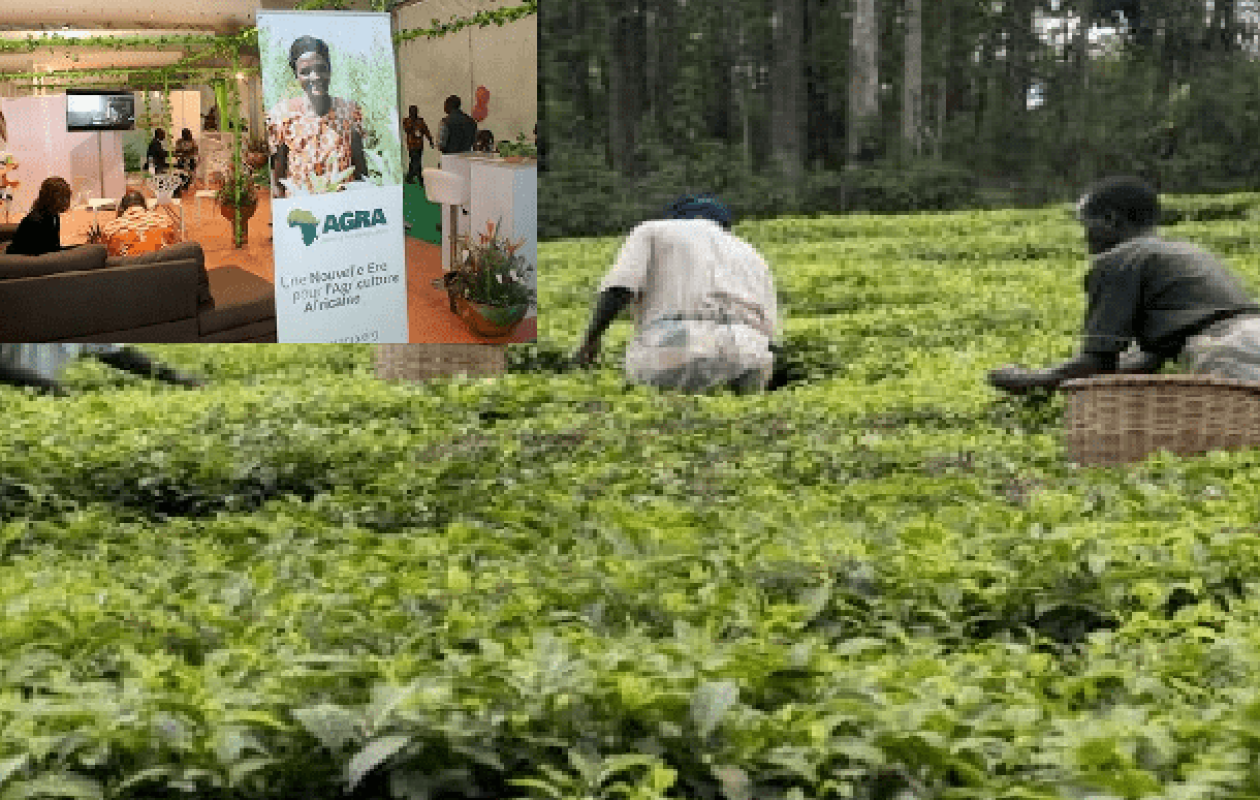
Vingt ans de Révolution verte en Afrique : Un bilan contesté face aux défis de 2035
As the Alliance for a Green Revolution in Africa (AGRA) celebrates its twentieth anniversary in 2026, African governments are embarking on a new ten-year agricultural strategy under the Kampala Declaration. However, eighteen years of national data now allow for a rigorous evaluation of the results of the AGRA model.
Beyond simply verifying the objectives set by AGRA at its creation in 2006, the central issue is to determine whether two decades of policies focused on increased fertilizer use, public subsidies, the promotion of commercial seeds, and various reforms have delivered on their promises. These massive investments were intended to accelerate productivity, optimize land use, strengthen resilience to risks, and improve the continent's food security.
However, data compiled by the Alliance for Food Sovereignty in Africa (AFSA) in a report clearly demonstrates that these results have not been achieved. Despite this failure, it is regrettable that the same assumptions and investment priorities continue to guide agricultural roadmaps and are being extended until 2035.
This assessment, conducted by AFSA, "is based on a methodology combining institutional documents, peer-reviewed research, and field data." The quantitative basis of this report relies in particular on a 2026 study by researcher Timothy Wise, using FAO data and covering thirteen target countries over eighteen years. "These figures were compared with the African Union's 2026-2035 strategy, the Malabo Final Review, AGRA internal reports, and an independent assessment carried out by the consulting firm Mathematica at the request of donors," emphasizes the report, presented this Monday during a webinar bringing together researchers, farmers, and community stakeholders.
The report's findings indicate that undernourishment in AGRA's target countries is projected to have increased by 58% by 2026, despite AGRA's stated commitment to reduce it. Similarly, the productivity gains promised by AGRA are more closely linked to the expansion of cultivated land than to improved yields. In fact, the cultivated area increased by 46% by 2026.
Even worse, adds Timothy Wise: "The number of people suffering from chronic undernourishment in the thirteen countries increased by 58%, from 94.6 million to 149.6 million, an increase almost identical to that recorded across sub-Saharan Africa as a whole. Even countries that have experienced relatively strong yield growth have not necessarily reduced hunger."
Senegal, which has implemented its own agricultural model, has succeeded in raising its production levels and reducing hunger, where the thirteen AGRA target countries have failed. "This is because we have never sacrificed diversity for the sake of productivity. For us, diversity is the engine of productivity," stated Famara Diedhiou of AFSA/Senegal, who urges agricultural stakeholders and policymakers to adopt agroecology, the only solution for sustainable agriculture.




















Commentaires (0)
Participer à la Discussion
Règles de la communauté
💡 Astuce : Utilisez des emojis depuis votre téléphone ou le module emoji ci-dessous. Cliquez sur GIF pour ajouter un GIF animé. Collez un lien X/Twitter, TikTok ou Instagram pour l'afficher automatiquement.
Se connecter
Commentez avec votre profil, votre photo, et soyez averti des réponses.