Révision constitutionnelle : La toge universitaire dans l’arène politique
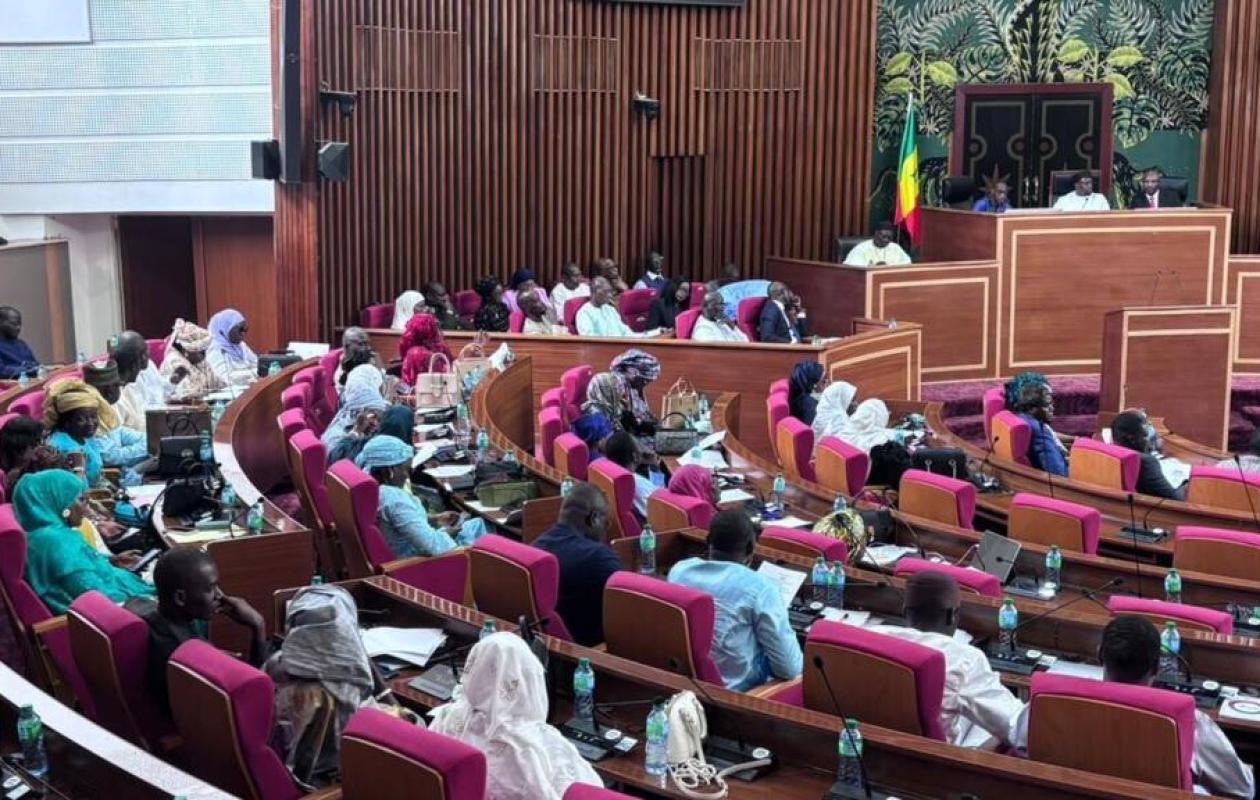
The constitutional revision adopted yesterday in the National Assembly, amidst a tense atmosphere, by Pastef deputies, is not only dividing the political class. It is also revealing a fault line among academics.
On one side, there is an appeal from 143 prominent figures, primarily university professors, calling for the adoption of the constitutional revision, "in the name of democracy." They believe the debate has gone on long enough and that it is time to act. "This reform did not arise from an impromptu initiative. It is the culmination of nearly twenty years of collective reflection. The 2009 National Consultations had already identified an imbalance of power. The National Commission for Institutional Reform formulated specific proposals to address it. In 2024, the National Consultations on Justice continued this reflection, before the 2025 National Dialogue on the Political System further enriched it."
On the other hand, a statement from the Network of Academics for the Defense of the Constitution and Democracy denounces this as "outright fraud" and "coercion." They believe there is a deliberate attempt by those lacking legitimacy to undermine the founding values of the Republic. "Parliamentarians are not authorized to unilaterally undertake a major revision of the Constitution and to act on behalf of the entire population on such a crucial issue. (...) Furthermore, how can Parliament appropriate the President of the Republic's draft constitutional revision and present it as its own proposal?" they ask.
But both sides would benefit from dropping the pretenses to help citizens better understand the situation. Indeed, when one emphasizes their title of university professor, they promote the assumption of academic neutrality. The uninitiated public might assume that these are scientists speaking to clarify the debate. Whereas in reality, it is more of a confrontation between two politically opposed camps.
Together yesterday, face to face today
The point here is not to say that everyone who signed has a political affiliation. Many people are on both lists, and we have no information about them. Therefore, it's not a matter of judging someone without knowing them. Consequently, there could be signatories motivated solely by deep convictions, without any bias.
However, when you look more closely at certain profiles, you quickly realize their political leanings. Among the "143 personalities," for example, are members of Pastef such as Daouda Ngom, Oumar Dia, Sidy Alpha Ndiaye, Mouhamed Abdallah Ly, Massamba Diouf, Abdoulaye Diouf, and Mohamet Lat Sack Diop, and the list is far from exhaustive. Some of them have resigned from their ministerial or director positions to demonstrate their loyalty to Ousmane Sonko.
On the other side, we find a similar pattern, notably former leaders or allies of Pastef who have chosen to remain within the presidential movement. These include Ndéné Mbodji, director of COUD; Mouhamadou Rassoulahi, president of the And Delo Ndioukeul movement; Samba Faye, spokesperson for the Republic of Values; and Jean Birame Gning, director of the CROUS of Kaolack and president of the Awalé party's cadre.
What are the consequences for academic credibility?
Given these identities, one is almost convinced of the partisan motivation behind both platforms. However, for the sake of clarity in public debate and intellectual honesty, all these actors should at least have highlighted, if not explicitly stated, their political affiliation. It would be easy to understand if they were speaking not as academics, but as members or supporters of a party or coalition.
In any case, this clash between academics is nothing new and, in fact, brings back unpleasant memories. At the height of the political crisis, around 2023 and 2024, two camps faced off: one supporting Macky Sall's regime and the other pro-Pastef. As is the case again today, it was the pro-Pastef faction that made the first move, followed by a reaction from the pro-regime side. Moreover, most of those on these two lists had, at the time, found themselves on the same anti-Macky list.
Furthermore, to date, there is no evidence that academics have helped one side prevail over the other. However, it is worth considering the potential consequences for the academic world. By taking political stances under the guise of academic discourse, do they not risk undermining the credibility of academic voices? As citizens, professors and researchers have the right to hold political affiliations. This is, in fact, a tradition in Senegal. The novelty lies in using the mantle of academia to express partisan positions, at the risk of seriously damaging the credibility of certified knowledge.









Commentaires (4)
Participer à la Discussion
Règles de la communauté
💡 Astuce : Utilisez des emojis depuis votre téléphone ou le module emoji ci-dessous. Cliquez sur GIF pour ajouter un GIF animé. Collez un lien X/Twitter, TikTok ou Instagram pour l'afficher automatiquement.
Se connecter
Commentez avec votre profil, votre photo, et soyez averti des réponses.