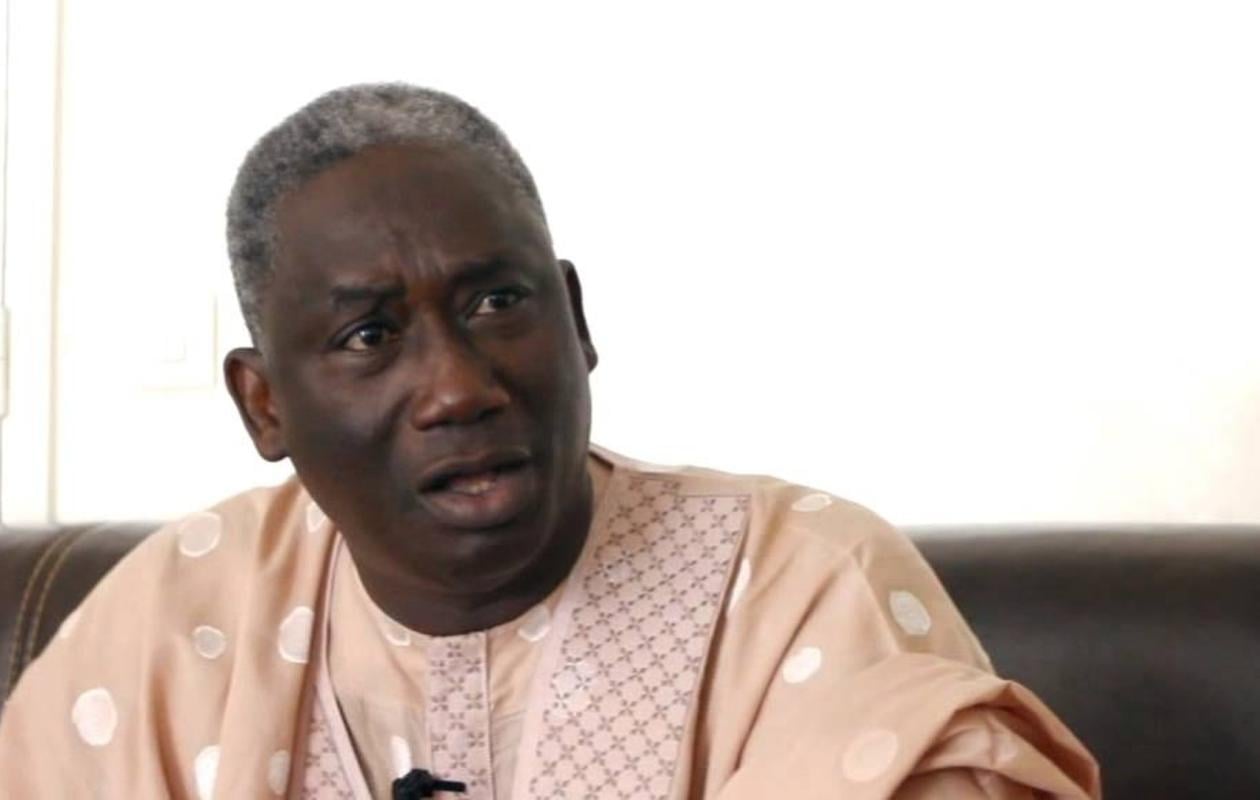
Abdou Fall pour un "compromis historique sénégalais"
Without succumbing to nostalgia for a bygone era when ideological debate held a central place in political struggle, I must admit that the exchanges of recent weeks with Babacar Gaye, Thierno Lô, and Kalidou Diallo, continued by Khafor Touré of the APR, Lamine Diouck of the PS, and Amadou Mbengue of the PIT, have not left me indifferent. Above all, they have convinced me of one thing: Senegal needs to rediscover the value of intellectual debate to prepare for a new chapter in its political history.
There was a time when…
We, who cut our political teeth in post-1968 Senegal, experienced a time when political differences were primarily about different visions of society, the state, the economy and Senegal's place in the world.
Senghor, Cheikh Anta, Abdoulaye Wade, Babacar Ba, Bara Diouf, Doudou Sine, Babacar Niang, Abdoulaye Ly, Amath Dansokho, Samba Diouldé Thiam, Kader Boye, Abdoulaye Elimane Kane, Moustapha Kassé, Maguette Thiam, Abdoulaye Bathily, Landing Savané, Moustapha Niasse, Djibo Ka, Diop Decroix and so many others each embodied in their own style profoundly different sensibilities, sometimes irreconcilable on a doctrinal level, but they had in common the view of politics as an intellectual exercise as much as a struggle for power.
The parties and their press of that time were, to borrow Antonio Gramsci's phrase, "collective intellectuals." And our generation established as a rule this requirement of "thinking one's actions and acting on one's thoughts."
It is in this atmosphere of permanent confrontation of ideas that the major families which have structured our political space for decades have asserted themselves: democratic socialism, social liberalism and the Marxist and nationalist left.
The third change of power in 2024 has given rise to the concept of sovereignty. This reflects a deep-seated desire among a segment of our youth and our people for a radical break with the past. It would be futile to deny this, just as it would be equally dangerous to reduce Senegal's political future to a simplistic, binary confrontation between two camps.
Our country has experienced three major peaceful transfers of power: in 2000 with Abdoulaye Wade, in 2012 with Macky Sall, and in 2024 with the new majority. Senegal's capacity for peaceful change of majority is one of the great strengths of our democracy. But it now presents us with a new challenge.
After changes of government, we need to build alternatives, particularly in the governance of our countries.
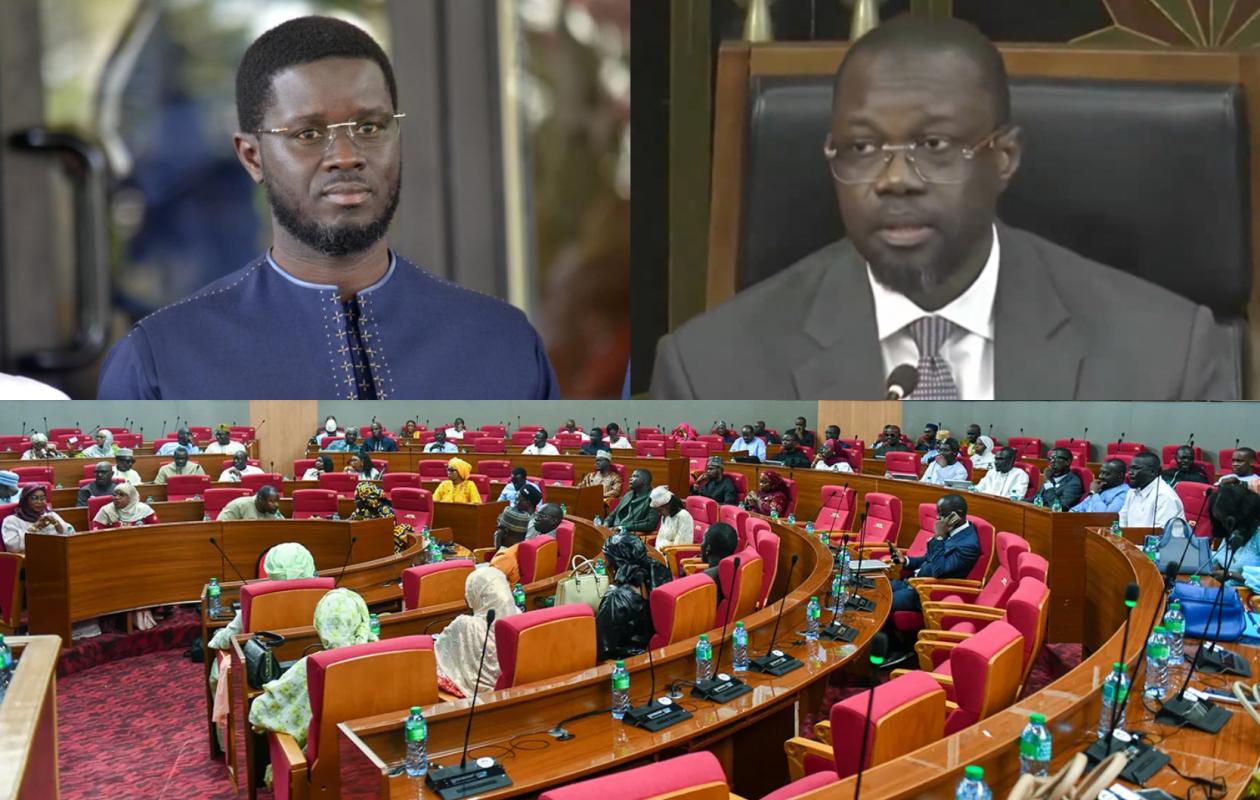
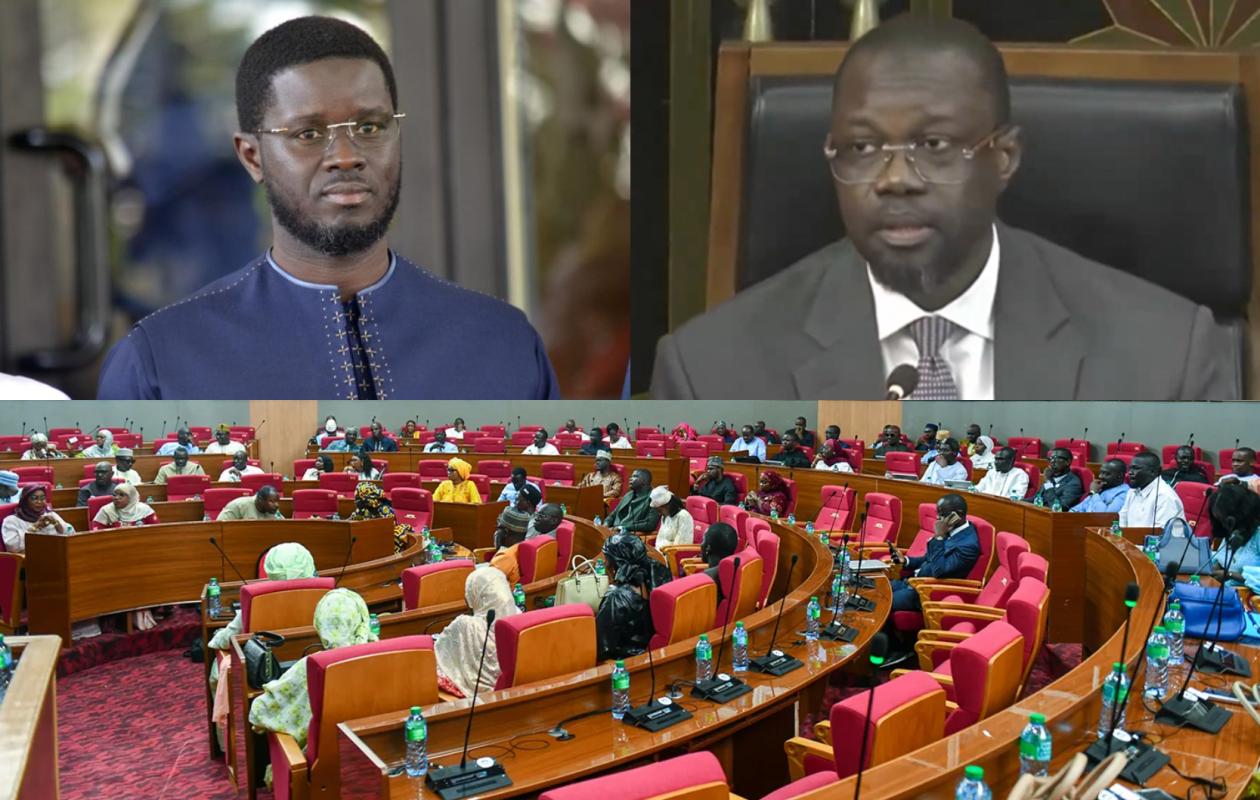
The disputes between rival political factions in power are now being expressed in a very peculiar way. The conflicts within the ranks of the current majority raise a question that transcends the protagonists: how to prevent the political crisis within the institutions from turning into a crisis of the regime?
The time has come for political forces to become aware of their historical responsibility
This is where the historical responsibility lies for all forces that recognize themselves in the Republic, democracy and the rule of law.
Senegal possesses a considerable advantage. The main political parties likely to participate in a future alternative have, to varying degrees, experience in exercising state power. The Socialist Party governed for several decades. The PDS (Senegalese Democratic Party) brought about the 2000 change of power. The APR (Alliance for the Republic) led the 2012 change of power and held office for twelve years. In addition to these forces, the components of the democratic left, the center, and civil society have each contributed, in their own way, to building our democracy.
This experience represents an invaluable national political asset. Today, it allows for the emergence of a responsible, republican opposition, capable of offering the country a new vision within the framework of a coalition for democratic renewal and nation-building.
Since the 1990s, Senegal has experimented with different forms of dialogue and broader governance. Under Abdou Diouf, long-opposed forces participated in the management of the state. After 2000 and 2012, this tradition of dialogue and shared governance continued, albeit in other forms.
It is worth recalling that this practice is linked to an older reflection on "historical compromise", which was developed by Enrico Berlinguer of the Italian Communist Party in the 1970s. It was extended in Senegal by the philosopher Doudou Sine of the Nation and Development Club, close to the Socialist Party of Senegal.
Building a new historic compromise
The idea was simple. In a pluralistic society facing major challenges, it is necessary to seek, beyond differences, a foundation of national values and interests that will allow the country to progress in stability. It is this idea that might be worth revisiting.
The "historic compromise" that Senegal might need cannot be the one from the 1970s or 1980s. The country has changed. Africa is entering a new historical phase. We must devise a compromise adapted to this new Senegal.
It could bring together, without confusing them, the traditions of social liberalism, social democracy and the democratic left, while integrating the aspirations for sovereignty carried by the new political generation.
The aim would be to build a new culture of governance around fundamental principles: the Republic, democracy, the rule of law, pluralism, public freedoms, national unity and social cohesion.
It should lead to a common program of recovery and rebuilding around clear priorities such as the rehabilitation of the State and institutions, the strengthening of the national private sector and SMEs, energy and food sovereignty, the reform of education and health, the reduction of territorial and social divides, the transformation of our economy into a productive economy, creating wealth and jobs.
Building a strategic state
The question is no longer one of choosing between the state and the market. It is about building a strategic state and a productive economy. Sovereignty should not be conceived as a retreat.
It must give Senegal the capacity to manage, in a clear-sighted and planned manner, its economic, energy, food, technological, cultural, and diplomatic choices, while remaining open to the world. Nations that progress are those that understand that we are in an era of constructive interdependence.
The challenge is to transform the experience of previous generations into a resource for the future. Just as the French left succeeded in 1972 with the common program uniting socialists, communists and radicals, the next team of renewal should come together upstream around a program to be carried out when the time comes by a government of broad national unity, without exclusion or spirit of revenge.
This fundamental debate deserves to be opened up, without passion and without recriminations about the past. A debate where the different political traditions would confront their visions, recognize their convergences, learn from their experiences, and define the foundation of a new national political contract.
Because after having acquired, throughout our history, our sovereignty in choosing our leaders, it is time for the Senegalese to learn to build together, in solidarity and co-responsibility, a true alternative for national salvation.

















Commentaires (8)
C’est toujours comme ça : on ne fait rien quand on a le pouvoir et on a des idées après l’avoir perdu
merci M Fall
Participer à la Discussion
Règles de la communauté
💡 Astuce : Utilisez des emojis depuis votre téléphone ou le module emoji ci-dessous. Cliquez sur GIF pour ajouter un GIF animé. Collez un lien X/Twitter, TikTok ou Instagram pour l'afficher automatiquement.
Se connecter
Commentez avec votre profil, votre photo, et soyez averti des réponses.