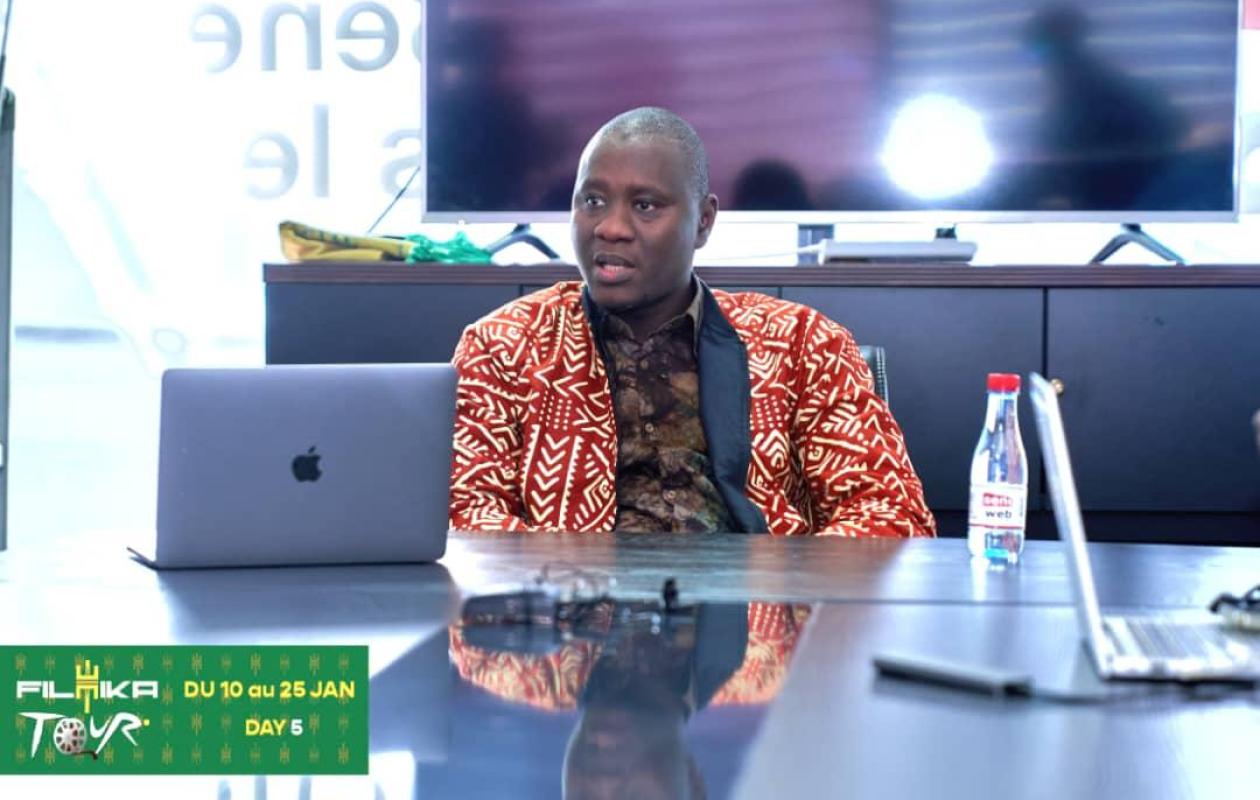
Au-delà du droit à l’information : quand l’État doit choisir entre soutenir ses champions ou les laisser porter seuls le poids de leur développement (Par Souleymane Fall)
United Nations General Assembly Resolution 59(I), adopted on December 14, 1946, proclaims that "freedom of information is a fundamental human right and the touchstone of all freedoms." This assertion should be far more than a solemn reference in speeches: it should serve as the compass for any public policy seeking to defend democracy, pluralism, and sovereignty.
However, in Senegal, we face a paradox: we regularly affirm the strategic importance of the press and information, while abandoning our media companies in an economic environment that does not always allow them to consolidate their gains, invest, innovate and conquer new markets.
The issue of unpaid wages is obviously serious. It directly affects women and men who depend on their work for their livelihood and cannot be trivialized. However, it cannot, on its own, constitute a comprehensive analysis of the crisis. Reducing the debate solely to the cash flow difficulties of media companies is like observing the smoke without addressing the fire.
The real question is eminently political: what place does the State of Senegal want to give to its media companies in the construction of its digital sovereignty and in its international influence?
The example of Seneweb is, in this respect, particularly revealing.
Since 1999, Seneweb has established itself as a pioneer in information and digital communication platforms in Senegal and Francophone West Africa. Long before the explosion of social networks as we know them today, a Senegalese platform had already embraced the digital age. When I remind some partners that the Seneweb forum existed before Facebook, they sometimes struggle to grasp the significance of this precedence. Yet, it tells a fundamental part of our digital history.
Nearly three decades later, Seneweb remains a major player in the Senegalese and West African digital ecosystem in terms of audience reach. This is not simply a self-congratulatory statement: audience data, as well as independent international measurement and ranking tools, consistently place the platform among the major players in the African digital space.
And yet, one question deserves to be asked directly: how much has the State of Senegal invested in the strategic support of this pioneer to enable it to strengthen its development, accelerate its African expansion and consolidate its international influence?
The answer to this question should concern us all.
Because Seneweb is not just a private company. Its journey illustrates the ability of Senegalese entrepreneurs to build, from within Senegal, platforms capable of reaching millions of people and extending far beyond our borders. As such, its experience should inform a much broader discussion on our policy for supporting national champions in the digital and media sectors.
In our countries, we sometimes maintain a strange way of treating our champions: instead of helping them grow, we first seek to create competitors for them.
This culture needs to change.
Competition is healthy when it stems from innovation, investment, and merit. It becomes counterproductive when it is seen as an end in itself, instead of primarily seeking to foster the emergence of national companies strong enough to face international competition.
Just look at what happened in the United States with the tech giants. The GAFAM (Google, Apple, Facebook, Amazon, Microsoft) became global players because they operated in an environment where American public policies, public investment in research, infrastructure, markets, and the innovation ecosystem largely contributed to creating the conditions for their rise. The American government didn't see the fact that a company became dominant in its domestic market as a problem to be solved; rather, it built an ecosystem within which American companies could establish themselves as global leaders.
Why can't we have the same ambition for our African champions?
We cannot claim digital sovereignty while leaving our key players to struggle alone for their survival and development. We cannot aspire to Senegal's international prominence while neglecting Senegalese companies that already possess the potential, know-how, and experience necessary to achieve this ambition.
It is precisely here that the reform proposal formulated by the CDEPS, within the framework of the revision of the General Tax Code, takes on its full meaning.
The tax debate surrounding media companies should not be presented as a corporatist demand or a privilege granted to a particular sector. It must be addressed as a major issue of economic policy and sovereignty. If we consider information essential to democratic functioning and if we want Senegalese companies to be able to invest in digital technology, create jobs, produce content, and reach African and international audiences, then their tax framework must absolutely incorporate this mission and this reality. Haven't we recently witnessed the establishment of international media companies in Senegal, driven by two main objectives that need not be elaborated on here?
The reform proposed by the CDEPS therefore deserves to be examined with the greatest attention, not only to resolve the immediate difficulties of press companies, but to create the sustainable conditions for their future growth.
We need to move away from a reactive approach where the state only intervenes when companies are already on the brink of collapse. An informed public policy must act upstream: it identifies leading companies, supports them, helps them invest, modernize, and conquer international markets.
It is this strategic vision that is still too often lacking in our public policies.
Senegal will gain nothing from seeing its most successful digital companies remain confined to their national market while foreign platforms capture the bulk of the value, audience, data and influence.
Our ambition should be exactly the opposite: to make Senegal a land of emergence for African champions capable of competing with international platforms.
Seneweb demonstrates that this is within our reach.
Since 1999, a Senegalese company has made the bold bet on digital technology, well before it became the center of gravity of the global economy. It has built its audience, developed its platforms, and kept pace with evolving user habits. The question today is therefore no longer whether Senegal is capable of fostering digital champions.
He has already proven it.
The question is whether we will finally have the political will to firmly support them when they emerge.
Because a strategic state does not simply acknowledge the existence of a champion: it gives it the means to change its dimension.
And if we really want to address digital sovereignty, international influence and information independence, it is most certainly with this requirement that we must begin.
CEO Salam Fall told me that he had met many fellow citizens during his last stay in Paris, who kept repeating to him: "Seneweb no longer belongs to you, it now belongs to the Senegalese people." I fully share this sentiment: this phrase perfectly captures the collective ownership of this media outlet by an entire people.
Souleymane Fall
Seneweb HR Department




















Commentaires (3)
Participer à la Discussion
Règles de la communauté
💡 Astuce : Utilisez des emojis depuis votre téléphone ou le module emoji ci-dessous. Cliquez sur GIF pour ajouter un GIF animé. Collez un lien X/Twitter, TikTok ou Instagram pour l'afficher automatiquement.
Se connecter
Commentez avec votre profil, votre photo, et soyez averti des réponses.