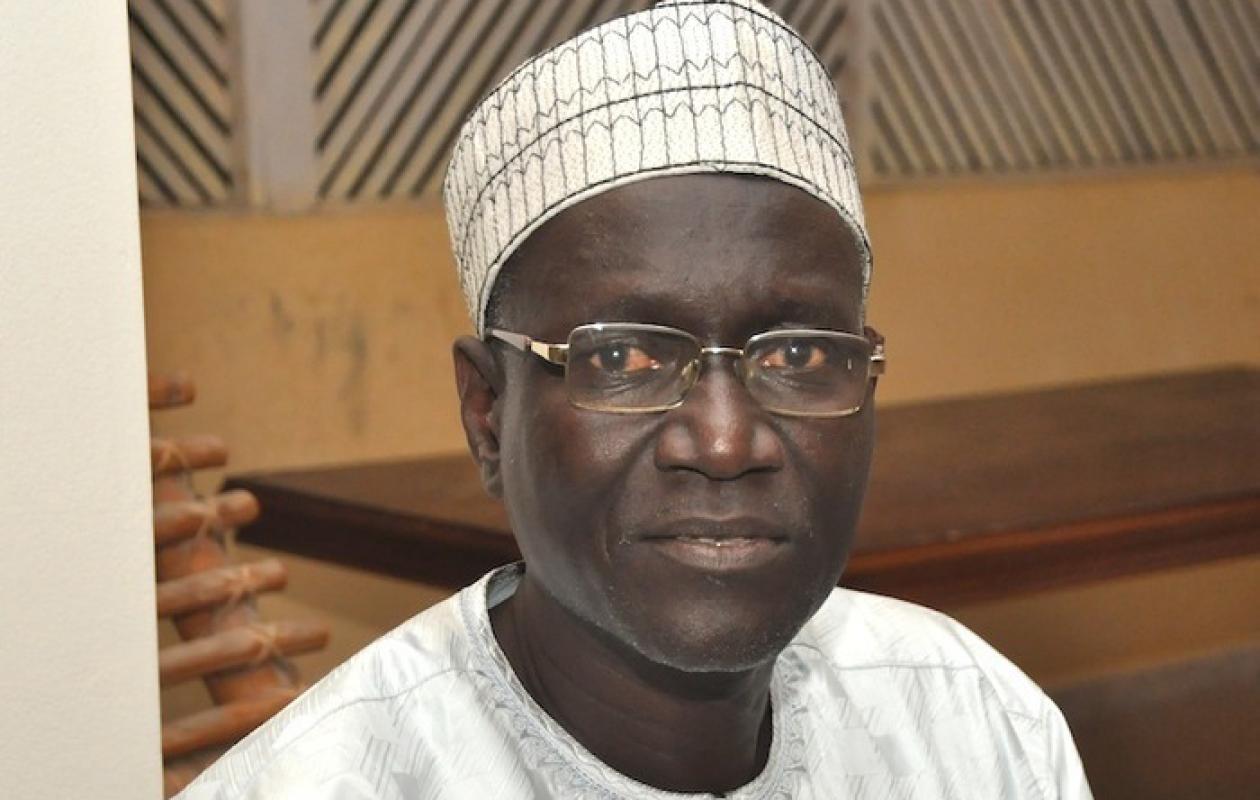
DANS LE PROLONGEMENT DE LA RÉFLEXION DE M. LE MINISTRE ABDOU FALL : Pour un nouveau contrat politique national (Par Mansour Sy)
Minister Abdou Fall's opinion piece seems to me to open a particularly important debate for our country. It comes at a time when Senegal, after several democratic transitions, appears to be called upon to reflect on a new stage in its political history.
I particularly remember from his reflection the idea that our country would benefit from rediscovering the taste for debate of ideas , not to reconnect with the ideological clashes of a bygone era, but to allow different sensibilities to confront their visions of Senegal and its future.
I also believe that the question raised about a "historical Senegalese compromise" deserves further exploration. This would obviously not be about replicating past compromises, but about seeking, under current conditions, what could allow different forces to work together on essential issues.
It is from this perspective that I would like, very modestly, to extend the reflection by asking a question
:
How could we extend this search for convergences and gradually bring about a new national political contract?
Minister Abdou Fall points out that several major Senegalese political forces have significant experience in exercising state power.
I believe that this experience does indeed constitute a national political asset that it would be a shame not to value.
But it seems to me that Senegal also has a much larger asset: its human capital .
This can be found in all components of our society: in the administration and public services, in businesses, universities and research centers, in professional and trade union organizations, in civil society, in local authorities, among entrepreneurs, managers, teachers, researchers, younger generations and, of course, within our diaspora.
The question then might be how to better mobilize this human, professional and intellectual wealth in service of the country.
It seems particularly necessary to seek ways to put this human capital at the exclusive service of the national interest , beyond affiliations and particular interests.
I do not believe that a new political contract should necessarily seek to bring together all the forces at play indiscriminately.
It would seem more useful to identify, across the entire national political, economic, social and intellectual landscape, the forces that have an interest in working together and that accept the cross-fertilization of their experiences and skills .
Therefore, it would not necessarily be a question of seeking political uniformity.
It would be more a matter of seeking convergences that are useful to the country .
The question could be less:
Who should meet whom?
What can we do together that we couldn't do separately?
This way of posing the problem might allow us to move beyond a logic of simply adding up devices or affiliations.
It would be more about creating synergy between different skills, experiences and sensitivities.
This is where the concept of cross-fertilization seems to me to be able to contribute something to the discussion.
Senegal has multiple experiences that too often remain compartmentalized.
The experience of the state could engage more in dialogue with that of the private sector.
The university and research could be more connected to business and the needs of the economy.
The generations who witnessed the major milestones in the building of our state and our democracy could pass on their experience to new generations.
In return, they could bring their new skills, their creativity, their mastery of technologies and their different relationship to the world.
Our diaspora could also be further mobilized as a reservoir of skills, experiences and international networks.
Professional, trade union and citizen organizations could also contribute to this collective production of solutions.
I believe that this cross-fertilization of experiences, generations and skills could constitute one of the means of giving concrete expression to the new national political contract.
This reflection should not, however, lead us to lose sight of the immediate realities facing our country.
We cannot remain indifferent to the contradictions that are currently manifesting themselves at the highest levels of the State.
Beyond the people and responsibilities in these disputes, what should concern us above all is their possible impact on the functioning of the State, on citizens' trust and on the country's ability to respond to economic and social emergencies.
Senegal cannot afford for political tensions to permanently divert attention from the essential concerns of the population.
Senegalese people expect answers to their daily struggles. They expect jobs, income, efficient public services, an improvement in their living conditions, and prospects for their children.
Social suffering cannot be put on hold while political forces clash.
That is why the debate on a new political contract should perhaps not be postponed to a future political deadline.
It could also aim to contribute, right now , to improving the situation of Senegalese people and to providing concrete answers to the difficulties they are experiencing.
The responsibility of the forces involved could thus be twofold: to contribute to preserving the stability and normal functioning of the institutions, but also to participate, each according to its means, in the search for solutions to the current difficulties of the country.
I understand Minister Abdou Fall's reflection as an invitation to revisit the various political traditions that have contributed to shaping our history.
I believe it is important to preserve this diversity.
The new political contract should not require different groups to renounce their convictions.
It could instead seek an agreement on a few fundamental principles: the Republic, democracy, the rule of law, pluralism, public freedoms, national unity, social cohesion and the primacy of the national interest.
Disagreements over resources, economic, social or institutional policies would naturally remain legitimate.
They even constitute an asset when they allow for a genuine debate of ideas.
The objective would therefore not be to eliminate differences, but to ensure that they can contribute to a collective reflection on major national priorities.
I believe that this is the level at which the discussion could be usefully deepened.
The historic compromise should perhaps not stop at a political convergence.
It could lead to a national transformation pact , built around a limited number of clearly defined priorities.
These could include:
;
The objective would therefore not only be to govern together , but to seek to transform together .
In my view, any approach of this nature should be guided by a simple principle: the national interest must remain superior to particular interests.
This obviously does not mean the disappearance of pluralism or political differences.
Rather, it means that the forces that would agree to participate in such an approach should be able, on major national issues, to transcend their own interests when these conflict with the general interest.
Power itself should be placed in this perspective.
It could be considered primarily as a means of implementing a national project , and not as the ultimate goal of political engagement.
It also seems to me that preparing an alternative could follow a different approach from those we have often seen.
Rather than starting by seeking a political coalition, why not start by bringing together the forces that genuinely want to contribute to finding solutions for the country ?
Forums for reflection could bring together political leaders of different persuasions, experts, academics, professionals, entrepreneurs, representatives of social organizations and younger generations.
They could compare their diagnoses, learn from past experiences and together seek answers to the country's major challenges.
Political convergences could then gradually be built around the work accomplished.
First produce the ideas and solutions; then build the convergences; and only, when the time comes, seek the political forms capable of carrying them.
I believe this is where the discussion deserves to continue.
Senegal has acquired significant experience in democratic transitions.
We now need to think about how to build alternatives capable of sustainably mobilizing the country's human, intellectual and economic resources .
But building the alternative does not necessarily mean waiting for the next election.
This also means starting now to think, propose, act and work towards improving the living conditions of our fellow citizens.
An alternative should therefore not be just a new team called upon to exercise power.
It could be based on:
a vision; a plan; a method; skills; a culture of governance; and an ability to produce results.
This is why I believe that the political capital accumulated by different generations could usefully be linked to the human capital available in all segments of the nation. Conclusion
The reflection proposed by Minister Abdou Fall seems to me to constitute a useful invitation to reopen the debate on the political future of Senegal.
The idea of a "historic Senegalese compromise" could, it seems to me, be extended by that of a new national political contract , provided that this is not reduced to a simple agreement between political formations.
It could be more: a framework allowing the forces present who wish to do so to confront their ideas, to cross their experiences, to pool their skills and to seek together solutions to the major challenges of the country.
But this reflection cannot be separated from the realities experienced today by our fellow citizens.
The current suffering of the Senegalese people compels us not to wait until tomorrow to act.
Political debate, the exchange of ideas and the search for common ground must also contribute to addressing the urgent needs of the present: employment, purchasing power, access to essential services, education, health, inequalities, the difficulties faced by businesses and the prospects offered to our youth.
Senegal probably doesn't need all its forces to think in the same way.
On the contrary, it might be necessary to make their diversity an asset, through a cross-fertilization of experiences, generations and skills .
The essential question could then become:
How can we mobilize the best that our country has to offer to build together what it can become, while responding today to the suffering of our fellow citizens?
It is from this perspective that national human capital could be considered a strategic resource of the Nation.
After the changes in power, we need to build the alternatives.
And to build them, perhaps we need to learn more about working together, without blurring the lines, exclusively in the service of the national interest and the well-being of the Senegalese people.
In my view, this is one of the paths that could give full meaning to the debate opened by Minister Abdou Fall on a new historical compromise and on the construction of a genuine alternative for national salvation.
Mansour Sy











Commentaires (2)
Participer à la Discussion
Règles de la communauté
💡 Astuce : Utilisez des emojis depuis votre téléphone ou le module emoji ci-dessous. Cliquez sur GIF pour ajouter un GIF animé. Collez un lien X/Twitter, TikTok ou Instagram pour l'afficher automatiquement.
Se connecter
Commentez avec votre profil, votre photo, et soyez averti des réponses.