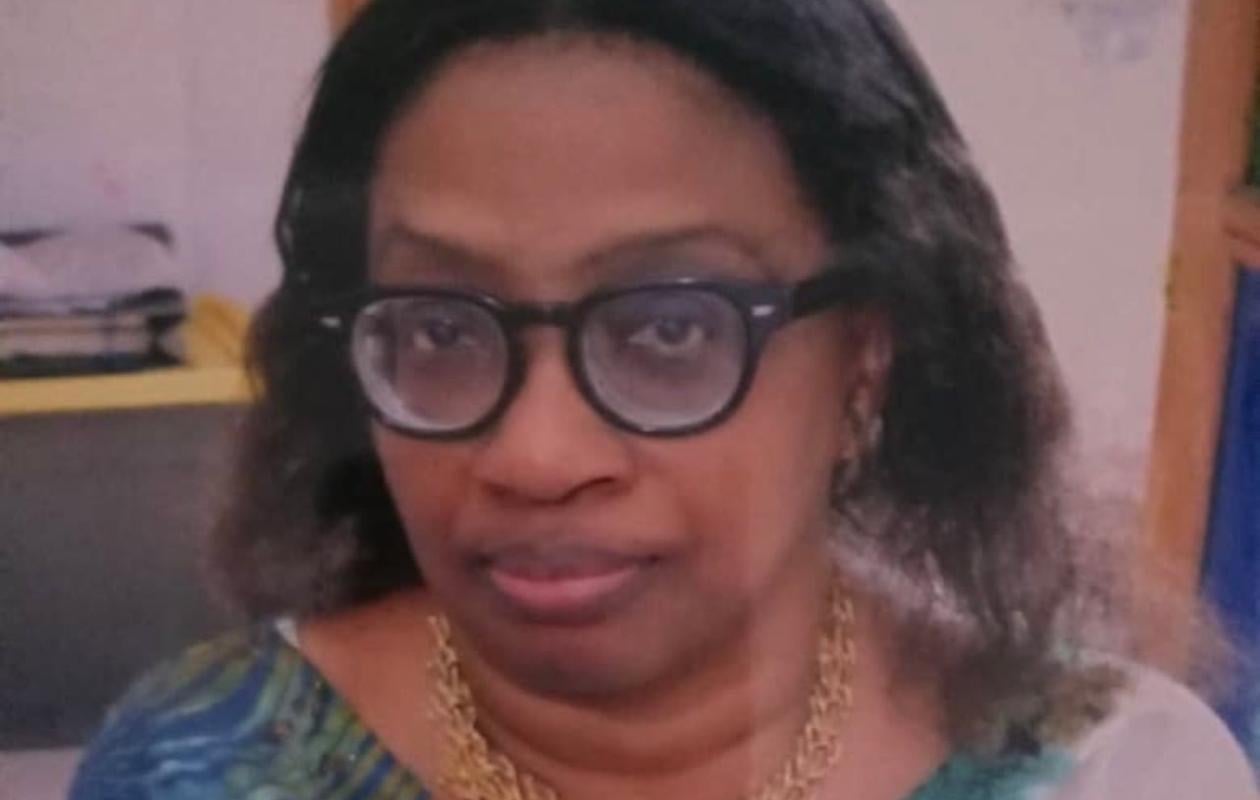
Economie du Sénégal : Ma contribution dans l’effort de redressement en cours [Par Marie Bâ AIDARA]
Moody's fourth downgrade of Senegal's sovereign credit rating, now lowered to Caa2 with a negative outlook , on August 28, 2026, constitutes a major warning sign. It comes during the IMF's mission to Senegal (August 19 to September 1). The difficulties highlighted include high refinancing needs, the debt burden, liquidity pressures, and the lack of a new program with the IMF, which limits the country's access to concessional financing and increases its dependence on the regional financial market. According to the agency, this reflects a rise in Senegal's default risk, in a context marked by persistent pressures on public finances, as Dakar seeks to restore investor confidence and improve the sustainability of its public finances.
What measures are needed to revive the economy and restore confidence?
This fourth downgrade should be seen primarily as a serious warning calling for a strong, coherent and credible response. Beyond the rating itself, the fundamental issue is the restoration of confidence: confidence of citizens, investors, technical and financial partners, businesses and markets.
Faced with this situation, Senegal must implement a genuine national economic and financial recovery plan (PNREF) based on the following priority measures:
1. Conclude an agreement with the IMF
Following a mission to Dakar from August 19 to September 1, 2026 , the International Monetary Fund (IMF) and the Senegalese authorities reached an agreement a 36-month Extended Credit Facility (ECF) of approximately $2.2 billion to support Senegal's economic and financial reform program. The planned program places significant emphasis on restoring public finances while protecting vulnerable households. The fiscal strategy will focus in particular on "strengthening domestic resource mobilization and streamlining expenditures," while consolidating social safety nets.
It is not simply a matter of securing new funding; the conclusion of this long-awaited new program will restore the confidence of partners and facilitate access to less expensive financing. Senegal must continue reforms aimed at strengthening public financial management, budgetary governance, transparency, and debt management.
2. Implement a realistic debt management plan
Senegal must conduct a comprehensive review of its public debt, guarantees, and potential commitments to gain a complete and transparent understanding of the state's financial situation. To this end, the government has just announced the implementation of a Debt Treatment Plan for Senegal (PTDS).
It is necessary to:
• prioritize concessional financing and long-term financing;
• limit the use of expensive short-term loans;
• improve the management of repayment deadlines;
• gradually reduce the weight of debt servicing in the budget;
• avoid debt being used primarily to finance operating expenses.
Each new loan should be subject to a clear requirement: what economic impact, what profitability, and what repayment capacity?
3. Accelerate fiscal consolidation without stifling growth
The 6.7% growth projected for 2025 is linked to the first full year of oil production. Excluding hydrocarbons, growth was only 2.2%. However, it rebounded to 4.7% in the first quarter of 2026, driven by private consumption. Reducing the budget deficit is essential. It should be noted that it decreased from 13.4% of GDP in 2024 to 6.4% of GDP in 2025. The government must prioritize reducing inefficient spending, waste, and administrative duplication. For example, several agencies with conflicting jurisdictions, such as ASEPEX, the Bureau de Mise à Niveau (Upgrading Office), ADEPME, and CICES, could be consolidated into a single, larger agency to streamline public spending. We must also preserve spending that prepares for the future: education, health, priority infrastructure, agriculture, industry, digital technology and vocational training (in this regard, we suggest that the Authorities refrain from dissolving ANAMO). The objective must be to move from a logic of imposed austerity to a logic of effective budgetary discipline .
4. Broaden the tax base rather than continually increasing the pressure on the same taxpayers.
It should be noted that 28.6% of tax revenues collected come from income tax (IR). Improving public revenues must be based on a fairer and more efficient tax system .
This notably implies:
• a better fight against tax fraud and evasion (every year Senegal loses approximately 161 billion FCFA due to these two scourges);
• the complete digitalization of tax and customs administrations;
• the reduction of unjustified tax exemptions;
• the gradual integration of informal activities into the formal economy;
• better taxation of highly profitable activities, while respecting national competitiveness.
Senegal needs to seek more revenue without stifling businesses and the middle class .
5. Make domestic production the top priority
The financial recovery will only be sustainable if it is based on a productive economy. Senegal must reduce its excessive dependence on imports (which amounted to 3,284 billion CFA francs at the end of June 2026) by providing greater support to:
• agriculture and agri-food processing;
• fishing and the blue economy;
• the manufacturing industry;
• livestock farming;
• tourism;
• digital technology;
• small and medium-sized enterprises.
The objective should be simple: produce more in Senegal, process more in Senegal and export more from Senegal .
6. Gradually clear the state's domestic debt
State payment delays weaken businesses, reduce their cash flow and limit their ability to invest and create jobs.
A transparent and progressive plan for clearing domestic debt must therefore be implemented, prioritizing the most vulnerable small and medium-sized enterprises. Fortunately, 300 billion FCFA has been allocated in the 2026 budget. Economic recovery also depends on restoring trust between the government and the private sector.
7. Restore state transparency
Trust is regained first and foremost through transparency. Authorities must communicate regularly on:
• the actual level of debt;
• budget execution;
• the financial commitments of the State;
• the results of the reforms undertaken;
• the use of public resources.
Senegal needs to put in place a genuine public dashboard for economic recovery , allowing citizens, investors and partners to objectively monitor the progress made.
8. Establish a national unit to monitor economic recovery
An economic and financial crisis unit, placed under the authority of the Ministry of Economy, Finance and Planning, could ensure the regular monitoring of key indicators: budget deficit, debt, debt service, tax revenues, investments, domestic debt and growth. This structure should regularly produce a public report on the progress of commitments made.
9. Re-establish a national consensus on the economy
Senegal's recovery cannot be the sole responsibility of the government. It must involve the state, the private sector, trade unions, local authorities, academics, experts, and civil society. A national pact for stability and economic recovery would allow for the definition of common priorities and provide economic actors with a medium- and long-term vision. Senegal's financial credibility will be built on transparency, rigor, productivity, and consistent reforms.
Marie Bâ AIDARA
Economist/Writer
Former Minister












Commentaires (3)
D’abord, on ne conclut pas un accord avec le FMI, on accepte les mesures imposées par le FMI.
Ensuite, quand on analyse un problème on ne peut négliger le critère le plus important, c’est-à-dire les vols, détournements de deniers publics par des gens connues et indexées par les corps de contrôle et qui sont libres et d’autres exilés à l’étrange donc il faut nommer les choses.
Enfin, on ne peut pas renoncer à ses ressources et compter sur des miettes pour se développer.
Tout le monde sait que le FMI n’a jamais aidé un pays a se développer, ce n’est pas sa mission cet organe travaille pour les ennemis des pays qu’il prétend aider.
Le pays doit avoir des dirigeants honnêtes, intègres, et respectant les ressources publiques et les biens publics, les intellectuels doivent également avoir la même honnêteté, la longueur un article de presse ou d’une contribution n’a jamais développé un pays.
Participer à la Discussion
Règles de la communauté
💡 Astuce : Utilisez des emojis depuis votre téléphone ou le module emoji ci-dessous. Cliquez sur GIF pour ajouter un GIF animé. Collez un lien X/Twitter, TikTok ou Instagram pour l'afficher automatiquement.
Se connecter
Commentez avec votre profil, votre photo, et soyez averti des réponses.