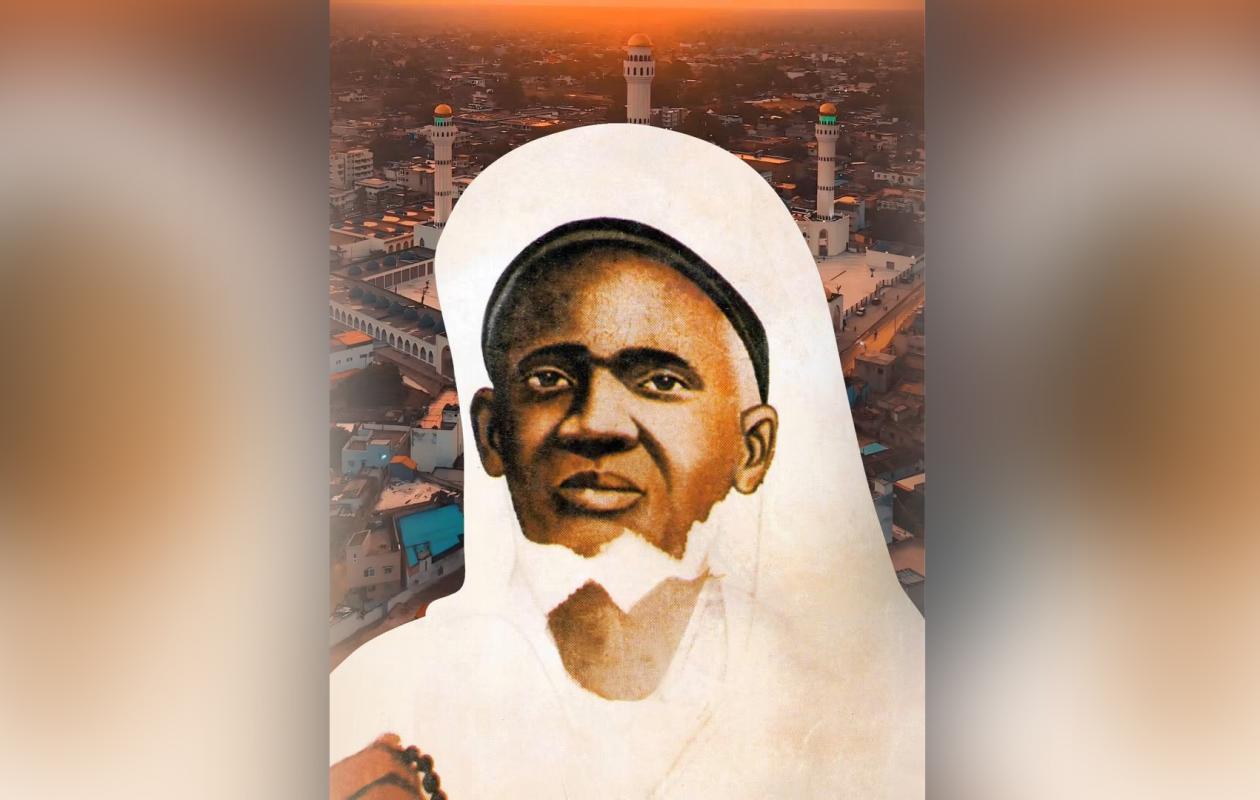
El Hadji Malick SY, une Maxime par Excellence (Par Baye Dame MBENGUE)
“Act in such a way that the maxim of your action becomes a universal truth.” This Kantian assertion resonates as a fitting description of El Hadji Malick Sy (RTA). The holy man has profoundly marked history through his role as a guide and a role model who continues to inspire and influence the masses, often disoriented by the constant evolution of society. His model of guidance resonates with all social strata thanks to a strategy like the Burda. These sessions of contemplation and piety permeate the social climate through panegyrics in honor of the Prophet (PBUH). All minds flock to Tivaouane, which lives as if by its namesake, so pervasive is the name of the founding father. This enthusiasm, like a moment of identity renewal, mobilizes young people throughout the country. This imitation stems from the need young people have to find a role model. In this sense, it is appropriate to focus on: how his life and work generated universal values that continue to inspire humanity.
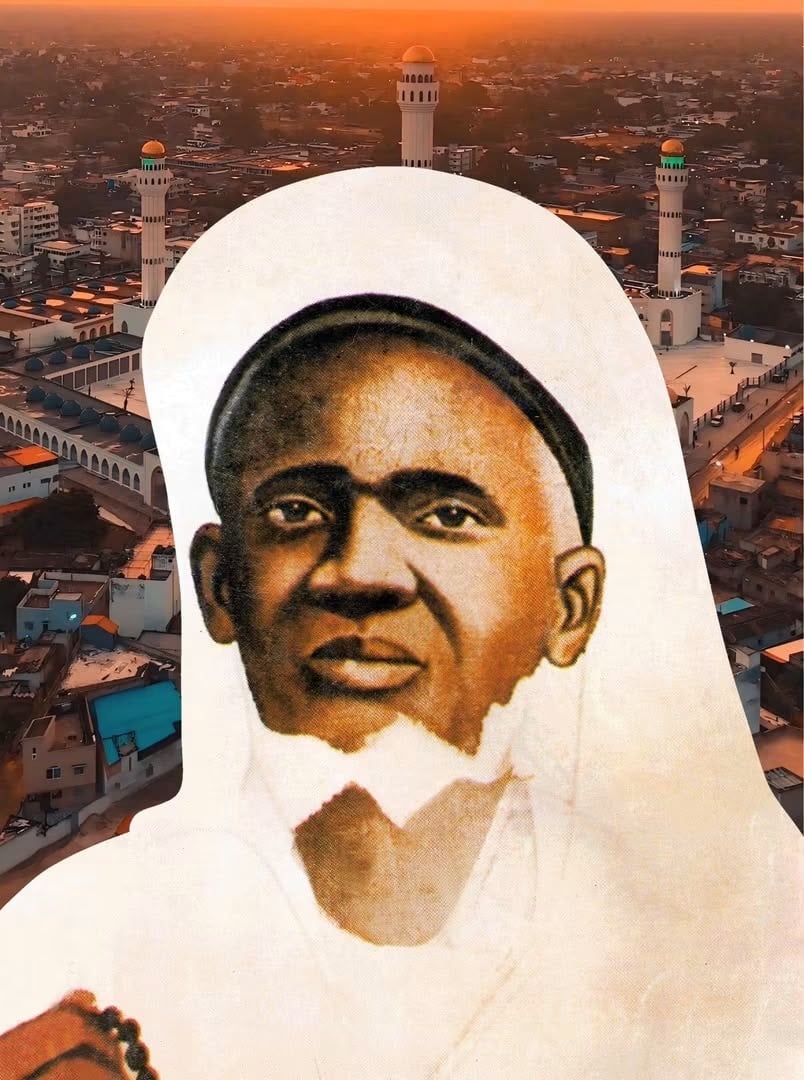
Knowledge as a prerequisite to the Spiritual Journey
“O sons of this era, I call upon you to revive Islam through knowledge.” This appeal from El Hadji Malick Sy to the youth perfectly illustrates the importance he places on young people in his spiritual project, or rather, in his vision of co-creation. It is also an invitation to responsibility, encouraging youth involvement through knowledge, a dedication to work, and exemplary conduct. The triad of knowledge, skills, and character forms the foundation of Maodo's thought and action.
The Holy Man believes that the most effective remedy against ignorance is education, and that ignorance is its most voracious enemy. In his strategy of transmission, knowledge, culture, and understanding occupy a central place in his method of guidance. Spirituality, as advocated by El Hadji Malick Sy, must be guided by Gnosis. For him, knowledge is the vessel by which the seeker must embark to migrate toward the realms of the Divine. Knowing leads to understanding, and when one understands, one ultimately comes to love (God): the quest for God is consubstantial with knowledge. Maodo considered it a chimera, even an essential element of his spiritual development.
Overcoming obscurantism through the light of knowledge was his lifelong guiding principle. This is why, from a very early age, he trained an elite, which he deployed throughout the country to educate the masses, especially the youth. He believed that youth should be the first line of defense for religious, spiritual, economic, and social development. To achieve this, learning is the foundation upon which everything else rests, particularly the love of religion. This is why he maintained: "To love one's religion, one must absolutely possess knowledge."
Indeed, in the turmoil of ancient societies, where imperfections stemming from the soul's failings reigned supreme, the only glimmer of hope emanated from Knowledge and Wisdom, according to Maodo. Knowledge undeniably leads to know-how.
Expertise for social integration
El Hadji Malick Sy did not hold a passive view of religion. For him, religion must be embraced by a socially active individual. Religion cannot be a cover for idleness or laziness, but rather a moral compass that guides and guides. He carried within him an ethical conception of Sufism that excludes all dependence on material possessions, a rejection of work, and subordination to patrons. Work is central to his spiritual project, as it allows one to integrate into the social order and also serves as a means of protection against all the afflictions linked to the vicissitudes of the soul. This connection between spirituality and work finds its source in the life of the Prophet Muhammad (peace be upon him), whom he holds up as a model. He was a merchant and farmer who relied not only on a (messianic) status but was also an active and useful citizen within the society in which he lived. The Prophet wielded influence within his clan due to his autonomy and his disinterest in all material matters. It is important, however, to distinguish between material possessions and materiality, which is simply the minimum conditions for subsistence.
The spiritual project of El Hadji Malick Sy represents a radical departure in the history of Sufi brotherhoods in Senegal. It embodies a Sufism grounded in economic activity, fostering a degree of autonomy necessary to ensure that the sustenance of his disciples was not the sole prerequisite for his religious practice. This is why he practiced agriculture, not only to earn a living but also to contribute, in his own way, to nation-building, thus offering a model of co-creation. His disciples were no longer seen as subjects subservient to a leader, but as active participants in a collective endeavor.
Interpersonal skills or the ethics of social responsibility
The ultimate goal of this path remains the Aspirant's behavior; it is the balance that allows them to act upon the "human condition." In the spiritual principles of Seydi El Hadji Malick Sy, character and interpersonal skills occupy a paramount place. The disciple is first and foremost a social being destined to evolve within society. Their relationships with others must be governed by a logic of interaction. This explains the reorientation of his method of resistance against colonialism: indeed, Maodo understood very early on that armed decolonization was ineffective against the armed power of the colonizer. He advocated a return to cultural and religious heritage to confront the occupation. This capacity for adaptation is a marker of social intelligence in this holy man, whose approach is based on enabling pluralistic expression to achieve harmonious coexistence: "the right to be different, the duty to be together."
In Seydi El Hadji Malick Sy's spiritual project, shaping the aspirant so that he is able to hold his place in the social order is an integral part of its (spiritual) structure. This involves creating harmony between determinism (human nature) and social achievements. He bases his approach on values that comprise our collective memory: humility, selflessness, detachment, work, dignity, tolerance, and concord, but also spirituality through the worship of God and love for the Prophet (peace and blessings be upon him).
The philosophy of El Hadji Malick Sy revolves around humanism and conscience, all underpinned by a Sufism free from fanatical and obscurantist practices. Faith and exemplary conduct are its principal components.
For El Hadji Malick Sy, knowledge is inseparable from moral rectitude. Without morality, knowledge cannot be beneficial, since proper conduct is a prerequisite for the sharing of knowledge. Maodo was above all a scholar who mastered the issues of his time. With a detached approach, he lived within society while protecting himself from the vanities it can bear as stigmas. To his fellow students, he instilled a spirit of self-improvement by helping others, working for the unity of the community, and above all, distancing himself from divisions and personal quarrels.
The Sufi path advocated by El Hadji Malick Sy emphasized respect for the establishment and the rules that fostered good relations between local authorities and citizens. He promoted adherence to the order established by the colonial power as a guiding principle, while simultaneously preserving cultural and religious beliefs. His strategic approach, which prioritized raising awareness over resorting to force of arms, was the key to his success in establishing Zawiyas, or theological centers, throughout the heart of the colonial administration's centers (Dakar, Saint-Louis, Tivaouane).
In the vast body of work of El Hadji Malick Sy, we can discern a spiritual offering rooted in humanity. Faith is not incompatible with the principles that govern life in society. On the contrary, it is beneficial to society insofar as it can instill in its citizens a sense of ethics. The holy man does not advocate separation, but rather a correlation between different forms of knowledge to cultivate active citizens capable of meeting the challenges that foster the development of the city.
The ideal of the accomplished man in the thought of the holy man is based on education to live in his time, a spirituality to guard against the errors of the soul, morality so as not to deviate from his responsibilities and action as a contribution to participate in the will to reform.
In a context marked by a crisis of values, Maodo's work continues to inspire young people. His life is a model that Senegalese people should proudly uphold because of his profound sense of patriotism, which he nurtured through education, making him a bulwark against assimilation and inferiority complexes: a sovereigntist before his time.
His legacy transcends the boundaries of any one era, revitalizing new and future generations by inviting them to engage with Knowledge. His thought is based not only on Knowledge but also on Becoming.
El Hadji Malick SY's spirituality can be summarized as an impactful Faith whose driving forces are Knowledge, Know-how and Know-how of Being.
Baye Dame MBENGUE






















Commentaires (0)
Participer à la Discussion
Règles de la communauté
💡 Astuce : Utilisez des emojis depuis votre téléphone ou le module emoji ci-dessous. Cliquez sur GIF pour ajouter un GIF animé. Collez un lien X/Twitter, TikTok ou Instagram pour l'afficher automatiquement.
Se connecter
Commentez avec votre profil, votre photo, et soyez averti des réponses.