
État civil au Sénégal : après l'affaire "Bébé Diène", poser enfin les vraies questions (Par Yankhoba Mané)
There are cases that make headlines for the duration of a media cycle. And then there are those that, beneath the surface, reveal something deeper, something we knew but didn't want to name.
The so-called "Baby Diène" case belongs to this second category. Not because it involves a celebrity of the arena, but because it exposes, with brutal clarity, the structural fragility of an edifice supposed to be the foundation of all our citizenship: the civil status.
We have all experienced or known people who have experienced similar situations with civil status. How many of our classmates have had to end their studies because of "paper problems"? How many have had to postpone a trip for the same reasons? When it is not the challenge of registering a birth in certain localities, it is obtaining the precious key, the first diploma automatically acquired by all Senegalese.
What then to say of the players of Navetanes and other students forced to "Lidieunti" papers to hope to realize their dreams because they are registered on the files or simply forced to "reinvent an administrative identity" to hope to find something?
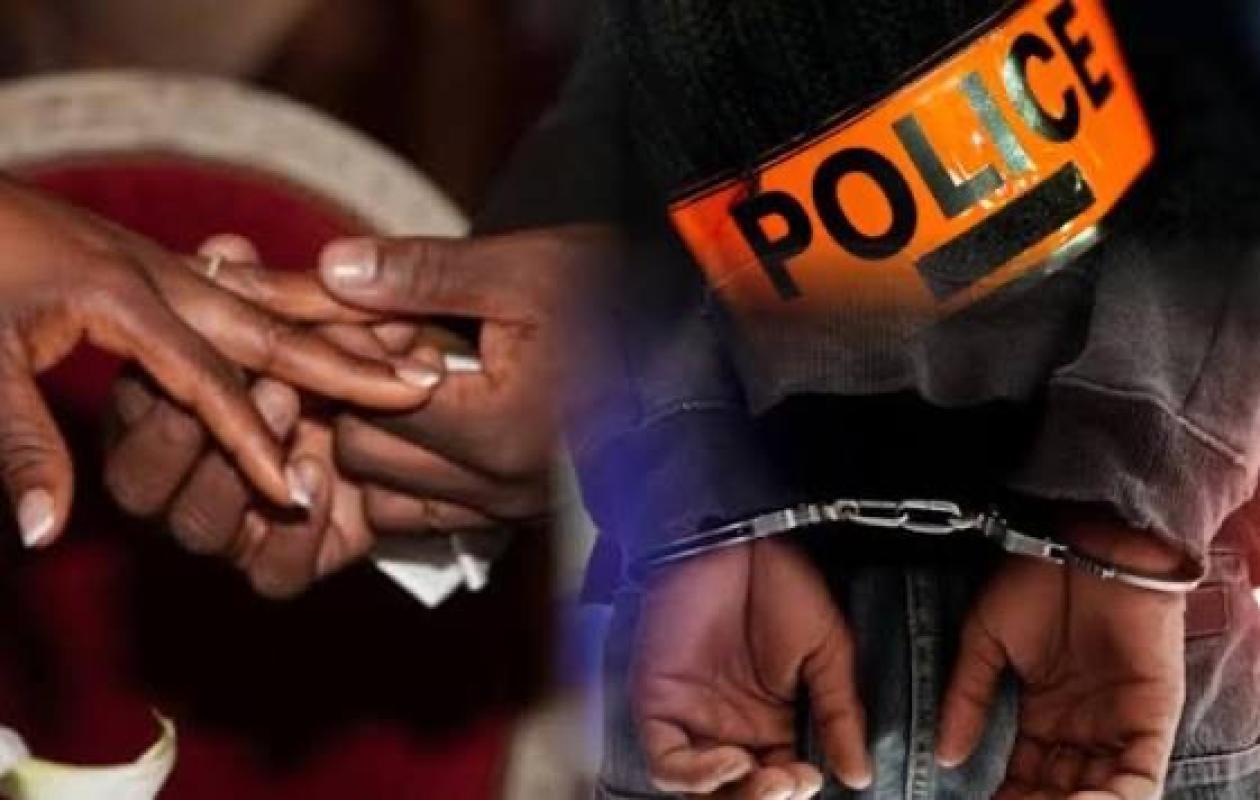
On May 4, 2026, the Dakar Urban Security Unit dismantled a criminal organization specializing in forgery and use of forged authentic documents, possession of falsified administrative documents, and identity fraud. Eleven individuals were arrested following a referral from the Directorate of File Automation (DAF).
At the heart of the matter: a parallel register that was unnumbered, uninitialed, unclosed, lacking any authentication, with missing pages and inconsistent numbering. It was a document number already assigned to a third party that allowed the anomaly to be detected and the network to be traced.
The scheme relied on fabricated parentage: a merchant presented himself as the wrestler's father, and his wife as his mother. Thanks to this arrangement, Amadou Cheikhou Diallo, a Guinean national, was able to obtain a national identity card, a passport, and a Senegalese wrestling license. Ten years of activity in the national arena. Ten years under a completely fabricated identity.
But reducing this affair to a mere sporting incident would be a mistake. The civil registrar in question, Hamady Diallo, alias "Nini," was in fact the first deputy mayor of the municipality of Wakhinane Nimzatt. This is where the true gravity of the case lies: the fraud was not external to the institution. It was embedded within it.
What makes this moment special is the accumulation. In less than six months, three cases have broken out in almost simultaneous registers, and in distinct geographical areas.
In Kafountine in December 2025, a structured network within the town hall produced false birth certificates, which were then inserted into official records, using fabricated parents. The first deputy mayor herself validated these documents without any oversight. During the searches, eight registers covering the period from 1977 to 2016 were seized and sealed.
In Ziguinchor, a sophisticated network operated in several localities—Kaour, Niaguis, Enampore, Djouloulou—selling counterfeit documents for between 6,000 and 250,000 FCFA, depending on the client's profile. The complicit agents inserted documents after the official closing of the registers or used blank spaces to create entirely fabricated identities.
To explain their actions, several officers simply cited their low salaries and the lure of illicit financial gain. This is not an excuse. It is a diagnosis.
We can no longer speak of isolated incidents. The repetition, the geographical distribution, the converging methods of operation point to a systemic fragility. The question is no longer: how are such cases possible? The question is: how many other parallel systems have yet to be discovered?
It would be unfair to deny the efforts undertaken. The State has taken action, and on several fronts.
In March 2025, Prime Minister Ousmane Sonko announced thirteen measures to modernize the civil registration system, including free registration of births, deaths, marriages, and divorces. On a technical level, in my professional capacity, I had the opportunity to participate in two working sessions with teams from ANEC (National Agency for Civil Registration and Employment) under the previous director. These discussions allowed me to appreciate both the scale of the project and the dedication of the teams working on it.
The NEKKAL plan, as presented at the time, has yielded tangible results: 20 million digitized documents out of a target of 30 million, 2,800 trained staff, and a key partnership established with Sénégal Numérique SA to interconnect civil registry offices across the country. To date, 400 of the country's 600 centers are equipped with the national management software.
More recently, the Director General of ANEC announced the upcoming holding of National Conferences dedicated to a thorough overhaul of the sector.
These are positive signs. But the cases of Wakhinane, Kafountine, and Ziguinchor remind us that these advances coexist with gaping holes on the ground. And the number of students without birth certificates—409,789 recorded in 2024 for preschool and primary school alone—says something essential: we cannot build a credible digital identity on such a flawed foundation.
Digitalization: the solution or simply a shift in the problem?
That's the question no one is frankly asking.
Digitizing 20 million documents is a considerable undertaking. But if some of these documents were produced in parallel registers that were unnumbered, uninitialed, and unknown to the judicial authorities, what exactly are we digitizing? Digitization, if not preceded by rigorous certification of the source data, risks simply giving a corrupted database an appearance of modernity.
It was during these same working sessions that I directly asked the ANEC teams: given technological advancements, were they considering integrating blockchain into the process? The answer I received at the time did not convince me. Today, considering what recent cases have revealed, I remain convinced that it is a serious and urgent avenue to explore.
Blockchain applied to civil registration is precisely the technical answer to the operational methods we have just described: each recorded act becomes an immutable, time-stamped entry, verifiable by any authorized authority, and impossible to modify retroactively without leaving a trace. A parallel, uninitialed register, insertions after closure, duplicated act numbers—all of this becomes technically impossible in a distributed system of this type. Some African countries, including Ghana and Rwanda, have already experimented with such solutions to secure sensitive public registers. Senegal, with its technological ecosystem and the infrastructure of Sénégal Numérique SA, has the capacity to seriously consider this, provided that the political will is there.
The real question, therefore, is not: should we digitize? The answer is yes, obviously. The real question is: in what order, with what data verification methods, and under what citizen oversight?
Everything happens at the municipal level. That's where the documents are produced, where the civil registrars operate, and where the registers are kept. And that's also where collusion is most easily organized, precisely because that's where oversight is weakest.
Several avenues deserve serious exploration, and some of us intend to pursue them not from the stands, but from the town halls:
Prior data certification. Before any deployment of the national software, each municipality should conduct a consistency audit of its registers: verifying the sequentiality of record numbers, ensuring that the registers are numbered and initialed, and detecting duplicates. The DAF (Department of Administrative and Financial Affairs) has demonstrated its ability to perform this control role. This should be systematized and made a prerequisite for connecting to the national register.
Real-time traceability . Each recorded act should generate a time-stamped fingerprint in the central system, making it impossible to retroactively insert the technique used in the three cases cited.
The revaluation of public servants. The Ziguinchor revelations make this perfectly clear. The reform cannot avoid a reflection on the working conditions of this essential profession. An underpaid employee facing a fraudulent service request should not be the system's only line of defense.
The involvement of community actors. Imams, neighborhood leaders, and association representatives: they are often the first to know when something "doesn't add up" in an individual's civil history. Formally involving them in a local monitoring mechanism would be more effective and less costly than any purely technical system. In this regard, a startup called Digital Nisa opted to take charge of digitizing a crucial first step: registering births in remote areas. The principle was simple: provide all community liaisons with tablets or an offline application, enabling them to officially register any birth in the locality. This initial step would prevent late registrations due to distance or the lack of resources in remote areas. Digital Nisa won project competitions, but the necessary support from the authorities did not materialize, and the project was abandoned.
The New Deal for Technology, President Bassirou Diomaye Faye's digital framework, calls for the modernization of the administration through digitalization and digital sovereignty. This is a legitimate and necessary ambition. However, it rests on an implicit assumption: that the data to be digitized is reliable.
Civil registration is the foundation of this ambition. It is not just another tool. Without certified civil identity, there is no credible digital identity, no interoperability between government agencies, and no true digital sovereignty. Civil registration is not a dependent variable in the digital transformation; it is its prerequisite.
This is perhaps the most important message that the announced National Conference must convey: rebuilding does not simply mean further digitization. Rebuilding means recertifying, monitoring, empowering, and protecting every Senegalese man and woman against the most silent form of theft: the theft of their identity.
Civil registration is not a technical subject reserved for specialists. It is a matter of local governance, proximity, and daily trust between citizens and their administration.
I worked with the institutions leading this reform. I asked questions that remained unanswered. I observed the weaknesses from the inside. And I am convinced that change will not come solely from the top down.
It will come from the municipalities that decide to do things differently. From local elected officials who treat civil status not as an administrative formality, but as a fundamental political act, one by which a community says to each of its members: you exist, you matter, and we are the guarantors of that.
Digital and innovation professional,
Secretary General of Pastef Sicap Liberté


















Commentaires (10)
Participer à la Discussion
Règles de la communauté
💡 Astuce : Utilisez des emojis depuis votre téléphone ou le module emoji ci-dessous. Cliquez sur GIF pour ajouter un GIF animé. Collez un lien X/Twitter, TikTok ou Instagram pour l'afficher automatiquement.
Se connecter
Commentez avec votre profil, votre photo, et soyez averti des réponses.