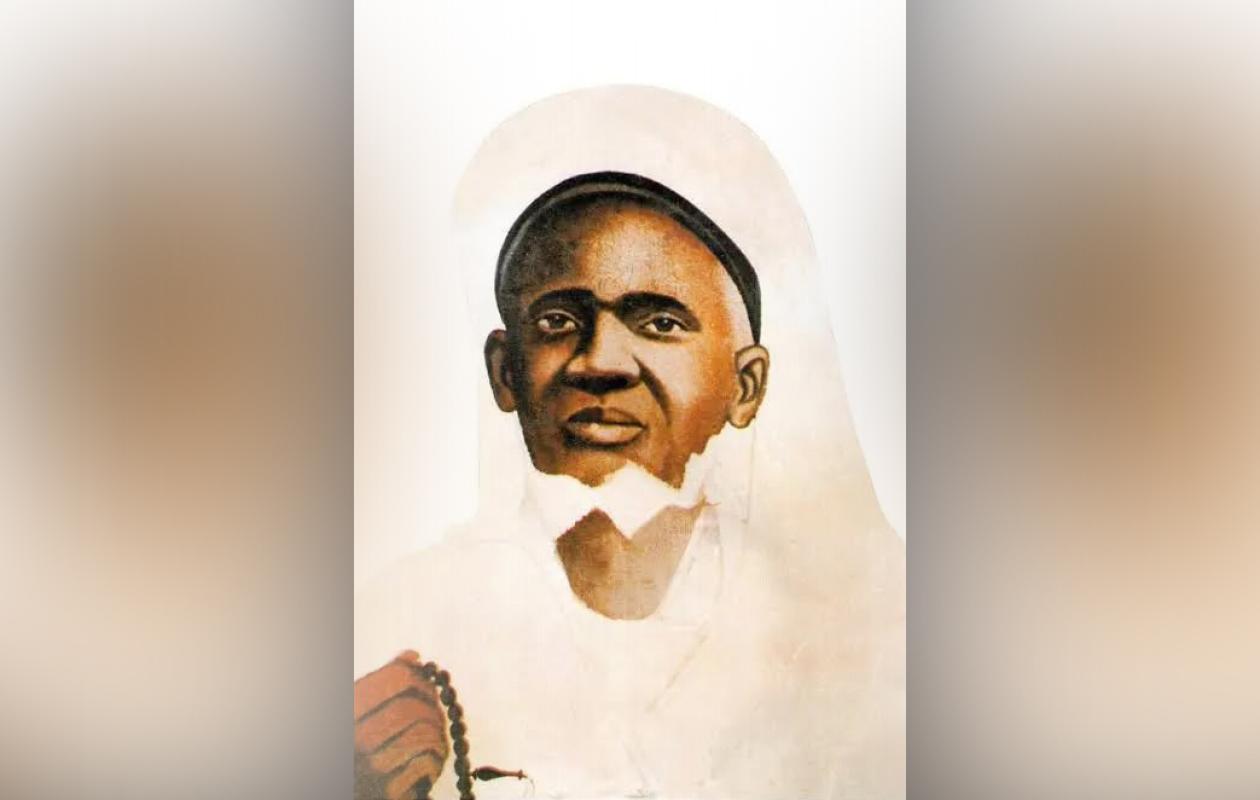
Être « pauvre en Dieu » : le cheminement mystique dans la poésie d’El Hadji Malick Sy (Par Dr Seydi Diamil Niane)
El Hadji Malick Sy was a Sufi who used his poetic talent to chart a path of initiation rooted in Sunni mystical tradition. Indeed, through his poetry, the founder of the Zawiya of Tivaouane left traces of a long inner journey that progresses from renunciation of the world to reverential fear, before traversing the path of hope and poverty in God—the ultimate stage of the initiatory path in the Maliki perspective.
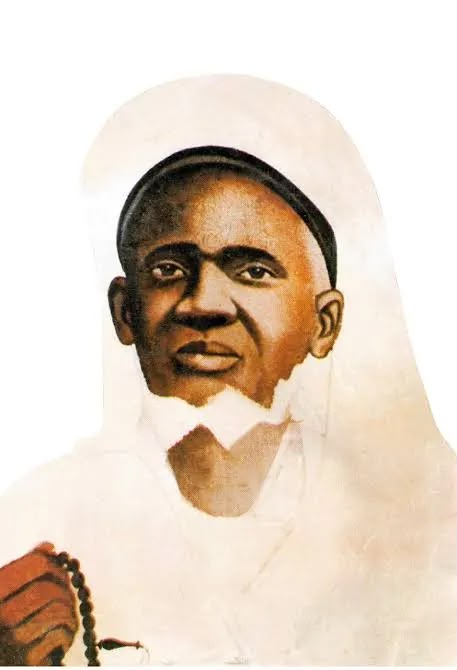
If one truly wishes to understand the mystical soul of El Hadji Malick Sy, it is in his poetry that one must delve deeper than in his prose writings. In this regard, it is worth recalling that beyond his reputation as a rigorous scholar and demanding teacher, the founder of the Zawiya of Tivaouane left behind a rich poetic oeuvre, permeated by the major themes of classical Sufism. This Maliki poetry is deeply imbued with Sunni spirituality, with its various stages that the mystic must traverse on the path leading to the Divine Presence.
In Maodo's poetry, the first of these stages is asceticism, al-zuhd : this inner detachment from the pleasures and possessions of this world. For El Hadji Malick Sy, this asceticism begins with a simple yet demanding discipline: constantly remembering death. It is in this sense that, in his poem Zajr al-qulûb , he directly addresses the believer distracted by the trivialities of existence:
"I see you forgetting death, and yet it is
a source from which everyone will have to draw.
He uses the same image in the same poem, comparing life here below to a guesthouse that one only inhabits temporarily:
"O builder of a guest house:
Don't you know that death is near?
[…] Consider yourself to be among the dead
"Turn away from life and turn to God."
Further on, his writing becomes almost harsh, the better to dissuade the disciple from material attachment: he compares the world to carrion, to be treated with the same suspicion as dogs fighting over its remains. The love of life becomes, in his writing, "the greatest of sins." To progress on this path, Maodo prescribes four disciplines, which he presents as the pillars of a true spiritual home: "hunger, silence, solitude, and night vigils." Without these pillars, he writes, "the house, without pillars, cannot stand."
Two feelings, seemingly contradictory but in reality complementary, occupy a central place in Maodo's spirituality and poetry: fear ( khawf ) and hope ( rajâ' ). In his poem Falâ budda , he first expresses, with heart-rending sincerity, the anguish of the believer aware of his own errors:
“Life goes by, the days pass with it, and I am a man of sin.”
The bird of separation has announced my imminent departure!
Alas, I am a prisoner of my ego and my passion!
Life slips away; if only I could turn it back.
"That way I would repair the flaws of my moments of folly!"
But this fear is never a stopping point: for El Hadji Malick Sy, it always leads to hope in divine mercy. In the same poem, he writes:
“However, I hope to benefit from the encounter with my Lord.”
Otherwise, I would be damned eternally.
All my hopes, other than You, were disappointments!
"All doors are closed to me except yours!"
This pendulum swing between fear of judgment and trust in God's mercy structures a good part of his poetic production and joins a much older mystical tradition, that of the great Sufi masters of the Muslim Middle Ages, such as al-Qushayrî or al-Hujwîrî.
Next comes an even higher stage in the spiritual journey: ridâ , total contentment with everything God decrees, whether joy or hardship. For the master of Tivaouane, refusing to accept destiny is tantamount to exposing oneself to divine wrath. He writes in another verse:
"Woe and perdition to the one who walks the path of Oneness."
who is not satisfied with the divine decree."
In another poem, he goes so far as to ask God for the strength to accept even the most painful trials and thus anchor him in the mystical state of contentment:
"Lord, I cannot escape your decree"
Grant me the gift of being content with Your most painful judgments.
The ultimate stage explored by El Hadji Malick Sy in his poetic work is that of spiritual poverty, or faqr . Al-faqr is a central concept in the Tijani doctrine, where it is considered among the greatest treasures of the heart. Far from being mere material deprivation, this poverty is an inner richness: it consists of recognizing one's total dependence on God and expecting nothing from anyone but Him.
This is how El Hadji Malick Sy liked to present himself in many of his poems, as "the poor man in God" ( al-faqîr ), even before signing his name. This formula appears at the beginning of several of his poems, as in this verse from Qantarat al-murîd :
“The poor man in God, son of ʿUthmân, who hopes
the support of the Lord-Protector, he said…”.
In another poem, Yâ kâshif al-dâʾ , he takes this posture of radical humility before the Most Generous even further:
“In Your Book, O Lord, it is said:
Indeed, alms are intended for the poor.
Here I am; I am poor, needy, and worn out.
who, in the fulfillment of his wishes, needs only You.”
At the end of this journey through asceticism, fear, hope, contentment, and spiritual poverty, one thing becomes clear: to reduce El Hadji Malick Sy to his sole role as a teacher and founder of schools is to miss the essential point. His poetry reveals an accomplished mystic, fully rooted in the great Sunni Sufi tradition, and imbued with an intense spiritual experience of the divine presence.
This is why, echoing the famous phrase of historian David Robinson, who saw Maodo as a "Teacher in the New Colonial Order," we propose to rename him, with equal aptness: Sufi in the New Colonial Order. Robinson highlighted Maodo's pedagogical side; it is now up to us to show the world the great Sufi that the master of Tivaouane was, by studying his poetry.
Dr. Seydi Diamil Niane
Research Fellow in Islamic Studies
Fundamental Institute of Black Africa
Cheikh Anta Diop University of Dakar
Email: [email protected]






















Commentaires (0)
Participer à la Discussion
Règles de la communauté
💡 Astuce : Utilisez des emojis depuis votre téléphone ou le module emoji ci-dessous. Cliquez sur GIF pour ajouter un GIF animé. Collez un lien X/Twitter, TikTok ou Instagram pour l'afficher automatiquement.
Se connecter
Commentez avec votre profil, votre photo, et soyez averti des réponses.