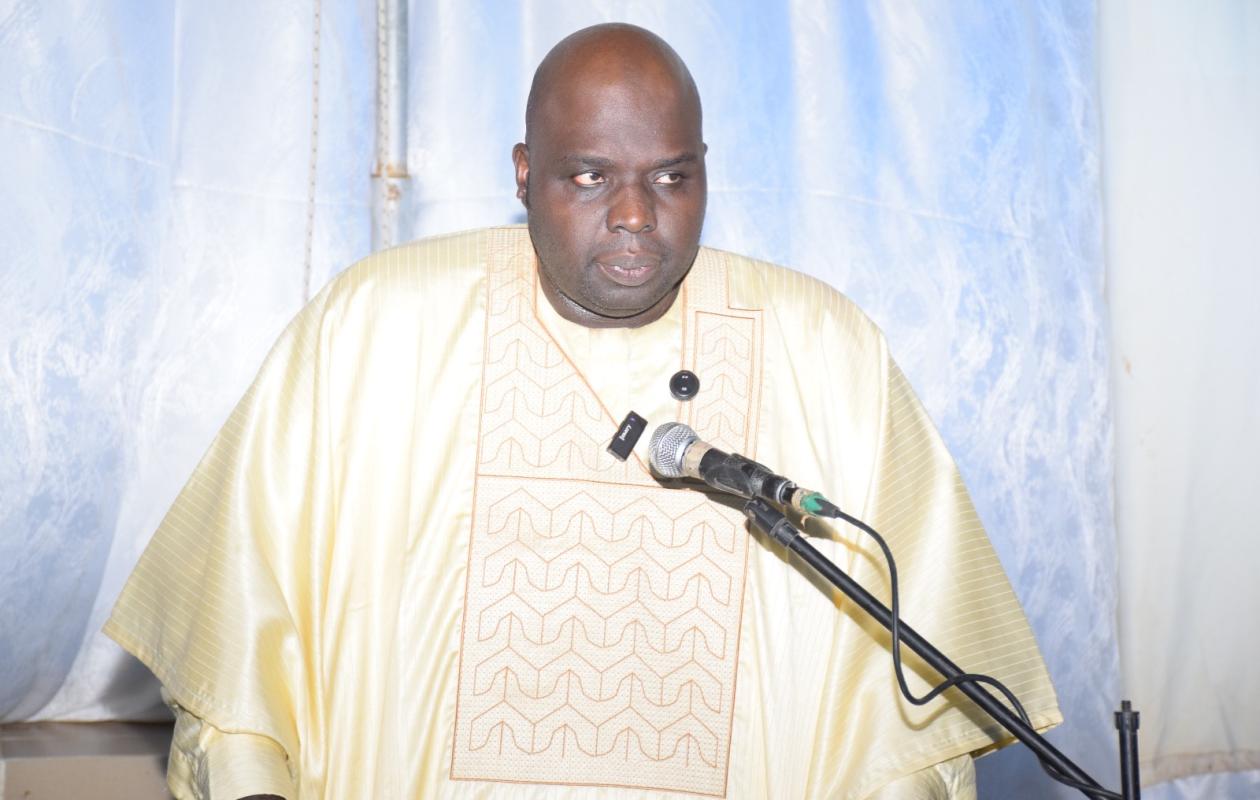
IMMIGRATION IRRÉGULIÈRE : COMBATTRE LE DÉSESPOIR, CRÉER DES OPPORTUNITÉS ET REDONNER CONFIANCE À LA JEUNESSE SÉNÉGALAISE [PAR ALIOUNE MBENGUE]
It is time to look at the issue of irregular immigration differently. Behind every pirogue that sets sail, behind every young person who braves the Atlantic Ocean at the risk of their life, there is often a story of despair, frustration, broken dreams and lost hope in their own country.
Today, a phrase is increasingly common in conversations with young people: "I prefer to invest 5 million CFA francs to go abroad rather than stay here with no prospects."
This statement should give us profound pause. It reveals a disturbing reality: for some of our youth, leaving has become an economic project, while staying is sometimes experienced as a condemnation to uncertainty.
But a fundamental question deserves to be asked: how did we get to a situation where a young person is willing to mobilize all of their family's savings, sell their possessions or go heavily into debt to try an adventure whose risks and outcome they do not control?
The real problem isn't just the desire to leave. It's also the loss of confidence in the possibility of succeeding at home.
Fight despair before fighting departures
Since 2007, as administrator of the first information site dedicated to migration, I have had the opportunity to follow, observe and report on many realities related to migratory journeys.
Over the years, a conviction has grown stronger: irregular immigration will never be fought sustainably solely through awareness campaigns, control operations, arrests or speeches of the moment.
You can't ask a young person to give up emigration without offering them a credible alternative.
We cannot talk to him about the dangers of the ocean without also talking to him about the economic opportunities that exist on land.
We cannot ask him to stay if staying means unemployment, job insecurity, lack of support and no prospects for him.
Fighting irregular immigration is first and foremost fighting despair.
Travel should not be a luxury
We must also have the courage to ask another question: why has legal travel become such a difficult journey for many Senegalese?
Traveling, studying, working, discovering other horizons or developing professional experience abroad should not be reserved for a privileged category of citizens.
Travel should not be a luxury.
It is urgent to strengthen bilateral cooperation between Senegal and destination countries in order to promote legal, accessible and better organized pathways for mobility.
This includes, in particular:
• Negotiation of professional mobility schemes and work visas.
• The development of training and university exchange agreements.
• Facilitating visa procedures for qualified individuals and project promoters.
• The promotion of circular migration programs.
• Better information on the actual conditions for accessing visas and the possibilities for regular stay.
Migration cooperation should not be limited to border management and the fight against illegal departures. It must also open up prospects for legal and dignified mobility.
Making self-employment a genuine alternative
We also need to change the way we talk about success.
Too often, in the collective imagination, success means obtaining a visa, joining Europe, the United States or Canada and finding a job there.
We need to deconstruct this idea without devaluing those who succeed abroad.
Senegal has economic opportunities in several sectors: agriculture, fishing, processing of local products, digital technology, crafts, trade, tourism, services and the creative economy.
But these opportunities must be accessible.
The State needs to raise awareness of its support mechanisms, financing schemes, vocational training programs and entrepreneurship support structures.
It is not enough to launch programs or mobilize billions of CFA francs. Young people in Rufisque, Kédougou, Matam, Ziguinchor, or Tambacounda also need to know precisely:
• Which organization should I contact?
• What are the conditions for receiving funding?
• How to compile a file;
• What training courses are available;
• How to turn an idea into a revenue-generating activity.
Good information can sometimes prevent a bad start.
Economic information must reach down to neighborhoods, villages, training establishments and youth associations.
Show examples of success, not just failures
We also have a collective responsibility: to tell more stories of those who have succeeded.
Young people who have created businesses in Senegal, women who have developed economic activities, entrepreneurs who export their products, artisans who employ several people, farmers who innovate, digital professionals who work from Senegal for international clients.
These journeys need to receive more media attention.
Our youth need role models. They need to see that success is possible here, even if the path is difficult.
We must stop giving a voice exclusively to those considering leaving, to shipwreck survivors, and to bereaved families. We must also give a voice to those who have built something, to those who are entrepreneurs, to those who create wealth and jobs.
This is not about fabricating an artificial narrative of easy success. It is about showcasing real possibilities, with their difficulties, sacrifices, and results.
Let's talk more about economics than politics
Irregular immigration should not become a mere subject of political confrontation.
It deserves better than statements after every maritime tragedy, repeated promises or partisan controversies.
We need to engage in a serious national debate on employment, purchasing power, investment, vocational training, entrepreneurship and access to markets.
The essential question is not who should bear political responsibility for this phenomenon. It is how to create the conditions so that a young Senegalese person can envision their future without seeing clandestine departure as their only chance of success.
We need to talk about production, innovation, financing, competitiveness and job creation.
Young people don't just need speeches. They need concrete economic prospects.
Our collective responsibility
The state, local authorities, the private sector, banks, financial institutions, the media and civil society must all play their part in this battle.
Local authorities must identify local economic opportunities. The private sector must invest more in the skills of our youth. Financial institutions must make their mechanisms more accessible. The media must become channels for information, guidance, and promotion of promising initiatives.
As an information professional involved in migration issues since 2007, I remain convinced that the fight against irregular immigration must go beyond traditional awareness campaigns.
We need to inform, guide, train, support and above all, build confidence.
We need to build a society in which young people who want to leave can do so legally, in dignified and safe conditions, but also a society in which those who decide to stay can have a real chance of succeeding.
Because ultimately, the problem isn't that a Senegalese person dreams of living elsewhere. The problem begins when their own country no longer seems capable of offering them a future.
Our ambition must be simple: to make Senegal a country where leaving is a choice, not an obligation dictated by despair.
Because no nation can sustainably build itself by letting its youth believe that their future necessarily lies on the other side of the ocean.
Alioune Mbengue
Administrator of Tukki, the leading information website dedicated to migration since 2007.



















Commentaires (2)
(dé/mal)formation pour doomou diambour yi, administrer leurs maigres bourses scolaires, et pendant ce temps " confier" l'éducation et la formation de ses propres enfants à l'Occident honnie. Comment voulez-vous que cette jeunesse à une réussite ici, si même gni leen djiite n'y croient pas?
Participer à la Discussion
Règles de la communauté
💡 Astuce : Utilisez des emojis depuis votre téléphone ou le module emoji ci-dessous. Cliquez sur GIF pour ajouter un GIF animé. Collez un lien X/Twitter, TikTok ou Instagram pour l'afficher automatiquement.
Se connecter
Commentez avec votre profil, votre photo, et soyez averti des réponses.