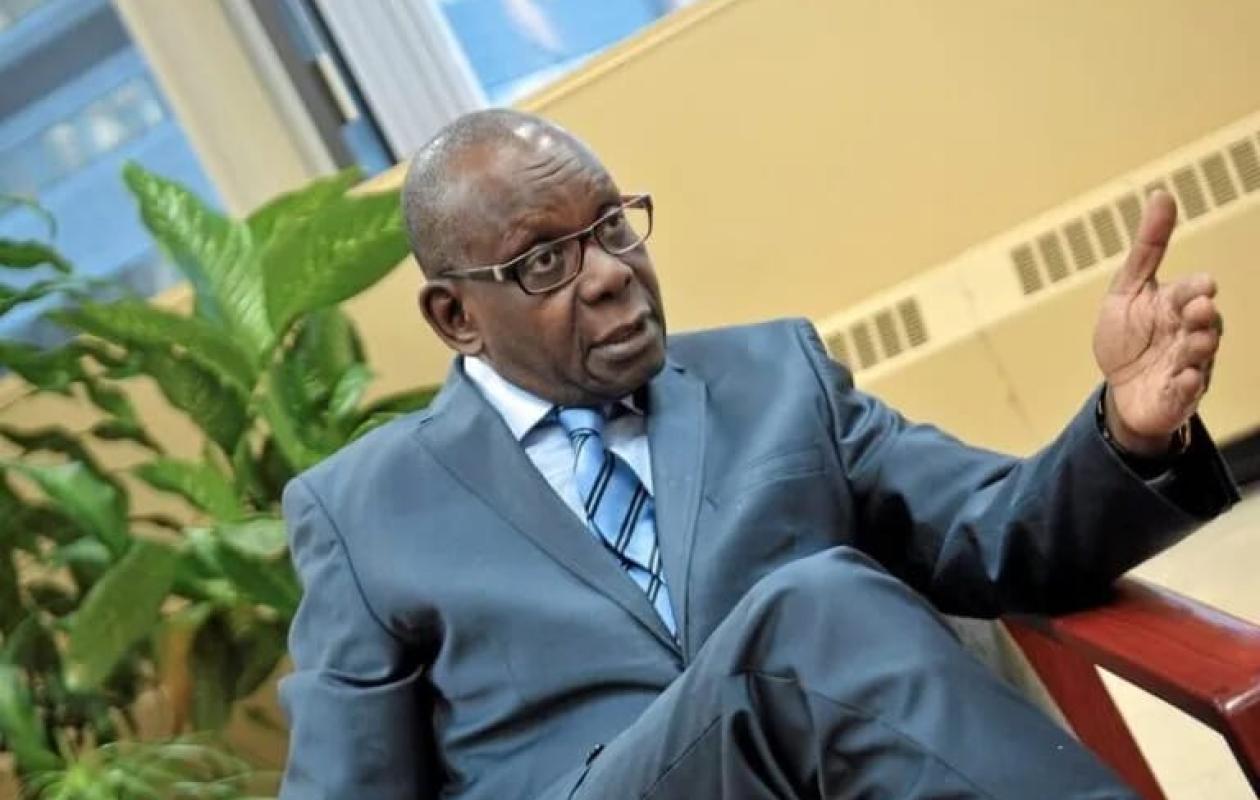
Le discours du Professeur Papa Fary Seye : quand la parole éducative devient une pensée de la République (Par M. Khadiyatoulah FALL)
A speech to reflect on excellence, education, and the Republic
I. When a ceremony becomes an intellectual event
Ceremonies come and go. Some words remain. Most official speeches fulfill their protocol function with dignity before gradually fading from collective memory. A few, much rarer, survive the event that gave rise to them because they permanently alter our understanding of it. The customary speech delivered by Professor Papa Fary Seye on the occasion of the sixtieth anniversary of the Concours Général, it seems to me, belongs to this second category.
This text deserves more than a mere tribute. It demands careful reading, not because it is immune to criticism, but because it transcends the specific circumstances. It does not simply accompany a ceremony; it shapes its meaning. Therein lies its true singularity.
The usual speeches generally follow a well-established pattern. They greet the authorities present, pay tribute to the institution, congratulate the award winners, and reiterate the values associated with the school. Professor Papa Fary Seye takes a different approach. His aim is not simply to celebrate the General Competition. He invites his audience to reflect on what it means, for a nation, to publicly recognize excellence.
With this change of venue, the Concours Général ceases to be a mere academic competition. It becomes one of the institutions through which Senegal affirms a certain vision of knowledge, responsibility, citizenship, and its future. The ceremony then takes on a significance that far exceeds the mere presentation of awards.
This depth stems first and foremost from the structure of the speech. The ideas are not presented as a series of independent tributes. They are organized according to a rigorous progression. The speaker begins with the event itself, gradually leading the audience toward a broader reflection on the mission of education, intergenerational transmission, and the responsibility of elites in nation-building. This coherence lends the text an intellectual unity rarely seen in this type of exercise.
One of the speech's most remarkable qualities lies in its approach to excellence. In many educational systems today, excellence tends to be reduced to individual performance, ranking, or competition. This text offers a completely different perspective. While the award winners are certainly recognized for their achievements, their success is consistently placed within a collective narrative involving teachers, families, schools, and, ultimately, the entire nation.
Merit thus ceases to be a privilege. It becomes a responsibility. Being recognized among the best does not mean rising above others; it means being more indebted to the society that made this success possible. This profoundly republican conception is undoubtedly one of the strongest messages of the speech.
This is all the more important given that contemporary education systems are under increasing pressure to focus solely on measurable performance. International comparisons, rankings, and indicators now occupy a central place in education policies.
Without denying the importance of academic standards, the speech reminds us that a society cannot reduce excellence to results alone. It must also be associated with ethics, responsibility, and a commitment to the common good.
Another quality deserves highlighting. Historical and cultural references are never used as mere rhetorical flourishes. They structure the argument and situate the Concours général within an intellectual history where the school emerges as one of the principal sites for the construction of the Republic. The past is not invoked out of nostalgia; it becomes a resource for envisioning the future.
It is precisely this ability to transform a ceremony into a reflection that gives the speech its true significance. By moving beyond the realm of celebration, Professor Papa Fary Seye reminds us that great institutions thrive less on their rituals than on the ideas they transmit and the hopes they inspire.
As such, his speech deserves to be read not only as a routine address, but as a contribution to a broader reflection on the aims of the Senegalese school system, on the meaning of excellence and on the responsibility that every society entrusts to its youth.
II. An African Philosophy of Excellence: Knowledge in the Service of the Nation
Professor Papa Fary Seye's speech transcends the realm of a brilliant address because it rests on a genuine intellectual framework. The references he draws upon are never merely displays of erudition. They structure a philosophy of education, excellence, and the Republic. Above all, they demonstrate that the major educational challenges of our time can be addressed by drawing upon the intellectual resources that Senegal has accumulated throughout its history.
The first of these references is naturally Léopold Sédar Senghor . Founder of the Concours Général (General Competition), he is invoked not simply as a historical figure, but as the thinker of a humanism where education goes far beyond the acquisition of knowledge. For Senghor, school shapes women and men capable of combining intelligence, culture, sensitivity, and responsibility. The discourse echoes this fundamental intuition: excellence only has true meaning when it serves the national community.
This vision is further reinforced by the reference to Cheikh Anta Diop , whose work reminds us that no country can ensure its sustainable development without producing its own knowledge. The discourse thus situates the General Competition within an ambition that transcends academic success. The laureates are destined to become the future researchers, engineers, doctors, teachers, artists, entrepreneurs, and decision-makers who will contribute to strengthening Senegal's scientific, cultural, and technological sovereignty. Excellence is therefore presented as a national investment.
This requirement of intellectual sovereignty is matched by another equally essential dimension: openness to others . By invoking Amadou Hampâté Bâ , the discourse reminds us that true intelligence thrives on dialogue. Educating the best is not simply about developing skills; it is also about learning to listen to, understand, and respect those who think differently. In a democratic society, the diversity of experiences and viewpoints is not an obstacle to unity; it becomes an asset.
One of the most original references, however, remains that of Serigne Mbaye Diakhaté , through the notion of yar . This concept, deeply rooted in Senegalese tradition, goes beyond the mere idea of good manners. It refers to a holistic development of the individual, encompassing inner discipline, respect for others, humility before knowledge, a sense of duty, fidelity to one's word, and service to the community. By reintroducing this notion into his discourse, Professor Papa Fary Seye reminds us of an often-forgotten truth: intellectual qualities only reach their full potential when they are grounded in moral qualities.
This link between intelligence and responsibility is particularly well illustrated by the presence of the patron of the sixtieth anniversary, Professor Awa Marie Coll Seck . Her scientific career, her commitment to public health policies, her international influence, and her unwavering loyalty to Senegal lend the speech added depth.
She embodies that excellence which is not measured solely by the distinctions obtained, but by the ability to put one's knowledge, experience and authority at the service of the general interest.
Her selection as godmother thus carries a significance that far transcends protocol. Through her, the ceremony reminds the young award recipients that academic success is not an end in itself; it is the beginning of a responsibility. The honors received today will only have true value if they translate tomorrow into a lasting commitment to society.
This coherence explains the strength of the argument. The historical, philosophical, and cultural references are never simply imposed on the text. They support an argument that gradually leads the listener toward a demanding conception of education. School emerges as the place where not only skills are developed, but also consciences, values, and a certain idea of citizenship.
This reflection takes on particular significance today. Senegal is engaged in an ambitious curriculum reform that questions the very purpose of its education system. Behind the debates on programs, languages of instruction, digital technologies, and artificial intelligence lies a more fundamental question: what kind of citizen do we want to educate for the Senegal of tomorrow?
Without directly answering this question, Professor Papa Fary Seye's speech sheds light on its main issues. He reminds us that no educational reform can be truly successful if it is not based on a vision of the human person, of knowledge, and of the common good. It is precisely this ambition that gives this public address a scope far exceeding that of the General Competition. It proposes a genuine philosophy of excellence, where knowledge, culture, ethics, and service to the nation remain inseparable.
III. A word for today, a legacy for tomorrow
The true significance of Professor Papa Fary Seye's speech becomes apparent when one looks beyond the circumstances surrounding its delivery. It is no longer simply a matter of assessing the quality of an official address, but rather of considering its potential role in Senegalese educational discourse. Grand ceremonies rarely produce texts that continue to fuel debate once the applause has subsided. This speech possesses precisely this quality: it invites re-reading.
Indeed, this speech comes at a pivotal moment in the history of education in Senegal. The country is engaged in a broad reflection on curriculum reform, the role of national languages, the transformations brought about by artificial intelligence, the new skills expected of 21st-century citizens, and the conditions for genuine cognitive sovereignty. In this context, the speech makes a contribution that goes beyond the General Competition alone: it reminds us that any educational reform begins with a reflection on the aims of schooling.
Ultimately, the question he poses is simple yet crucial: why do we educate? Producing high-achieving students is not enough. We must also know what kind of citizen, what kind of intelligence, and what conception of responsibility a nation wishes to foster. This question runs throughout the entire text. It explains why the discourse never reduces excellence to mere academic performance. The excellence it celebrates encompasses knowledge, culture, ethics, creativity, civic engagement, and service to the common good.
This concept is particularly important at a time when education systems are often evaluated almost exclusively using quantitative indicators. International rankings, success rates, and comparative performance are useful tools, but they cannot, on their own, encompass the mission of schools. The discourse aptly reminds us that a society truly prepares its future only when it educates women and men capable of thinking, creating, innovating, and assuming their responsibilities to the community.
This is also where this text resonates with contemporary debates on the sovereignty of knowledge. Through references to Senghor, Cheikh Anta Diop, Hampâté Bâ, and Serigne Mbaye Diakhaté, it demonstrates that Senegal possesses considerable intellectual resources to develop its own educational project. Openness to the world does not imply the erasure of its own references; on the contrary, it presupposes a sufficiently strong identity to engage in dialogue on equal footing with other traditions of thought.
Another characteristic deserves highlighting. The discourse rehabilitates a certain idea of public speaking. At a time when media immediacy often favors sound bites, controversy, or instant emotion, it opts for the slowness of reflection. It takes the time to articulate memory, history, philosophy, and the responsibilities of education. This intellectual rigor undoubtedly explains why the text invites more reading than simple commentary.
It is therefore regrettable that the content of the speech itself did not receive the media attention it deserved. The ceremony, the awards, the dignitaries present, and the images of the event naturally captured the press's interest. However, the text itself remained relatively unanalyzed. This observation reveals a more general weakness: we still devote too little attention to the important educational pronouncements that accompany significant moments in our national life.
These speeches constitute a valuable intellectual heritage. They reveal how a society conceives of its schools, defines excellence, constructs its ideals of citizenship, and expresses its ambitions for its youth. Collecting, preserving, and studying them would allow for a better understanding of the evolution of Senegalese educational thought since the creation of the Concours Général by Léopold Sédar Senghor.
From this perspective, Professor Papa Fary Seye's speech could occupy a special place. Not because it marks the culmination of a tradition, but because it opens up a renewed way of thinking about the Concours Général. He no longer presents this institution as a simple competition of excellence; he situates it at the heart of a reflection on transmission, responsibility, memory, culture, and the building of the common good. He thus transforms a ceremony into a moment of reflection.
The greatest tribute we can pay to these words is therefore not simply to acknowledge their oratorical skill. It is to continue the dialogue they initiate. Speeches that truly matter do not live solely in the moment they are delivered. They continue to resonate with the generations who reread them, because they shed light on questions that transcend their own time.
In this respect, Professor Papa Fary Seye's speech deserves its place among the great educational pronouncements of contemporary Senegal. He reminds us that academic excellence is not merely an individual reward. It is a promise made to the nation, a commitment to future generations, and an ambition for civilization. Perhaps it is here, beyond the success of the ceremony itself, that his most lasting contribution lies.
Mr. Khadiyatoulah Fall
Professor Emeritus, Quebec, Canada




















Commentaires (2)
Participer à la Discussion
Règles de la communauté
💡 Astuce : Utilisez des emojis depuis votre téléphone ou le module emoji ci-dessous. Cliquez sur GIF pour ajouter un GIF animé. Collez un lien X/Twitter, TikTok ou Instagram pour l'afficher automatiquement.
Se connecter
Commentez avec votre profil, votre photo, et soyez averti des réponses.