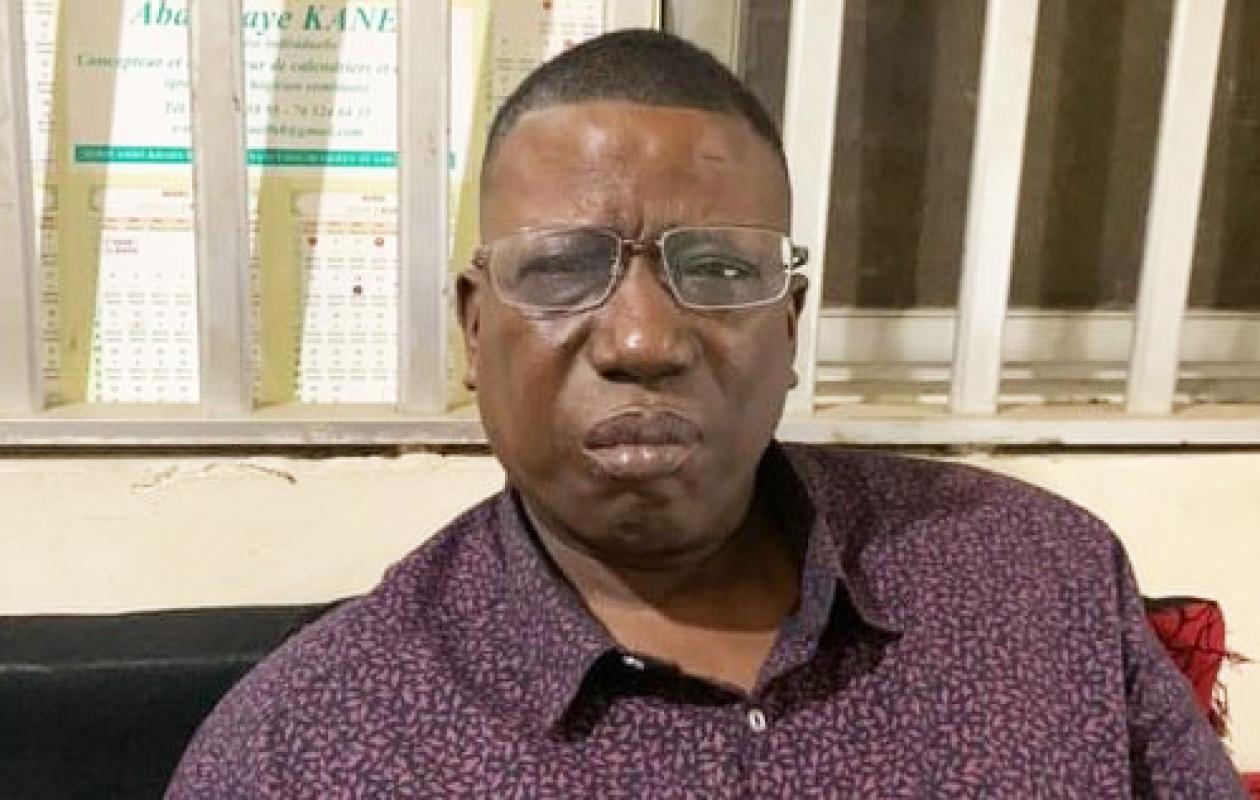
Le Parti, la Patrie et la Nation (Par Dr Moustapha Samb)
A political party is an entity with a soul, an organization identified by its representative who is nominated or elected to seek power. A leader orchestrates the dynamics and drives the movement with clear directions. A coalition is a grouping of parties to exert electoral weight capable of winning elections. This is why President Bassirou Diomaye Faye deemed it necessary to establish a political party (KIIRAAYE).
The party is a foundation, a bedrock. However, it is not inconceivable that political parties will form alliances within a broad electoral coalition. The party is a means, an instrument for gaining power. The nation is not the party. It is an end in itself, since everything the party undertakes must take into account the nation, which encompasses the population and the working masses.
The party is partisan, while the homeland refers more or less to the nation. It encompasses the feeling of belonging; it designates the country where one was born or to which one belongs as a citizen, and to which one has an emotional attachment. The State, for its part, encompasses the three branches of government (executive, legislative, and judicial). It also refers to civil servants and institutions. As for the Nation, it is a human community that shares a territory, a history, and a culture, and that wishes to live together.
Every action taken by a politician must take public opinion into account. The nation must judge the government's actions, either positively or negatively. The people are therefore the judge, and their verdict is implacable, as they decide between the candidates during elections. This is why the nation must feel the impact of government policies on its living conditions and the economic progress achieved for the benefit of the nation. The Head of State knows full well what he means when he quips, "The Nation First." When governing, one must have as a constant concern the achievement of tangible results, which serve as a guarantee for potential electoral success. It is the people who win elections.
PASTEF, which held a majority in the state and government coalition (from April 2024 to May 2026), turned its back on the President after barely two years of co-governance. The Head of State therefore needed a new political strategy, an instrument to guarantee his KIIRAAYE (a term referring to a specific political entity or policy) and ensure competent oversight in his management of the state. This is what Dr. Aminata Touré (former Prime Minister), General Supervisor of the Diomaye President coalition, a woman of courage, determination, and experience, spearheaded.
Nothing could be further from the truth than thinking that the political arena is composed of good guys and bad guys, opportunists and men of conviction. This is a simplistic view. All politicians, regardless of their affiliation, have diverse backgrounds and varied career paths, and most have been involved with traditional parties such as the Socialist Party (PS), the Democratic Party of Senegal (PDS), the Young Democrats (AJ/PADS), the Alliance for the Republic (APR), the Union for Democracy and Reconstruction (URD), the Popular Front for the Liberation of Madagascar (AFP), Rewmi, etc., and later with newer parties and movements, some more recent than others, most of which are now aligned with the new PASTEF/KIIRAAY coalition. This proves that it is impossible to stigmatize any one group, as all parties are complex, heterogeneous, and eclectic.
No party has a monopoly on morality, ethics, or patriotism. These days, traditional ideologies are relegated to the dustbin of history. All parties are vying to accelerate their expansion because elections are primarily about votes. In politics, one should never underestimate the opponent. In England, the Conservative Party, in power for 13 years until 1964, learned this the hard way by underestimating the Labour Party, historically composed of trade unions and workers. In France, General de Gaulle fell victim to this in 1965 against the young, relatively unknown candidate, François Mitterrand.
De Gaulle believed victory was within his grasp. He did not campaign in the first round of a universal suffrage election, a first under the Fifth Republic. He was forced into a runoff by Mitterrand. This is why De Gaulle, disappointed, campaigned in the second round before ultimately winning the election. It is true that the existing electorate rarely changes its mind, as it only engages with the media to reinforce its initial convictions, but there are many potential voters to recruit among the undecided through direct, face-to-face communication. This interpersonal communication is of paramount importance, especially with the involvement of opinion leaders and key electors, most of whom are prominent figures.
The KIIRAAYE Party must therefore prioritize massive mobilization, organized presence on the ground, in the media, and especially on social networks, listening to the people, and showing humility towards them, all while speaking in their local language. The government has limits and constraints in its communication and even in its propensity to make promises. The primary obstacle facing the government is its record. The government is only comfortable when it is showcasing its achievements and accomplishments.
Quite the opposite of the opposition, which controls the Ministry of Public Debate and can freely capitalize on campaign promises. When you're in power, your room for maneuver is limited when it comes to promises, and it's difficult to inspire dreams. The opposition, on the other hand, has the excuse of not being responsible for anything and can take advantage of this comfortable position to promote its platform, which sometimes includes purely fantastical elements.
From this perspective, the two years of PASTEF governance have weakened, if not tarnished, their discourse by allowing a significant segment of the population to doubt the famous project and sometimes even their symbols and representatives.
Furthermore, for KIIRAAYE to gain a strong position in the national political landscape, it must emphasize values. The essence of its philosophy must be: Openness, Tolerance, Peace, Democracy, Work, and above all, Respect for the Republic. Neither the State nor the Party is the Nation. Therefore, to satisfy the people, it is necessary to accomplish, beyond mere rhetoric, the work of transforming Senegal. Projects must be implemented and changes must be visible. KIIRAAYE is newly formed, but it possesses significant advantages: hundreds of mayors elected by universal suffrage, plus numerous parties and movements that have joined the organization.
The work has only just begun, as it's essential to strengthen all the areas that can sway the vote during elections: Dakar, Thiès, Diourbel (including Mbacké and Touba), Kaolack and Saint-Louis, Tambacounda and the Casamance region—in short, all of Senegal, even in the most remote villages. PASTEF, founded in 2014, has an even stronger foothold and remains very popular. Therefore, there's a significant amount of grassroots and community-based work to be done, especially targeting first-time voters, and this requires considerable resources. Politics isn't about speeches; it's about creating the right conditions for those involved.
Political opposition must be faced with firmness, but also with restraint and moderation, as unexpected alliances between rival factions are always possible. One should never underestimate the future. For now, the urgent priorities are clearly identified: increasing the purchasing power of Senegalese citizens, implementing bold solutions to youth unemployment, improving the healthcare system and medical technology, which still fall short of international standards, strengthening resources in both national education and higher education, implementing reforms initiated by active citizens, and effectively combating corruption.
Finally, citizens in general and political parties in particular must make this credo a religion, namely that our anchoring in the Constitution and respect for the Republic are no longer negotiable.
Dr. Moustapha Samb, Full Professor at the University
Head of doctoral training at Cesti




















Commentaires (24)
Longue vie à vous.
C’est de ce genre d analyse approfondie que les sénégalais ont besoin mais pas des futilités
Participer à la Discussion
Règles de la communauté
💡 Astuce : Utilisez des emojis depuis votre téléphone ou le module emoji ci-dessous. Cliquez sur GIF pour ajouter un GIF animé. Collez un lien X/Twitter, TikTok ou Instagram pour l'afficher automatiquement.
Se connecter
Commentez avec votre profil, votre photo, et soyez averti des réponses.