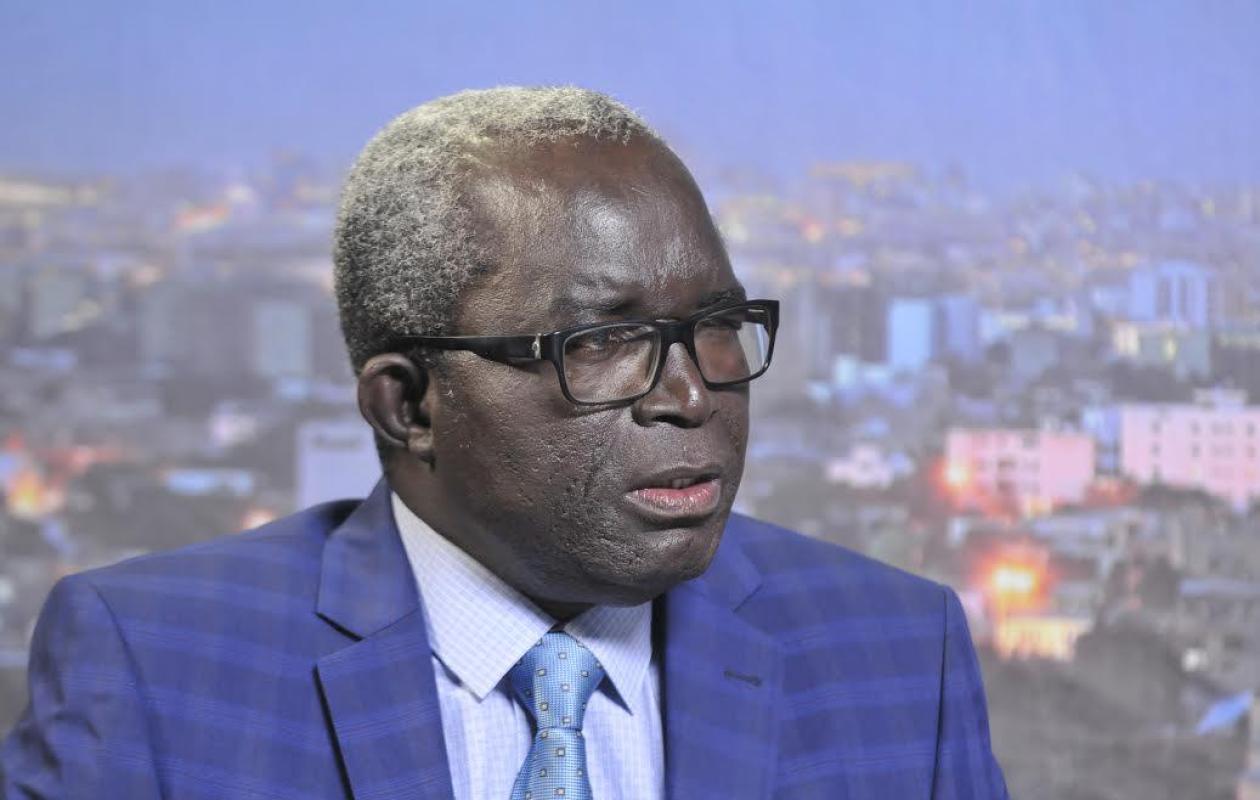
Le secret et le spectacle (Par Babacar Justin Ndiaye)
Regardless of the veracity of Sheikh Yerim Seck's sensational revelations – I can neither confirm nor deny them, much less corroborate or refute such information – history teaches us that politics and secrecy are hardly incompatible. Quite the contrary!
The expression "under the table" is, in this respect, heavy with meaning and overflowing with substance.
In Senegal's mature democracy, the (electoral) map is a highly visible element of the political spectacle in the hands of citizens; while the behind-the-scenes dealings remain the prerogative of those who, in the shadows, pacify and stabilize the country.
It was, it is, and it always will be this way. Proof that secret contacts are neither ruinous for democracy nor scandalous for good governance.
The tradition is deeply rooted and the practices are well-established.
During the first decade of independence, President Senghor established secret contacts with leaders of the African Renewal Party (PRA-Senegal) to expand his government through an emissary whose surprising identity clearly demonstrated the need to keep the matter under wraps: General Jean-Alfred Diallo, Chief of the General Staff of the Armed Forces at the time.
The success of this behind-the-scenes approach led to the appointment of Ministers Assane Seck, Abdoulaye Ly, Diaraf Diouf, and Amadou Moktar Mbow. Specifically, the latter was the interlocutor of President Léopold Sédar Senghor's truly special emissary.
There was no outcry or cry of outrage from the ranks of the majority at the time.
Shortly afterwards, secret contacts took place in Bamako with Majmouth Diop, one of the historical leaders of the PAI, with the aim of facilitating his return to Senegal.
Certainly the initiative was not without political motives, but President Senghor also had the highly human concern of shortening the duration and hardships of the exile of a great and nationalist compatriot.
Because exile is never gilded; not even in a castle in Spain or a mansion in Marrakech. The same melancholy can be felt in a princely residence in Qatar.
Closer to our time, Famara Ibrahima Sagna (a great statesman and holder of the broad confidence of President Abdou Diouf) had, in his capacity as Minister of the Interior, met several times with Master Abdoulaye Wade in the greatest secrecy.
One of the long-time companions of the founder of the PDS can testify to a nighttime meeting in a house on the way to the airport where the former Minister of the Interior arrived driving his personal car without a police escort.
I have heard that Famara Ibrahima Sagna's expertise and extensive network were such that his French colleague at the time, Pierre Joxe, reported Abdoulaye Wade's return flights from Roissy-Charles de Gaulle to him.
Still under the era of Abdou Diouf and under the regime of Abdoulaye Wade, official and unofficial emissaries secretly met with representatives of the MFDC, in Senegal and abroad.
However, according to the Constitution, any contact with the leaders of a heavily armed political party intent on dismantling the national territory is punishable by the harshest penalties. The notable exception is the press, which, everywhere, encounters, films, and interviews all parties involved in conflicts.
However, since politics is the continuation of war by other means (Clausewitz and Mao said so), it is quite logical that the balance of power in the green forest of Casamance – battles between soldiers and maquisards – is transposed around the…green carpet.
The moral of the story: politics is not done exclusively in the gladiatorial arena, but also takes place in more sanitized and less exposed venues, less visible to the eyes of fiery or even fanatical activists and curious journalists, often taking non-straight paths like the winding and secret labyrinths of dynamic arrangements.
Aimé Césaire was categorical: "The shortest path to the future passes through the past." The younger generation of politicians must be convinced that secret conversations with pacifying virtues are preferable to deadly confrontations.
This will be the best way to nurture and strengthen Senegalese ingenuity. This ingenuity that further distances Senegal from the ranks of countries engulfed in conflict on the continent.







Commentaires (21)
Senghor, Diouf et Wade tous en tant que PR durant ces initiatives étaient non seulement dépositaires de la légalité mais aussi et surtout de la toute la légitimité politique requise. Chacun disposait en son temps de l'appareil politique majoritaire plusieurs fois démontré.
Autant dire qu'ils avaient les coudées franches!
Cependant Diomaye ne peut justifier de sa capacité politique à disposer de la troisième force politique du pays. Pire sa volonté de repousser les locales démontre plus de l'anxiété fébrile sur fond d'improvisation que de la sérénité requise chez un acteur légitime. Le schéma actuel est inédit et en cela les méthodes anciennes ne sont les solutions idoines.
Diomaye a raison de ne pas dialoguer, car on ne dialogue pas en position de faiblesse. Le premier faucon du palais est lui même.
Reste que l'avenir, certes incertain, ne réserve pas de grandes surprises. La légitimité prendra toujours le dessus, car nous sommes et restons en démocratie. Rien de plus factuel aujourd'hui au Sénégal de 2026.
Mes parents de Diokoul a Rufisque diraient : yobou Lene la Fann, ki dakha dof.
Parler pour ne rien dire n est pas le début de la folie, c est la forme grave
Et si on faisait simple? Phrases courtes. Mais des syntaxes alambiquées....b
Appuyer yérim?
Ce n’est pas le signe qu’on maîtrise une langue ni qu’on a une belle plume.
Participer à la Discussion
Règles de la communauté
💡 Astuce : Utilisez des emojis depuis votre téléphone ou le module emoji ci-dessous. Cliquez sur GIF pour ajouter un GIF animé. Collez un lien X/Twitter, TikTok ou Instagram pour l'afficher automatiquement.
Se connecter
Commentez avec votre profil, votre photo, et soyez averti des réponses.