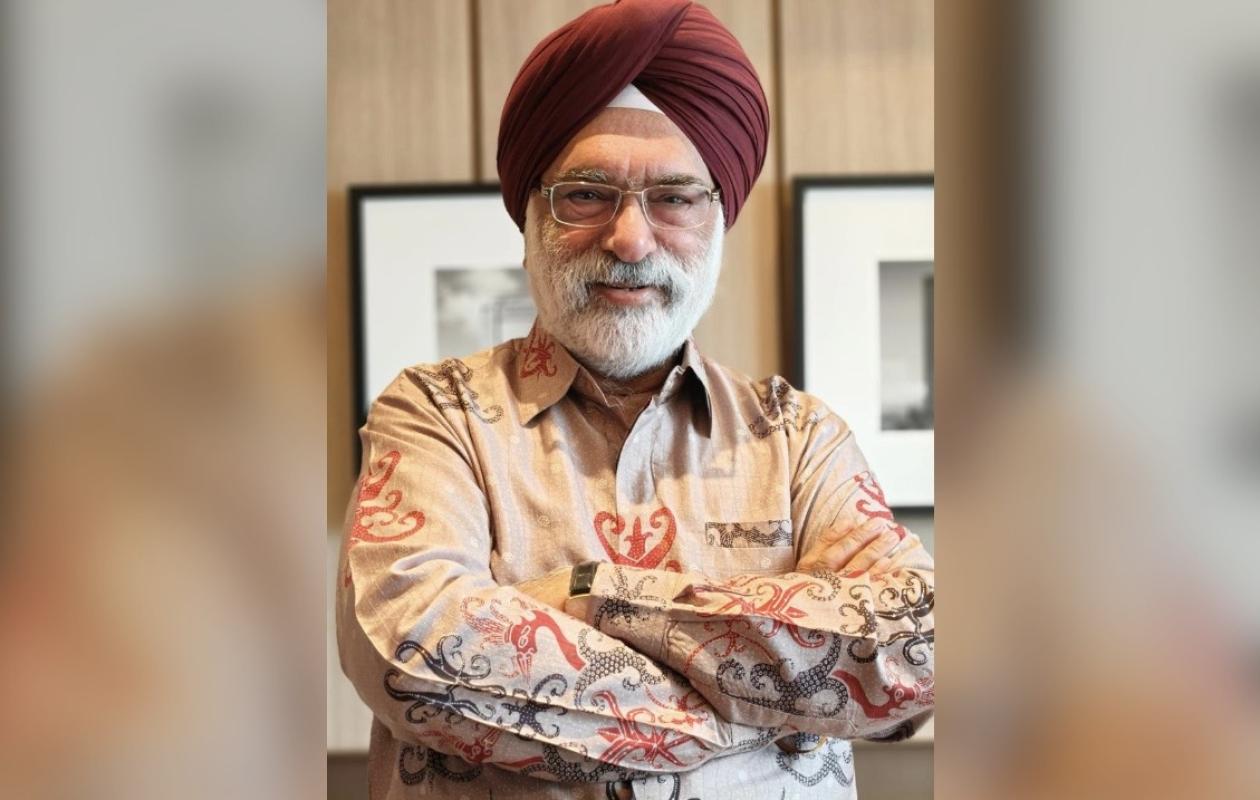
Le secteur spatial indien : un tremplin pour les partenariats mondiaux (Par Gurjit Singh)
India's journey in the space sector is unique. Unlike many space programs that emerged in the context of Cold War rivalries, the Indian space program was conceived as an instrument of national development. Dr. Vikram Sarabhai grounded India's space vision in practical applications to improve people's lives. Under his leadership, satellites were developed to enhance communications, weather forecasting, disaster management, healthcare, agriculture, and education. This development-oriented philosophy remains central to the Indian space program and is particularly relevant to the needs of countries in the Global South, which seek practical applications of space technologies rather than mere prestige.
Today, India's achievements extend far beyond development-related applications. The Chandrayaan missions, the Mars Orbiter mission, the Aditya-L1 solar observatory, and the upcoming Gaganyaan crewed spaceflight program have established India as a nation capable of conducting sophisticated and reliable space missions. The successful soft landing of Chandrayaan-3 near the Moon's South Pole placed India among a select group of space powers, while also demonstrating that world-class innovation can be achieved at a relatively modest cost.
India's growing credibility comes at a time of rapid expansion in the global space economy. Valued today at over US$600 billion and projected to reach nearly US$1.8 trillion by 2035, this sector is increasingly driven by commercial activities in satellite communications, Earth observation, navigation, climate services, broadband connectivity, and emerging areas such as on-orbit services and lunar exploration. Many countries want to participate in this dynamic but lack sufficient domestic capabilities. They are looking for reliable long-term partners rather than just launch service providers.
India has the capabilities to meet these needs. The liberalization of the space sector in 2020 transformed the ecosystem by opening it up further to private participation. The establishment of the Indian National Space Promotion and Authorisation Centre (IN-SPACe), the expansion of NewSpace India Limited's commercial role, and the growth of private companies have helped create one of the most dynamic emerging space ecosystems in the world. Indian startups are developing launch vehicles, satellite platforms, geospatial applications, and propulsion technologies that are attracting international investment and customers. Companies such as Skyroot Aerospace, Pixxel, and Agnikul Cosmos have demonstrated that Indian private companies can be internationally competitive in advanced space technologies.
The next step is to internationalize this ecosystem.
Rather than positioning itself solely as a low-cost launch destination, India will offer comprehensive partnerships encompassing satellite design, launch services, mission operations, ground stations, astronaut training, capacity building, and downstream applications in agriculture, disaster management, and maritime security. Such integrated partnerships would be invaluable to countries in the Global South and the Indo-Pacific region seeking affordable, customized, and reliable technologies that address their development priorities.
India has already demonstrated the diplomatic value of this cooperation. Through the South Asia Satellite, it has provided communication and development benefits to neighboring countries. Indian launch vehicles have successfully placed hundreds of foreign satellites into orbit for governments, universities, and commercial operators worldwide. India's decision to join the Artemis Accords demonstrates its commitment to participating in the peaceful exploration of the Moon within the framework of international cooperation. Cooperation with NASA, the European Space Agency, and JAXA has also strengthened India's scientific and technological capabilities.
These partnerships strengthen India's position as a leading voice in the Global South. India offers development partnerships based on affordability, reliability, and mutual respect, rather than on creating technological dependency. Space cooperation has thus become an increasingly important instrument of Indian diplomacy, strengthening bilateral relations while generating tangible development benefits.
To fully realize its potential, India will seek to maintain the momentum of reforms. Faster regulatory procedures, improved access to venture capital, stronger intellectual property protection, and closer collaboration between research institutions, industry, and academia will be essential. Public procurement policies will continue to support Indian startups, enabling them to grow, innovate, and integrate into global supply chains.
India is also in a position to play an increased role in shaping outer space governance. Orbital congestion, space debris, the responsible use of resources, and equitable access to new space opportunities are becoming increasingly pressing international concerns. As space activities expand, the need for countries capable of reaching a consensus on responsible norms and practices will grow. India's long-standing commitment to the peaceful use of outer space, coupled with its growing technological capabilities, enables it to make a significant contribution to developing rules that promote transparency, sustainability, and equitable access.
The next decade will determine not only which countries will be leaders in the space sector, but also how space will be governed. With its scientific capabilities, entrepreneurial ecosystem, and international credibility, India is uniquely positioned to bridge the gap between established and emerging space powers. By developing partnerships based on inclusion, mutual benefit, and innovation, India can transform its space program into a major pillar of its international engagement.
In an increasingly divided world, the Indian space sector offers a powerful reminder: the greatest achievements in space are those that bring nations closer together.
This could well become India's most lasting contribution to humanity's next frontier.






















Commentaires (1)
Participer à la Discussion
Règles de la communauté
💡 Astuce : Utilisez des emojis depuis votre téléphone ou le module emoji ci-dessous. Cliquez sur GIF pour ajouter un GIF animé. Collez un lien X/Twitter, TikTok ou Instagram pour l'afficher automatiquement.
Se connecter
Commentez avec votre profil, votre photo, et soyez averti des réponses.