Le Sénégal a davantage besoin de Macky Sall que les Nations unies (Par Babacar TALL)
There are times when facts speak with such eloquence that they make long speeches almost superfluous. Ours is one of those times.
The world is currently experiencing a profound crisis of international governance. The multilateral order, patiently built in the aftermath of the Second World War to prevent a return to power struggles, seems to be faltering under the combined effects of geopolitical rivalries, armed conflicts, and the rise of national interests.
International law, long presented as the foundation of global stability, appears to be gradually giving way to a logic where power increasingly prevails over law.
The United Nations, created to preserve international peace and security, often appears powerless in the face of major contemporary crises. It raises concerns, calls for dialogue, and adopts resolutions, but struggles to influence the course of events when the interests of major powers clash. This limitation stems not from a lack of will, but from the very constraints of its institutional structure.
The tragedy in Gaza is the most striking illustration of this. For many months, calls for a ceasefire, diplomatic initiatives, and resolutions have followed one another without managing to end the suffering of the civilian population. The international community's outcry is met with the obstructionist mechanisms of the Security Council.
The war in Ukraine also confirms this reality. Despite condemnations, economic sanctions, and numerous mediation efforts, the conflict continues, reminding us that even in the 21st century, military power dynamics still heavily influence the fate of nations.
Recent tensions involving the United States, Israel and Iran have also demonstrated how collective security mechanisms struggle to respond effectively when major actors are directly involved.
To this geopolitical fragmentation is now added economic fragmentation. Trade wars, sanctions, technological restrictions, and industrial relocation policies reflect a profound questioning of the globalization model that had prevailed for several decades.
Persistent tensions between the United States and China, as well as with several of their trading partners, illustrate this new reality where strategic interests often take precedence over the principles of free trade.
Everywhere, the same observation seems to be emerging: the law of the strongest is gradually tending to supplant the force of law.
In this context, a question deserves to be calmly asked: what is the real capacity for action today of a senior official placed within an institution whose decisions so often remain paralyzed by geopolitical balances?
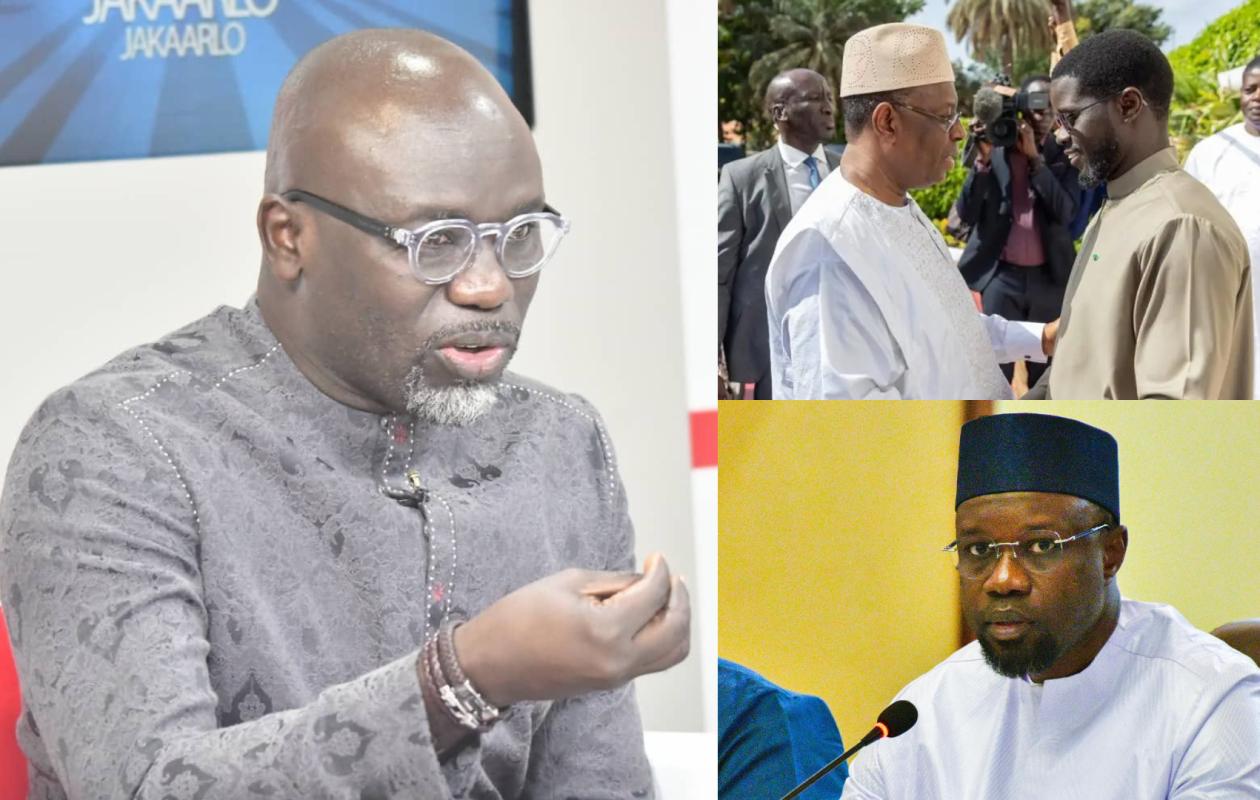
That is why I am convinced that former President Macky Sall would be more useful in Senegal today than within the United Nations.
Not because international responsibility lacks prestige or nobility. Quite the contrary. But because the usefulness of a statesman is measured above all by his ability to respond to the most pressing needs of his country.
Senegal is going through a period marked by significant economic, budgetary, and social challenges. Questions relating to public finances, investment, the confidence of economic actors, the cost of living, and growth prospects now occupy a central place in the national debate.
The analysis of responsibilities naturally falls within the scope of democratic debate. However, one observation is widely agreed upon: our country is facing challenges of such magnitude that they demand experience, competence, and a strong sense of the common good.
In this context, the experience gained by a former head of state who led Senegal for twelve years constitutes considerable institutional and diplomatic capital. This capital could be usefully mobilized in service of the nation, regardless of political divisions.
Major democracies often know how to rely on their former leaders when circumstances demand it. They consider the experience of the state not as a legacy to be filed away in the archives, but as a resource that can inform present-day decisions.
Ultimately, the real debate goes beyond Macky Sall himself. It raises a more fundamental question: where can a former African head of state exert the most useful influence today?
Within an international organization whose room for maneuver is shrinking in the face of great power rivalries? Or among his own people, at a time when his country is facing decisive choices for its future?
In my view, the answer seems clear.
The prestige of a position cannot replace its effectiveness. And when international institutions give the impression of no longer having sufficient means to prevent the very conflicts they were designed to prevent, serving one's nation directly undoubtedly remains the highest responsibility.
Because while international organizations are going through a period of weakening, states remain, more than ever, the main places where political decision-making, reform and public action can still be exercised.
That is why I firmly believe that Senegal needs Macky Sall more today than the United Nations.













Commentaires (19)
Participer à la Discussion
Règles de la communauté
💡 Astuce : Utilisez des emojis depuis votre téléphone ou le module emoji ci-dessous. Cliquez sur GIF pour ajouter un GIF animé. Collez un lien X/Twitter, TikTok ou Instagram pour l'afficher automatiquement.
Se connecter
Commentez avec votre profil, votre photo, et soyez averti des réponses.