
Le Sénégal est assis sur des braises : faisons attention avant qu'il ne soit trop tard (par Par El Hadji Malick DJITTÉ, Président du Mouvement ÉLAN )
Senegal is experiencing a period of political and institutional tension that demands clear thinking, responsibility, and a willingness to rise above adversity. The second rejection in committee of the 2026 supplementary budget bill is not a mere parliamentary incident. It reveals a rift that, if it persists, could further weaken the country's economic and social situation.
Senegal is sitting on hot coals. And when hot coals are smoldering, the duty of political leaders is not to fan the flames, but to extinguish them before they become a national conflagration.
Behind the budget debates are Senegalese citizens waiting for their student grants, families dependent on social welfare programs, businesses demanding payment of outstanding debts, and communities awaiting essential infrastructure. There are also international financial commitments, security and defense programs, and major infrastructure projects like the sanitation of Touba.
The blocking of the Finance Law cannot therefore be considered a simple confrontation between the Executive and Parliament. It directly affects the interests of the people and the credibility of our institutions.
Consensus rather than confrontation
In a democracy, disagreement is legitimate. Parliament has the right and the duty to oversee the actions of the Government. The Executive, for its part, must explain its choices, justify its policies, and listen to the concerns of the people's representatives.
But democratic disagreement cannot become a permanent deadlock.
The Government and members of parliament must now show responsibility and seek a compromise around the essentials: preserving public services, supporting the national economy and protecting the most vulnerable populations.
The vote on the Finance Law must be an opportunity for sincere dialogue, free from partisan calculations or any desire to humiliate. It is not about one side capitulating to the other, but about finding a solution that allows the country to move forward.
Consensus is not a political weakness. It is proof of maturity and patriotism.
Social urgency must take precedence over political calculations.
The state owes the national private sector over 300 billion FCFA, according to the figures presented. This situation particularly weakens SMEs, construction companies, and suppliers, with direct consequences for employment and household incomes.
Added to this are uncertainties about external financing, particularly the program envisaged with the International Monetary Fund, as well as the financing needs for social, security and infrastructure policies.
In this context, prolonging the budget blockage would amount to making the population bear the cost of an institutional disagreement for which they are not responsible.
The national interest therefore dictates that dialogue, consultation and the search for a reasonable agreement should be prioritized.
Emergency solutions: necessary, but not as a first choice
If dialogue fails and the deadlock persists, the state cannot remain inactive indefinitely.
The Constitution and the organic law relating to finance laws provide mechanisms for preserving the continuity of public action. The use of advance decrees, under legal conditions and for urgent expenditures, could in particular help to meet certain pressing needs.
Other constitutional instruments exist, notably the blocked vote or the government's commitment of responsibility. These must be considered with discernment, weighing their political and institutional consequences.
However, emergency mechanisms must not become a substitute for democratic dialogue. They must remain solutions of last resort, mobilized only when all reasonable avenues for compromise have been exhausted.
If the deadlock becomes insurmountable, give the people back their voice.
If, despite efforts at consultation, the National Assembly remains persistently unable to allow the adoption of texts essential to the functioning of the State, a question must be asked: can we continue to govern effectively with a parliamentary institution locked in a political deadlock?
In such a scenario, the dissolution of the National Assembly, as provided for in Article 87 of the Constitution under the conditions it sets out, could constitute a democratic outcome.
It would allow them to return to the voters so that they can express their will and give the country a new majority capable of making the institutions function.
Dissolution, however, should be neither a threat nor a weapon of retaliation. It should be considered as a last resort in the face of a persistent deadlock, after serious attempts at dialogue and compromise have failed.
Because, in a democracy, when the people's representatives can no longer find a way out, the people remain sovereign.
Senegal before parties, people before posturing
This is not the time for one-upmanship. This is the time for responsibility.
The President of the Republic, the Government and the members of parliament each have an obligation to the Nation: that of preserving institutional stability, the continuity of the State and the interests of citizens.
Senegal does not need a political victory achieved at the cost of paralyzing its institutions. It needs an agreement, a shared vision, and a common will to serve the people.
Before emergency solutions, consensus. Before confrontation, dialogue. And if the impasse becomes irreversible, the dissolution of the National Assembly should be considered, and the people should be given the final say.
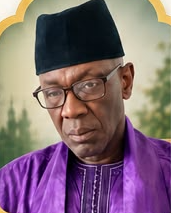
El Hadji Malick DJITTE
Lawyer, Banker
President of the ELAN Political Movement




















Commentaires (22)
le peuple sur l autel des sacrifices
Participer à la Discussion
Règles de la communauté
💡 Astuce : Utilisez des emojis depuis votre téléphone ou le module emoji ci-dessous. Cliquez sur GIF pour ajouter un GIF animé. Collez un lien X/Twitter, TikTok ou Instagram pour l'afficher automatiquement.
Se connecter
Commentez avec votre profil, votre photo, et soyez averti des réponses.