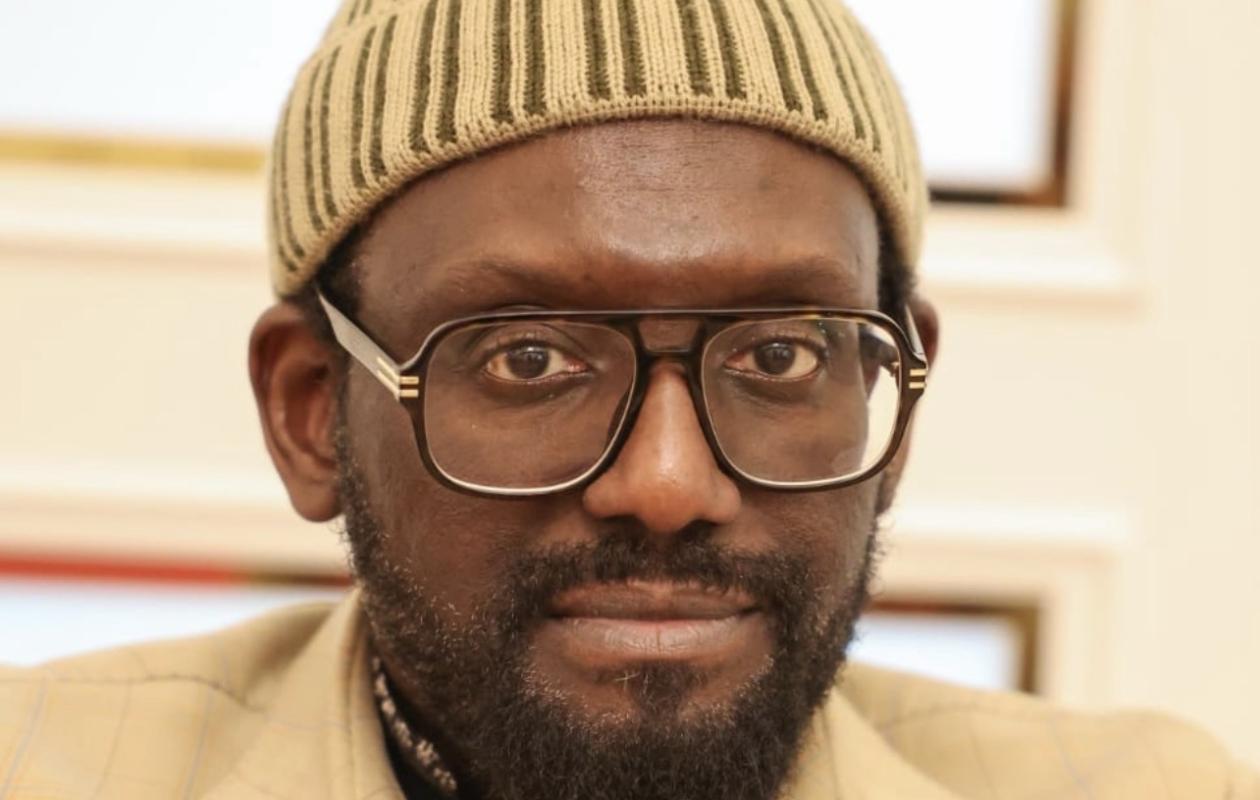
Les leçons du Président Abdou DIOUF, véritable bâtisseur de la démocratie sénégalaise [Par Alioune NDIAYE]
If I had to find acceptable reasons that might have prompted me to write a
text to celebrate, in a small way, the ninetieth birthday of President Abdou
DIOUF, despite the fact that I was part of that youth labeled "unhealthy and
manipulated” since I was in my final year of high school (Terminal D) at Lycée Lamine GUÈYE (where I did
(all my classes) in 1988, I had chosen to follow the strike movement and not
not to pass the second part of the baccalaureate; despite the fact that I also had
I did not appreciate certain parts of his memoirs published in 2014 and I made that clear.
publicly; if I were to try to justify this pressing desire to take
I'm using my laptop to type these few words, I'd say it's because (if we
also rules out the fact that we were born on exactly the same day at thirty-four
years apart) undeniably, the second President of the Republic of
Throughout its rich history, Senegal has given us lessons in humanity, in
citizenship, civility, integrity, authority, humility, accessibility, dignity,
of equanimity. This equanimity, named by the wordsmith Professor
Souleymane Bachir DIAGNE in his work "The Bundle of My Memory", this
The ability to remain calm and impassive regardless of the situation is
certainly President Diouf's most recognized quality. It constitutes both
the foundation and the culmination of all these attributes that made him the most statesman
an undervalued aspect of our Republic which, like many others, is rather inclined to
to celebrate narcissism and egocentrism.
As a citizen, I was able to grasp the lessons he had given to the entire nation.
Senegalese; as a student manager, I remembered those he had
lavished on one of our professors who was his young minister and "apprentice"; and in
As a novice entrepreneur, I absorbed the lessons he had taught me.
directly.
Lessons for the Senegalese Nation
When we talk about President Abdou Diouf, what comes up most often are these
two famous sayings:
1
- “ Jàkk jaa ngi nii, ku mu neex nga ndodd ”, which was the starting point of the
full multi-party system in Senegal from the moment he assumed the highest office in
1981;
"I will transmit the text as is to the National Assembly without changing a single thing."
"comma," alluding to the 1992 draft bill to revise the electoral code,
which laid the seeds of the first alternation at the beginning of the millennium.
The mosque is accessible; anyone who wishes may come and make the call to prayer.
1
1If we add to this the liberalization of the audiovisual sector which has led to the
the creation of several free radio stations, President DIOUF, as the builder of the
Senegalese democracy has given us a great lesson in citizenship.
In a country where there is currently much talk of accountability and
asset declaration, that of the former Head of State was simply
non-existent, since he had no personal assets when he left power in 2000;
which is a true lesson in integrity.
Similarly, if there was no "de-Dioufization" after his departure, it is precisely because
that he knew how to protect family and allies by keeping them away from the exercise of
power. Very few students at our high school could recognize his youngest daughter, who was there
completed at least one school year, when she walked home after school.
accompanied by only one bodyguard. Almost no one could recognize her
his eldest son when he was out for his brisk walk on the western coast. This is a
A fine lesson in civility.
Lessons for a young minister
During a Political Economy lecture, during our MBA seminars
Executive, our professor, who is also a former minister and close to the President
Diouf recounted a rather revealing anecdote. The young minister that he was,
Having had a run-in with a recalcitrant subordinate, he had made the decision to
to sanction. The president, having heard the story, summoned him to ask him
explanations that he found rather unconvincing. He then gave him a lecture
masterful on what the Republic represented, in the sense that it did not belong to him
not to him as minister, any more than it belonged to him as President of the
Republic. That the statesman's worst enemy remained the ego that was at the origin
of hubris, a symbol of all excess and abuse of power. And to illustrate its
In that moment, he told her how he had had to manage a crucial moment in our life
Nation. Tragic events had resulted in loss of human life.
among valiant servants of the Republic, resulting in anger
legitimate demands from their colleagues who were calling for justice. Their supervisory authority requested
an audience with President Diouf to inform him of this, subtly suggesting
punitive action against the person who would be responsible for these extremely serious acts.
The latter, after listening attentively, replied calmly: "Sir, I
I hold you responsible for the physical integrity of this young man from Pointe-à-Pitre
from his hair to the tips of his toes.” A young man who had nevertheless insisted on
His place, publicly, was filled with the most outrageous remarks. Our professor received this
That day, and all of us through him, received a tremendous lesson in humanity.
2. Lessons for a very young compatriot entrepreneur
It was in July 1993 that I first wrote to President Abdou Diouf
to inform him of my project to computerize high schools and colleges in Senegal,
when I was President of the MICRO MEGA GIE. I still keep, to myself,
the four letters he sent me, by way of reply, through the intermediary of
Minister of State, Minister of Presidential Affairs and Services, the late Ousmane
Tanor Dieng. During our correspondence, which lasted more than a year, he
had put me in touch with the Minister of Modernization and Technology
Magued Diouf and with the Minister of Education, André Sonko. Despite the fact that
This project fizzled out; I was treated with the utmost respect by the ministers and their
teams, both administratively and technically, while they
They reported regularly to the Presidency, which was closely monitoring the situation. I
I remember a tense meeting at the Ministry of Education during which I had
stood up to a dozen Directors and Heads of Departments who were both skeptical and
admiring a young computer scientist of barely twenty-four years old, trained in
Moreover, Senegal, which had the audacity to come and present a proposal...
completely revolutionary for the time. At the same time, I allowed myself, through
our exchanges, to provide advice to President DIOUF, as evidenced by this
letter of November 29, 1993, in which Minister of State Tanor Dieng concluded these
Terms: "With thanks from the President of the Republic for
your suggestions regarding government communication towards
People, I ask you to accept, Mr. President, the expression of my
"Best regards."
While nowadays some high-ranking officials don't even bother to respond
In addition to letters from their compatriots, the young business leader that I was received from
President Abdou Diouf, a sublime lesson in humility and accessibility.
Let us not be mistaken, however, the second President of the Republic of
Senegal was not a naive leader. A situation that occurred in 1991 could
to illustrate it. As is customary at the start of the academic year, the President
The Supreme Court justice was to submit his draft speech to the presidential office.
so that the Head of State could prepare his speech. The text received was
problematic because the senior magistrate, through words deemed discourteous, had
stressed the need to strengthen the separation of powers between the executive and the
judicial. After several interactions with President Diouf's associates, the
The Chief Justice of the Supreme Court agreed to change his opening remarks. On the day,
However, against all expectations, he decided to read the first text, which had been
amended, before a Head of State who was astonished but, as usual, equanimous, who
He then stoically resolved to deliver the speech that had been prepared for him. During the
debriefing with his legal advisors who analyzed the event as
Unacceptable, he asked them, a stickler for the rules to the core: "What is the
"What law allows me to do?" This was the starting point for the reform of the
judicial institutions of 1992, with the abolition of the Supreme Court and the creation
3 of the Constitutional Council, the Council of State and the Court of Cassation. It was
Certainly an excellent lesson in authority.
Legend has it that on the evening of March 19, 2000, when the first results
declared President Abdoulaye WADE the winner in the second round of the elections
presidential elections, a delegation composed of his supporters and allies came to find
the outgoing president, seeking to make him understand, with numerous arguments, the
possibility, or even necessity, of forcing the issue despite the impending defeat.
After listening to them patiently and equanimously, Abdou Diouf, upon their departure,
He called the newly elected president to congratulate him. He had chosen history.
Happy birthday Mister President! 2
By Alioune NDIAYE, MBA, DBAc
Special Advisor to the President
of the Republic



















Commentaires (9)
Participer à la Discussion
Règles de la communauté
💡 Astuce : Utilisez des emojis depuis votre téléphone ou le module emoji ci-dessous. Cliquez sur GIF pour ajouter un GIF animé. Collez un lien X/Twitter, TikTok ou Instagram pour l'afficher automatiquement.
Se connecter
Commentez avec votre profil, votre photo, et soyez averti des réponses.