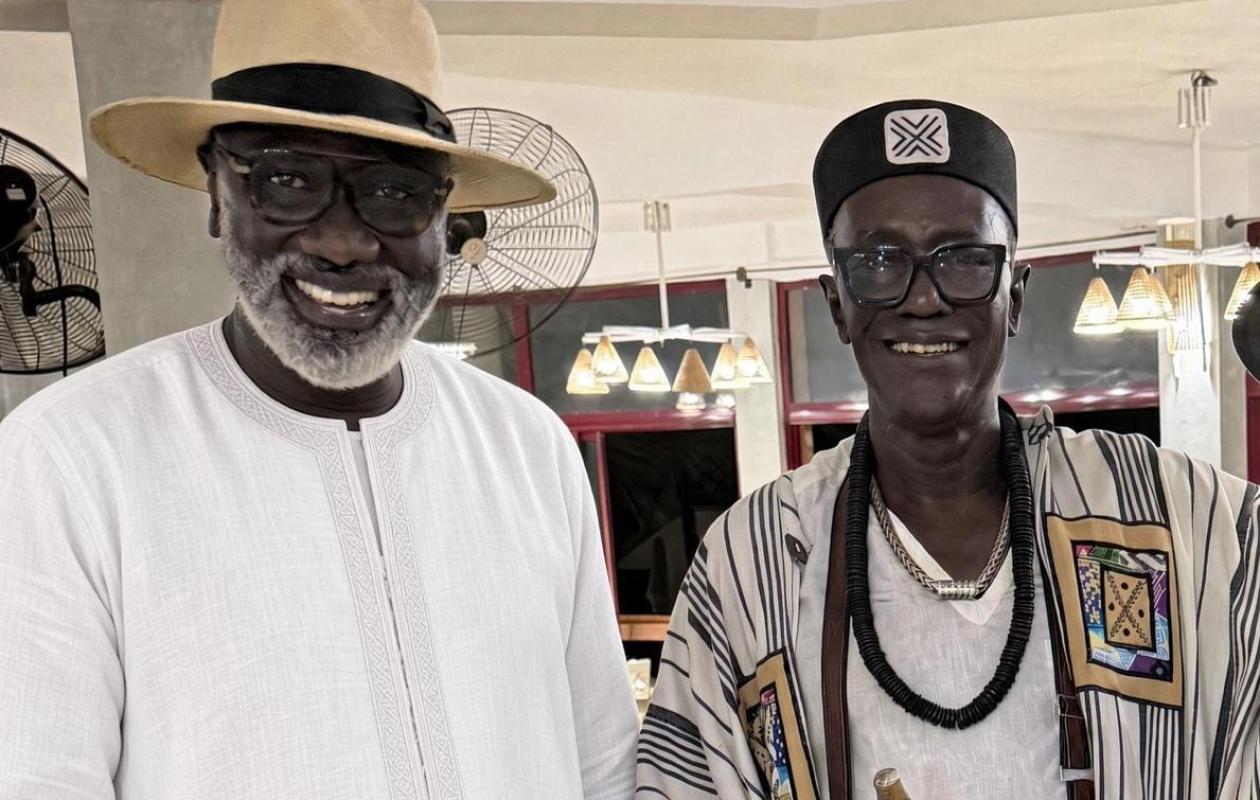
Les morts ne sont pas morts : ce que Cheikh Hamidou Kane nous laisse (Par Moussa Sene Absa et Abdou Samb)
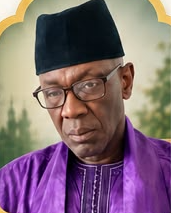
The death of Sheikh Hamidou Kane does not bring his work to a close. It raises a question. We have read it together. We are revisiting it because it remains unresolved.
The school was already a war zone.
Ambiguous Adventure doesn't tell the story of a young Fulani man torn between two cultures. It poses a dilemma. The Diallobé people see the foreign school coming. The Koranic teacher sees it as a threat to the soul. The Great Royal School, however, sees something else entirely: those who have come no longer fight only with weapons. They fight with a school. Keeping the children home means accepting defeat. Sending them there means risking the loss of what one wanted to remain true to oneself.
Kane doesn't choose between the two. To close the school to the outside world in the name of loyalty is laziness. To enter it without return, and to call progress what is merely forgetfulness, is another. Samba Diallo pays the price for this stance. He learns, he leaves, he doesn't return unscathed. The book doesn't save him.
For him, ambiguity is not a lack of clarity. One can acquire the world's knowledge. But one must still ask what it costs, and to whom.
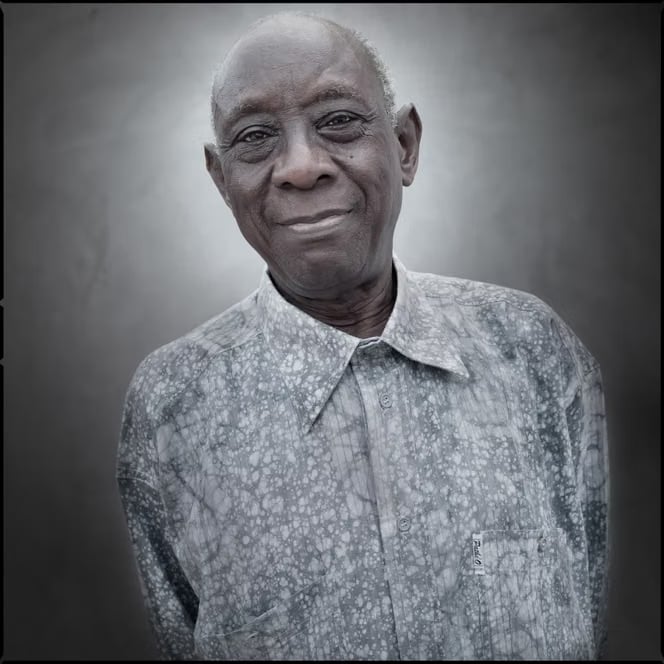
He lived the question he was writing about.
He doesn't write this from the margins. He writes it from his native Fouta, where the Koranic school still held pride of place. Then Saint-Louis, Dakar, Paris. Law, literature, philosophy, the diploma from the National School of Overseas France. Samba Diallo, he was that before he invented the term: the child sent to learn how the world joins wood to wood, without knowing what he will bring back.
His return was anything but a novel. On the eve of independence, Mamadou Dia appointed him governor of Thiès. Then the state was being built and already fracturing, between Senghor and Dia. He left his ministerial post during this crisis. After that, Africa was no longer part of Senegal. He didn't have to define his Africanness. It was evident in his roles, his travels, in his way of treating the continent as a single workplace. He remained in government until 1988. The Guardians of the Temple would later explain what becomes of a country when those who were meant to safeguard it begin to govern it.
He got in. He knew how to get out. That's not so common.
What we do with it
His question became ours.
One filmed her without naming her. Tableau Ferraille shows the post-independence power structure, where idealism meets compromise. It's a twist in Popenguine, a generation learning another language, another kind of music, and whose legacy remains uncertain. Madame Brouette embodies a dignity that doesn't seek from the state: it resides in the everyday lives of those ignored by official narratives. These films don't comment on Kane. They show that the turmoil hasn't ended.
The other encounters it on the day a child turns eighteen. Every African parent knows this moment. Europe, the United States, Canada, China. A file, a visa, a plane. It's called an opportunity. It's often a necessity. The one who lets their child go unknowingly takes on the fear of the Great Royal. If the child stays, what becomes of them in a country that doesn't have a place big enough for them? If they leave, what remains of them, and will they ever return? The dilemma is the same. Only the airport has changed.
Making youth the seventh region of the African Union means wanting to break free from the current situation. Not closing borders. It means ensuring that leaving is no longer the only option, and that parents can send their children to study abroad because they choose to. Staying should be an aspiration. Local schools should be strong enough so that going elsewhere is no longer an escape. Kane posed this question to a child. We pose it to the continent.
The dead are not dead
Birago Diop wrote it in Souffles. Those who have died have never left. They are in the trembling tree, in the flowing water, in the hut, in the crowd. The breath changes location.
Kane enters this breath. Not a memory to file away. A question that continues.
We're taking it up again together. Not the same age, not the same profession. A filmmaker who has spent his life observing the country. A man who works to give it institutions. The same ideal, the one Kane left behind: not having to choose between shutting ourselves off and losing ourselves.
Moussa has already made it visible. In his films, the heartbreak isn't mentioned. It's there. A city wearing thin, a generation learning another language, a woman enduring without asking. He will continue, in cinema, in painting. His gaze doesn't stop at Yoff.
I will take it elsewhere. To the African Union, in work with young people, it must not remain a textbook. It must enter the home where a father, at eighteen, no longer has to choose between keeping his child and losing him.
One films. The other tries to contain it within an institution. We are not mourning an author. We are picking up a thought where he left it.
Sheikh Hamidou Kane has not left.
Moussa Sene Absa is a Senegalese filmmaker, painter and composer.
Abdou Samb is president of the Abdou Samb Foundation and honorary ambassador to the Pan-African Parliament for the diaspora.


















Commentaires (2)
pour un intellectuel d' un tel Niveau , contemporain de Cheick Anta , très insultant pour nous, d' autant plus qu' on répète ici la méthode coloniale, surtout culturelle.
Senghor lui est alle plus loin: L' emotion est negre, la raison Helene
Je ne veux pas affirmer des choses sans preuves, mais c' est a se demander si ces gens ne travailler pas contre l' éveil de leur propre peuple. En tout cas ils ont été soutenu pas les anciens colon (Honneur , Prix, temps d' antenne est..)
Participer à la Discussion
Règles de la communauté
💡 Astuce : Utilisez des emojis depuis votre téléphone ou le module emoji ci-dessous. Cliquez sur GIF pour ajouter un GIF animé. Collez un lien X/Twitter, TikTok ou Instagram pour l'afficher automatiquement.
Se connecter
Commentez avec votre profil, votre photo, et soyez averti des réponses.