
Lettre ouverte à Monsieur le Ministre de l'Éducation nationale : Six garçons sur quarante-sept : Où sont les autres ? (par Adama Sow)
Mr. Minister,
In Joal-Fadiouth a few days ago, academic authorities organized a celebration of excellence to honor the year's top students. Forty-seven children went up to receive their awards to applause. Of these forty-seven award winners, only six were boys. Six. The principal of the Petite Côte middle school, interviewed by journalist Ndeye Maty Dieng, correspondent for RFM radio, didn't mince words in explaining why: "The boys are drawn elsewhere."
"Swept away elsewhere." In three words, this grassroots educator expressed what our national statistics confirm, session after session, without our public policies drawing the necessary conclusions: our boys are abandoning school. Allow a citizen who has dedicated his life to the cause of youth, since 1985, the International Year of Youth, to raise this cry before you, and before the Nation.
I want to begin by paying tribute to what has been a success. For thirty years, Senegal, along with its partners, has fought to educate its girls. This fight was just. It has been won. At the primary level, the gross enrollment rate has now reached 91.2% for girls, compared to 76.0% for boys. Everywhere, the gender parity index has now shifted in favor of girls. We should be proud of this.
But every victory casts its shadow. And this one's shadow bears a face that no program can see: that of the boy who is no longer here. The figures from your own administration scream it. In the 2026 baccalaureate session, out of 180,786 registered candidates, there were 110,084 girls and only 70,702 boys. Six out of ten candidates are girls. Boys have become a minority in the exam, not because they fail, but because they disappear before they even sit for it. The situation in Joal is not an exception: it is the local manifestation of a national shift.
Where do they go? They go to the mines: in the gold mining sites of Kédougou, school dropout rates are twice as high for boys as for girls. They go to the daaras, where the practice of entrusting children to others—a once respectable tradition corrupted—snatches tens of thousands of young boys away from public schools. They take to the dugout canoes. They get involved in drug trafficking, delinquency, and hustling. And for the past few years, a new affliction has been gripping them, which I can attest to as an expert in online youth protection: addiction to sports betting and online gambling.
This scourge is no longer a rumor. The Integrated Addiction Treatment Center in Dakar has established that 95% of gamblers are "at risk" and that half are experiencing excessive gambling, a suffering, doctors say, comparable to that of drug addiction. In the suburbs of Guédiawaye, Pikine, Keur Massar, and Rufisque—the most populated departments in the country—I have seen, during my awareness sessions and discussions with your own school inspectors, these darkened rooms where teenagers are wasting their days and their future in front of betting screens. What began in the suburbs of Dakar is now spreading throughout the country, even reaching the schools of the Petite Côte and beyond.
And all these paths lead to the same precipice. According to the most recent ANSD survey, more than one in three young people aged 15 to 24 – 34.1% – are currently neither employed, nor in education, nor in training, and this proportion is increasing year after year. This is the reservoir of exclusion where our dropouts end up. Make no mistake: this scourge also hits our girls hard, in a different way and later, when the job market rejects them despite their qualifications. This is clear proof that youth policy can no longer be conceived solely for the benefit of one gender.
Mr. Minister, I choose my words carefully, and I reject this easy judgment: acknowledging the boys' disengagement is not taking away from the girls what they have worked so hard to achieve. There is no choice to be made between our children here. Retaining our boys costs our girls nothing. But to continue viewing the world only through yesterday's lens, the one where the girl alone was the educational victim to be protected, is to allow an entire generation of boys to slip through the cracks, and beyond the reach of the nation.
Because this boy whom the school loses at fourteen, we find him again at twenty: idle, vulnerable, a candidate for exile, prey to trafficking, or a rebel without a cause. Boys dropping out of school is not just a school issue. It is a matter of security, cohesion, and the nation's future.
I'm not just here to raise the alarm. I'm here to demand. That your ministry finally commission a national, gender-disaggregated study on school dropout, incorporating these new urban manifestations of online gambling and addiction. That we shift from a policy of "educating girls" to a policy of equity that also protects our boys, without taking anything away from anyone. That protecting minors from gambling platforms become a priority, building on the clear-sightedness already expressed at the highest levels of government. And that we focus our efforts where the dangers are greatest: the suburbs, gold mining areas, and foster homes.
From the very start of last school year, you had the courage to regulate phone use in schools. This proves that this government understands the dangers of digital technology. I urge you to go further and confront what our statistics, and even a simple celebration of excellence in Joal, have been telling us in hushed tones for far too long.
A country that loses its daughters loses its present. A country that loses its sons loses its future. We have saved the former. It is time, without abandoning them, to stop abandoning the latter.
Hoping to be heard, I ask you to accept, Mr. Minister, the expression of my highest consideration.
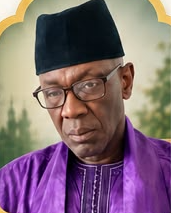
Adama Sow
Journalist, specialist in digital practices and online youth protection — Dakar













Commentaires (14)
Participer à la Discussion
Règles de la communauté
💡 Astuce : Utilisez des emojis depuis votre téléphone ou le module emoji ci-dessous. Cliquez sur GIF pour ajouter un GIF animé. Collez un lien X/Twitter, TikTok ou Instagram pour l'afficher automatiquement.
Se connecter
Commentez avec votre profil, votre photo, et soyez averti des réponses.