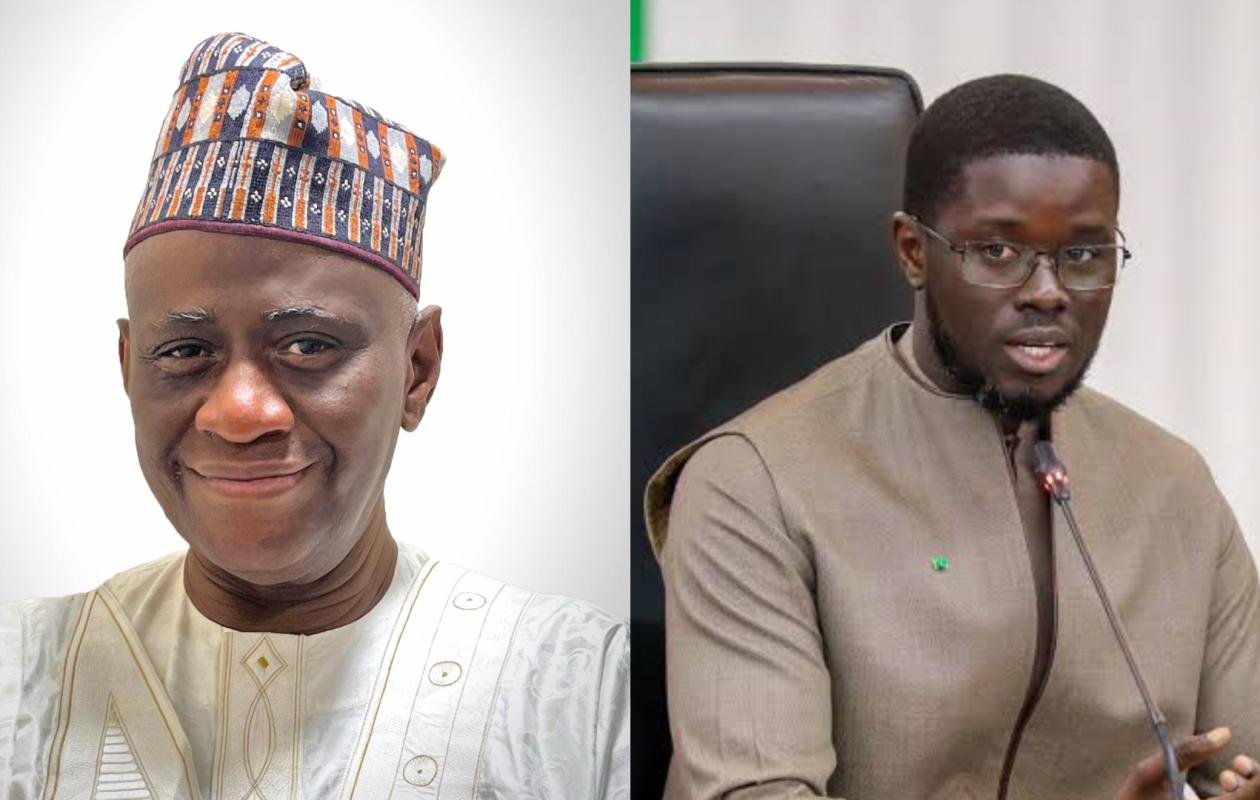
LETTRE OUVERTE AU PRÉSIDENT DE LA RÉPUBLIQUE DU SÉNÉGAL : Cinq réformes emblématiques pour renforcer la discipline budgétaire, la transparence et la confiance publique (par Aboubakr Kaira Barry)
Mr. President,
I wish you every success and divine guidance in carrying out the immense responsibilities that the Senegalese people have entrusted to you.
The International Monetary Fund (IMF) has announced that it has reached a staff-level agreement with your administration on a draft loan agreement of approximately US$2.2 billion under its Extended Credit Facility. However, since 1979, Senegal has entered into 20 loan agreements with the IMF, as well as two emergency loans, without managing to establish inclusive growth that benefits the majority of its population.
I therefore doubt that a new agreement with the IMF alone will be enough to build widespread prosperity. To succeed, Senegal must address two root causes that explain why past agreements have not yielded lasting results and why the country is experiencing its current economic difficulties.
TWO DEEP-SEATED CAUSES
The first is rent-seeking—a practice where well-connected individuals use public rules and state power for personal enrichment rather than to create real economic value. In Senegal, as in many developing countries, some insiders use public institutions for private gain. They also oppose reforms that would benefit all citizens if these reforms threatened their personal privileges.
This is not just an opinion. In its regular review of the Senegalese economy in 2016, the IMF repeatedly identified rent-seeking as an obstacle to reforms and transparency. It emphasized that 11 priority reforms, agreed upon in March 2016 by the Prime Minister and key ministers, had been "blocked by entrenched interests that are difficult to overcome."
The second point is that Senegal lacks a complete picture of its own financial situation. Every family and every business needs to know what it owns (its assets) and what it owes (its debts). The difference between the two constitutes its net worth (its net worth). The Senegalese state does not yet have a complete and reliable picture of its own net worth.
In 2018, in an independent assessment of the transparency of Senegal's public finances, the IMF indicated that the country's accounting practices "do not allow for the determination of the government's net worth." Entire segments of the state's assets, resources, and financial liabilities were completely absent from official reports. In September 2026, during a review of Senegalese economic statistics, the IMF again highlighted the absence of government balance sheets—showing what the state owns, what it owes, and its net worth—as a serious vulnerability.
This gap persists despite Senegal's administrative capacity and many years of substantial external support. The World Bank alone committed US$45 million to a public financial management project conducted from 2011 to 2019, the results of which were deemed "moderately unsatisfactory" by the Bank's own independent evaluators. This support was in addition to that provided by the IMF, the European Union, the African Development Bank, and France. In June 2025, the World Bank approved a new US$115 million in financing to support fiscal reforms and strengthen public financial management.
Rent-seeking thrives when public finances are opaque. This combination leads to discretionary tax breaks for a select few, inflated public contracts, embezzlement of public funds, and special rules that shield well-connected businesses from competition. Ordinary citizens, especially the most vulnerable, pay the price through a higher cost of living, degraded public services, and a decline in their standard of living.
A CRISIS IS AN OPPORTUNITY
Crises sometimes allow for the adoption of reforms that would otherwise be politically unacceptable. The experience of Greece after its debt crisis illustrates this point. The reforms were painful and the social costs very high. But lasting structural changes in fiscal management enabled the country to regain its stability and credibility.
The lesson is not that Senegal should copy Greece. The two countries have different economies and institutions. The lesson is that a crisis presents a rare opportunity to resolve problems that have been allowed to fester for far too long.
Senegal is currently facing numerous urgent challenges, from administrative reform and domestic revenue mobilization to youth employment. However, without mastering the fundamentals of public money management, all other sectoral plans will falter.
This letter outlines five key reforms that, in the eyes of the Senegalese people, would represent a clear and decisive break with past practices. Together, they will lay the foundations for budgetary visibility, transparency, and integrity.
1. Put an end to unjustified tax exemptions
For over a decade, the IMF has been concerned about the extent of tax exemptions, but the problem persists—even during the 2023 review, when it was still calling for their reduction. Depending on the year and the estimates used, these exemptions have cost Senegal between 5.3% and 7.8% of GDP. This is a significantly larger loss of revenue than that observed in neighboring countries such as Côte d'Ivoire or Mali.
According to official figures cited by the Court of Auditors in February 2025, the cost of tax exemptions increased from 750.3 billion FCFA in 2019 to 952.7 billion FCFA in 2021. The tax administration did not produce comparable figures for 2022 and 2023.
Every franc granted through an unjustified exemption is a franc that the ordinary taxpayer must compensate, or a franc less for Senegal’s roads, schools, hospitals and basic public services.
I recommend the creation of an independent commission tasked with reviewing all existing tax exemptions and making their beneficiaries public. This commission should recommend the immediate cancellation of any exemption that does not generate clear and measurable economic or social benefits for the country. When an exemption is maintained, the government must publicly explain the reasons for it. Any new exemption should expire automatically after a specified period, for example, five years, unless renewed by a specific law passed by the National Assembly.
2. REVISE CUSTOMS DUTIES AND REGULATIONS THAT PROTECT A MINORITY
Tariffs and regulations can serve legitimate public objectives, such as protecting health, safety, and national strategic interests. However, they can also be used to shield politically connected businesses from fair competition. In this case, consumers pay excessive prices, and the cost of doing business increases throughout the economy, discouraging new investment, both domestic and foreign.
As the economist Adam Smith pointed out:
"It is rare for people of the same profession to gather, even for entertainment, without the conversation ending in a conspiracy against the public or some scheme to raise prices."
An independent commission must review tariffs and business regulations to assess their real impact on consumers, competition, and the investment climate. The central question must be simple: does this measure protect a genuine public interest, or does it merely serve to preserve the profit margins of a privileged few?
This commission must submit its report directly to you, Mr. President, with operational recommendations on which measures to maintain, modify, or eliminate. Every customs duty and regulation must be transparent, justified, proportionate, and designed to serve the Senegalese people rather than entrenched private interests.
3. MAKE EVERY PUBLIC PROCUREMENT TRACEABLE
Corruption and losses in public procurement represent the greatest budgetary risk for a state. In Senegal, public procurement accounts for 15 to 20% of GDP, according to the World Bank. In *Best Things First* , Bjørn Lomborg demonstrates that the transition to electronic and transparent public procurement is one of the most profitable investments a government can make: he estimates that every dollar spent on digitizing public procurement yields $38 in savings and economic benefits.
Senegal has a modern public procurement code, a regulator, and a public procurement portal. However, in June 2025, in its evaluation document for its US$115 million program, the World Bank noted that significant amounts are still awarded through direct negotiation (without open competition) and that the publication of public procurement data remains limited. It also observed that the electronic procurement system does not allow for a fully digital process and is not securely linked to budget, accounting, and payment systems, which, the Bank warned, "limits the traceability of public spending."
A public contract may be visible at the time of the tender notice, but its amendments, cost overruns, and final disbursements often remain hidden. This lack of transparency opens the door to waste, favoritism, and corruption.
Senegal must implement a fully integrated, end-to-end electronic procurement system. Each public contract must be assigned a unique identification number that follows it continuously, from initial budget entry to final bank payment. Tender notices, awards, amendments, implementation milestones, final costs, and actual payments must be published online in an open, searchable format.
The operational rule must be inviolable: no payment without a complete digital trace.
Making public procurement online won't eliminate corruption overnight, but making every administrative decision, amendment, and payment visible will make it easier to identify irregularities and much harder to conceal them. Completing this system must be an urgent priority.
4. BUILDING THE INFRASTRUCTURE OF BUDGETARY VISIBILITY
Senegal cannot manage what it cannot see. Senegal's public financial management systems must be completed and unified.
This requires two essential steps:
The task will not be easy, as greater transparency naturally provokes resistance from those who benefit from informal systems. However, full visibility brings three major benefits:
These are not mere accounting details. This is the essential basic infrastructure for managing public resources responsibly.
5. CREATE INSTITUTIONS THAT CURB SHORT-TERMISMOTION
Every government faces political pressure to immediately commit to routine operating expenses, subsidies, and short-term programs, leaving future generations to shoulder the burden of debt repayment. When budgetary adjustments inevitably become necessary, it is the most vulnerable citizens who suffer the most.
Figure 1. Senegal's budget deficit and the 3% ceiling of the WAEMU. Source: IMF, World Economic Outlook, April 2026.
Senegal’s own budget data illustrate the extent of this pressure (Figure 1). Between 2015 and 2024, the budget deficit was within the WAEMU ceiling of 3% of GDP in only one year (2017). In 2019, the deficit reached nearly 14% of GDP, more than four times this ceiling. Even though WAEMU suspended this ceiling in April 2020 due to the pandemic, the persistence of high deficits demonstrates why Senegal urgently needs sustainable institutions to anchor fiscal discipline. Developed countries rely on such institutions, like independent central banks and legally established independent authorities, to contain short-term political pressures.
I propose three mechanisms: the first two established by law, the third by a constitutional revision.
An independent project evaluation commission (established by law). Large infrastructure projects can transform an economy, but without rigorous selection, they easily become sources of cost overruns, undue rent-seeking, and waste. In its 2018 review, the IMF conducted a Public Investment Management Assessment (PIMA) and identified persistent weaknesses in how Senegal prepares, selects, and executes its public investment projects.
Senegal should establish an independent commission of qualified economic and technical experts tasked with evaluating major projects before they are included in the state budget. Its mission would be to determine whether the expected socioeconomic benefits of a project truly outweigh its overall cost over its entire lifecycle, including long-term maintenance and operating expenses. South Korea provides a useful example. Since 1999, major projects exceeding a certain amount have been required to undergo a pre-feasibility study conducted by the Korea Development Institute, a public research institute independent of the spending ministries, before being included in the budget; the Ministry of Finance retains the final decision. Norway follows a similar approach. Senegal can adapt these examples to its own legal framework.
This commission will have to:
The government would retain the sovereign power to approve projects, but when it overrides the commission's opinion, it must make the reasons public.
An independent Office of Budgetary Accountability (established by law). This office would produce independent assessments of the state of public finances, medium-term budgetary prospects, debt sustainability, and the credibility of the government's revenue forecasts. It would offer citizens and members of parliament a second, objective, and non-partisan opinion.
The UK's Office for Budget Responsibility is a clear example. In 2022, when the British government announced significant unfunded tax cuts without independent forecasting from its budget office, financial markets reacted sharply, forcing the central bank to intervene urgently. A few weeks later, Prime Minister Liz Truss resigned after only 45 days in office, a clear demonstration of the influence an independent budget office has on fiscal discipline. Senegal does not need to replicate the British model, but the principle is clear: fiscal policy gains credibility when its assumptions are independently verified.
This office would assess economic forecasts and budgetary sustainability from a forward-looking perspective, complementing — and not replacing — the Court of Auditors, whose ex-post control role remains indispensable.
A constitutional budgetary rule. Over the course of a presidential term, current operating expenses (such as administrative operating costs and public sector salaries) must be financed entirely by domestic revenue, not by borrowing. Government borrowing must be strictly reserved for investments whose social benefits demonstrably exceed their total cost. This is known as the "golden rule": the state can borrow to build the future, but not to pay for its current expenses.
This golden rule must be enshrined in the Constitution precisely so that it is difficult to change. As Ngozi Okonjo-Iweala, now Director-General of the World Trade Organization and twice Nigeria's Minister of Finance, writes in *Fighting Corruption Is Dangerous* : "To be sustainable, good fiscal practices may need to be enshrined in the Constitution." For such a rule to hold, an organic law (a special law placed just below the Constitution) must clearly define what constitutes operating expenses and what constitutes investment expenditures. Otherwise, ordinary expenditures can simply be reclassified to circumvent the rule. Even a familiar expense can be interpreted in both ways: Is a teacher's salary an operating expense or an investment in human capital?
Above all, the constitutional provision must include strictly defined derogation clauses for exceptional national emergencies—natural disasters, pandemics, or severe economic shocks. This ensures sustainable budgetary discipline throughout normal political cycles without restricting the executive branch's ability to respond decisively to a genuine national crisis.
To preserve their integrity and public trust, members of the Project Evaluation Commission and the Office of Budgetary Responsibility must be appointed solely on the basis of proven professional competence. They must be granted fixed and staggered terms of office, so that no single administration appoints them all at once, be protected by law against dismissal without just cause, and be subject to rigorous rules regarding conflicts of interest.
MANAGEMENT AND MONITORING FROM THE PRESIDENT'S OFFICE
None of these reforms will succeed without direct and sustained oversight from the President of the Republic. I therefore recommend the creation, within your office, of a small implementation monitoring unit (Delivery Unit), headed by a senior official and dedicated exclusively to the execution of these priority reforms.
This unit must not duplicate the work of the ministries. Its role will be to monitor progress, identify administrative obstacles, bring together the relevant departments, and report directly to you based on measurable performance objectives.
Former British Prime Minister Tony Blair relied on a dedicated unit to maintain focus on cross-cutting government priorities. Senegal can adapt this model to its own administrative culture, including through technical cooperation with institutions experienced in these methods, such as the Tony Blair Institute.
The task force should organize monthly follow-up meetings, chaired by you, to monitor these reforms alongside your key priorities. These sessions will provide ministers and directors general with a regular framework to showcase what has been accomplished, explain what remains stalled, and secure the necessary decisions to move the files forward. As Lou Gerstner, who rescued IBM from near collapse in the 1990s, observed in his memoir *Who Says Elephants Can't Dance?* : "People don't do what you expect them to do, they do what you control."
This implementation work rarely makes headlines, but it is essential. Reforms don't fail for lack of good intentions; they fail because implementation falters and entrenched interests quietly resist change. Only sustained presidential attention provides a counterweight powerful enough to overcome this inertia.
CONCLUSION
Senegal possesses profound national assets: social cohesion, a lasting culture of democratic dialogue, a history of peaceful political transitions, and its administrative capacity.
There is nothing wrong in Senegal that cannot be fixed by what works well in Senegal.
What is needed today is a clear vision, the political will to remove the obstacles to widely shared prosperity, and what Justin Yifu Lin, former chief economist of the World Bank, calls the late-start advantage: copying, adapting and implementing policies that others have used to solve similar problems.
The five emblematic reforms proposed in this letter reinforce each other. Together, they would establish structural budgetary discipline, restore transparency in public management, reduce opportunities for waste and rent-seeking, and redirect public resources towards productive investments that broaden Senegal's economic future.
Mr. President, what we cannot see, we cannot manage. These reforms will allow Senegal to clearly see its public finances—and to govern them for the lasting benefit of all its citizens.
By Aboubakr Kaira Barry, CFA, former Chief Financial Officer of the Islamic Development Bank, Managing Director of Results Associates and Chairman of the Board of Directors of Omou Financial Literacy Center, Bethesda, Maryland, USA
















Commentaires (14)
Participer à la Discussion
Règles de la communauté
💡 Astuce : Utilisez des emojis depuis votre téléphone ou le module emoji ci-dessous. Cliquez sur GIF pour ajouter un GIF animé. Collez un lien X/Twitter, TikTok ou Instagram pour l'afficher automatiquement.
Se connecter
Commentez avec votre profil, votre photo, et soyez averti des réponses.