
L’université africaine à l’épreuve des mutations scientifiques et technologiques internationales (Par Pr Ahmadou Aly Mbaye)
Since the Industrial Revolution, scientific and technological innovation has played a decisive role in transforming economies. The creation of new products, the improvement of production processes, and the dissemination of knowledge have led to considerable productivity gains. Universities have long held a privileged position in this dynamic. A new phase of upheaval is now beginning, driven by digital technology, artificial intelligence, biotechnology, and the energy transition. This is changing not only the global geography of science but also the relationships between research stakeholders. Indeed, private companies and research centers, as well as specialized public institutes, are becoming the dominant players in a rapidly transforming ecosystem, at the expense of universities. The African continent still contributes only modestly to global scientific output and remains dependent on technologies largely developed elsewhere. However, the spread of digital tools, internationalization, and the emergence of new technological needs also offer opportunities for catching up. The experience of countries like Turkey and China shows that implementing appropriate strategies could yield tangible results in relatively short timeframes.
The international geography of research has changed dramatically. Europe, the cradle of the industrial revolution, remains a major scientific power, but the rise of the United States, followed by China and several Asian economies, has profoundly altered the balance. China now combines extensive scientific capabilities, a powerful industrial base, and massive investments in sectors such as batteries, artificial intelligence, and telecommunications.
This evolution is accompanied by a diversification of knowledge producers. Private companies have research centers capable of mobilizing considerable teams and equipment in many fields (pharmaceutical, digital, energy, and aeronautical). Specialized public organizations and public-private partnerships also play an increasing role. The development of messenger RNA vaccines illustrates the growing role played by these new actors. Similarly, the rise of space technologies demonstrates the growing influence of these same actors.
Domestic expenditure on research and development (GERD) encompasses all research activities within a country. The university component (HERD) specifically refers to expenditures in higher education. The evolution of this expenditure distribution reveals a relative decline in the role of universities in several major economies over the long term. In OECD countries, the share of private companies in total R&D is projected to increase from 67% in 2010 to 73% in 2024. This growth is even more dramatic in China, where the proportion is expected to rise from 60% in 2000 to nearly 78% in 2025. In the European Union, the share of universities remains above 20%, reflecting the relative weakness of new research players in this region. This weakness is even more pronounced in developing countries, with a ratio exceeding 40% in Latin American countries, for example.
In this new research landscape, universities that successfully integrate advanced training, high-quality research, industrial cooperation, and entrepreneurship can strengthen their position in the knowledge economy. Conversely, institutions isolated from other stakeholders risk seeing their influence diminish. For African countries, the strategic challenge is to build these connections without sacrificing their fundamental missions of independent knowledge production and civic education.
Africa facing the global scientific and technological divide
Africa has recognized research hubs, but these remain heavily concentrated in a limited number of countries, institutions, and disciplines. These successes should not, however, obscure the challenges facing research: inadequately equipped laboratories, limited resources for scientific operations, unequal access to journals and data, fragile doctoral supervision, and excessive teaching loads.
Underfunding is one of the main structural constraints facing African universities. According to the World Bank and UNESCO, public spending on education averaged 0.38% of GDP in sub-Saharan Africa in 2023, a level virtually unchanged since 2012. In higher education, the bulk of resources is absorbed by recurring expenses—salaries and allowances, operating costs, and student social services—leaving limited room for scientific investment. This constraint is particularly evident in Francophone Africa, where these expenses exceed 90% of total public spending on higher education in most countries. Lacking sufficient and predictable national funding, university teams frequently rely on projects financed by external partners. While these resources are essential, their sporadic and fragmented nature can jeopardize the establishment of sustainable teams, the maintenance of scientific infrastructure, and the development of research programs that address long-term national priorities.
Huge disparities persist across the continent's regions and countries. According to a 2026 UNESCO study, South Africa and Egypt accounted for 26% and 21% respectively of African scientific publications between 2000 and 2021, compared to 6% for Nigeria and 4% for Kenya. In 2021, South Africa produced approximately 33,000 scientific publications, compared to 16,700 for Nigeria and 1,050 for Senegal. These gaps also reflect the profound differences in human and financial resources available to higher education systems across the continent.
Brain drain is another weakness for African research. The DIOC database (Database of Immigrants in OECD and non-OECD countries) is one of the most accurate statistical tools for measuring this "brain drain." It assesses migration by cross-referencing country of birth, age, and, most importantly, level of education (primary, secondary, and higher). It reveals a lower overall emigration rate for the African population in OECD countries than in other regions of the world, contrasting with the highest emigration rates of highly educated individuals in the world. Across sub-Saharan Africa, 20% of people born in the region with a higher education degree live and work in an OECD country. This rate climbs to 50% in some conflict-affected countries.
Rebuilding university institutions to optimize their contribution to development
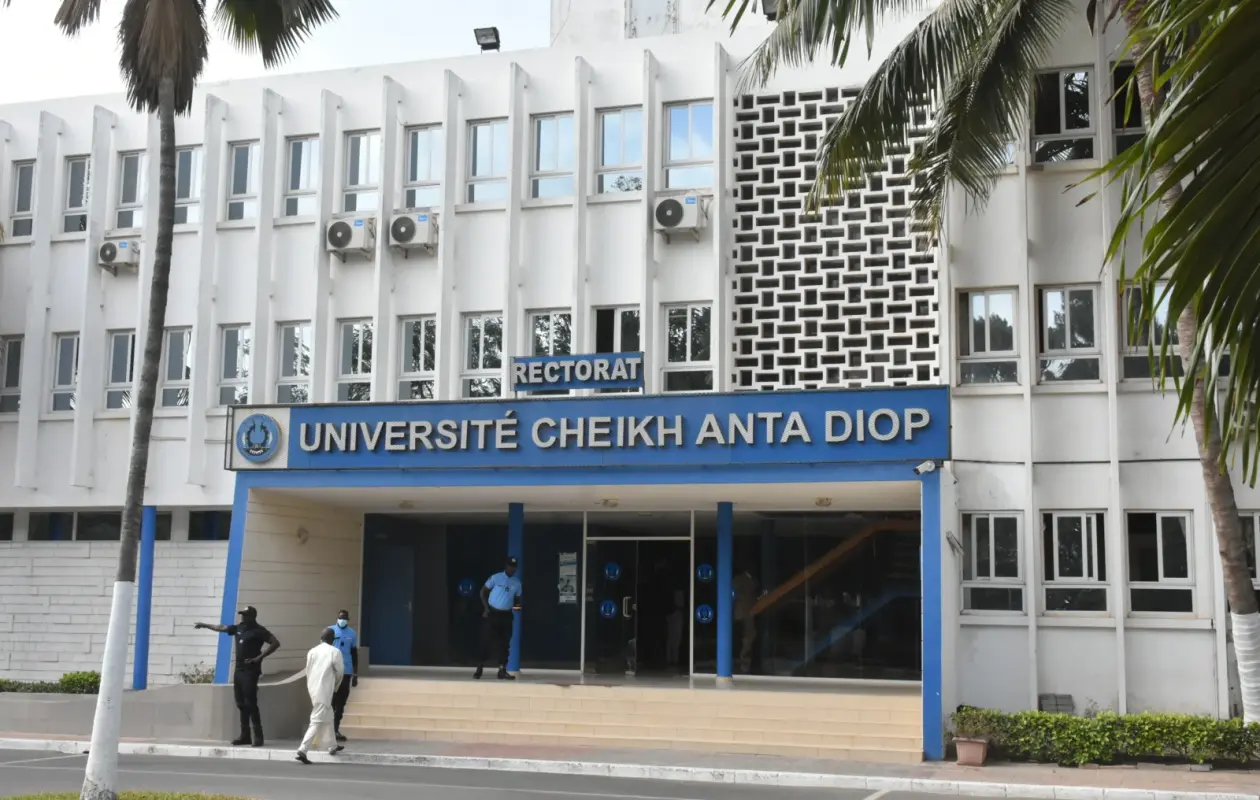
Colonial history has left lasting marks on African higher education. In several British territories, local university colleges were established before independence: Makerere appeared in 1922, while Ibadan and Legon were founded in 1948. In French West Africa, the higher education of elites was long more oriented towards the metropolis; the University of Dakar, created in 1957, on the basis of earlier institutions, is a notable exception.
In the Francophone tradition, the centrality of the state, the role of elite institutions, and national or regional career management mechanisms have contributed to shaping universities strongly oriented towards training public sector managers. In such a system, the state has remained the dominant actor in both the governance and financial models of universities, which negatively impacts their autonomy and performance.
A credible reform must first grant institutions genuine autonomy in management and planning, coupled with tangible results. Governance boards should integrate scientific, economic, and territorial expertise, while preserving academic freedom. Core public funding remains essential; it would benefit from being supplemented by competitive funds, multi-year contracts, and transparent evaluation mechanisms. Career advancement should recognize the quality of publications, doctoral supervision, teaching, interdisciplinarity, and innovation, rather than relying primarily on statutory criteria. Finally, the private sector must become a key partner of the university. Businesses can help define the skills needed, host students, co-finance projects, and transform scientific results into productive innovations.
Several examples of countries that have significantly boosted their national research systems demonstrate that the marginalization of African universities is not inevitable. In 2015, China launched the World-Class Universities Program and the World-Class Disciplines Initiative. These programs continued reforms initiated in the 1990s, including the 100 Priority Universities Strengthening Project in 1995 and the 1000 Talents Program launched in 2008. Similarly, Turkey launched the Research Universities Program in 2017 and numerous other programs aimed at revitalizing research. While China has become a dominant technological power globally, Turkey has made impressive breakthroughs in key sectors such as medicine, energy transition, and aerospace.
Professor Ahmadou Aly Mbaye ,
tenured and associate professor in
economic sciences (CAMES)



















Commentaires (2)
Participer à la Discussion
Règles de la communauté
💡 Astuce : Utilisez des emojis depuis votre téléphone ou le module emoji ci-dessous. Cliquez sur GIF pour ajouter un GIF animé. Collez un lien X/Twitter, TikTok ou Instagram pour l'afficher automatiquement.
Se connecter
Commentez avec votre profil, votre photo, et soyez averti des réponses.