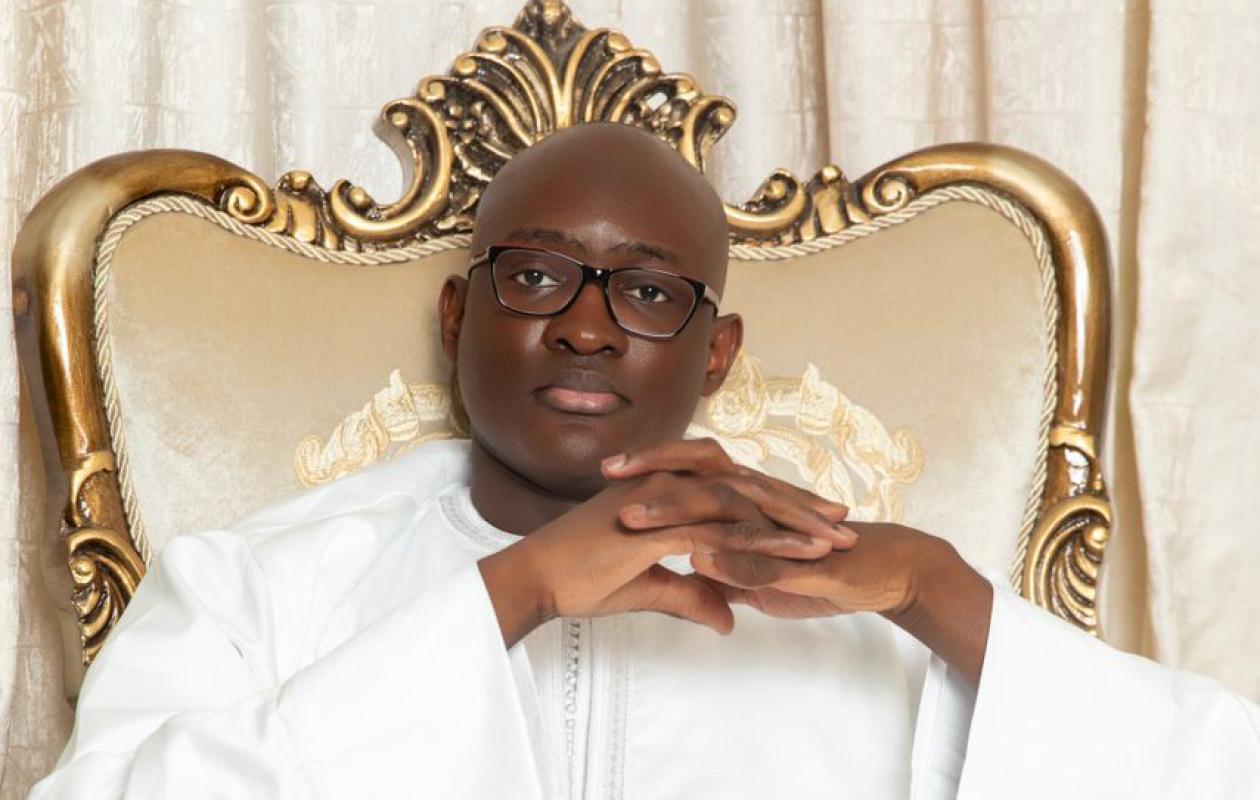
Pourquoi le monde ignore-t-il encore l'un des plus grands penseurs d'Afrique ? Le cas de Cheikh Ahmadou Bamba (par Cheikhabdou Lahad MBACKE)
In every era of crisis, humanity returns to the great minds that have illuminated its path.
When landmarks falter, when certainties collapse and societies seek a new equilibrium, men rediscover thinkers capable of reminding us of what is essential.
Today, our world is going through precisely one of these periods.
Humanity has never mastered technology to such an extent. Never before has it produced so much wealth, exchanged so much information, or pushed the boundaries of science so far.
And yet, she has never seemed so in search of meaning.
Conflicts are multiplying. Social divisions are widening. Trust is eroding. Material progress often advances faster than moral progress.
Faced with this crisis of values, the world naturally turns to the great figures of history. People mention Gandhi, Martin Luther King Jr., Confucius, Socrates, and other thinkers whose ideas continue to inspire generations.
Their legacy is immense.
But one question deserves to be asked frankly:
Why is a figure whose work has brought together millions of people for over a century still largely absent from the major global intellectual conversation?
This figure is Sheikh Ahmadou Bamba.
More than a century after his passing, his influence continues to grow. His teachings continue to shape generations. His writings are studied, commented upon, and passed on. His work nourishes the spiritual, educational, and social lives of millions of followers across several continents.
Yet, outside of Senegal and the Mouride community, his name remains surprisingly little known in major international academic, philosophical and media circles.
How can we explain that a man who developed such profound thought on peace, knowledge, ethics, work and human dignity remains so little studied on a global scale?
This question goes far beyond the religious sphere.
It concerns the place that the world gives to great ideas from Africa.
Think about man before trying to change the world
What profoundly distinguishes Serigne Touba is his perspective on human transformation.
Where many reformers have sought first to seize power or transform institutions, Sheikh Ahmadou Bamba chose a different path.
He wanted to shape man.
For him, no society can sustainably improve if the individuals who compose it do not improve themselves.
This intuition seems surprisingly modern.
At a time when there is constant talk of political, economic or technological reforms, Serigne Touba reminds us that the first revolution is internal.
His project is based on a remarkable articulation between several dimensions that the contemporary world often sets in opposition:
- faith and reason;
- spirituality and action;
- knowledge and work;
- personal success and service to the common good.
In this vision, true greatness is measured neither by wealth nor by power.
It is measured by the ability to become useful to others.
This is an idea that our era may need more than ever.
A philosophy of strength without violence
One of the greatest lessons left by Sheikh Ahmadou Bamba lies in his way of facing adversity.
Despite facing considerable adversity, he never made violence his language.
He chose patience, self-control, faith, and endurance.
This choice was not a resignation.
It was a show of force.
In an era where power and domination are often confused, his journey reminds us that there is another way to win.
The most difficult one.
Victory over oneself.
He who masters his passions is sometimes stronger than he who wins all battles.
This conception of power is undoubtedly one of the most universal aspects of his thought.
Knowledge as the driving force of human dignity
It is impossible to talk about Serigne Touba without mentioning his exceptional relationship with knowledge.
Author of a considerable body of work, he never presented knowledge as a mere instrument of prestige.
Knowledge only had value if it transformed the person who possessed it.
Knowledge that feeds pride is incomplete.
Knowledge that produces humility, discernment, and service becomes a true light.
At a time when we have access to an almost infinite amount of information but wisdom remains rare, this distinction appears strikingly relevant.
The challenge for heirs
For more than a century, the Mourides have preserved and transmitted this heritage with remarkable fidelity.
They founded schools, institutes, universities, libraries and social structures that testify to the vitality of this tradition.
But a new responsibility now emerges.
The challenge is no longer just to transmit the Sheikh's work to those who already know him.
The real challenge is to introduce it into the major intellectual conversations of the 21st century.
His writings deserve to be translated more widely.
His concepts should be studied in universities.
His thinking must engage in dialogue with philosophy, the humanities, contemporary ethics, and the major debates on development, peace, and social responsibility.
Today, young Mourides have tools that their predecessors did not have: digital platforms, international scientific networks, academic journals, artificial intelligence, and modern means of disseminating knowledge.
They can bring the thought of Serigne Touba into libraries all over the world.
An African voice for the challenges of the 21st century
For a long time, Africa has been portrayed primarily through its wounds.
Yet, it is also the continent that has given birth to thinkers, philosophers, scholars and spiritual guides whose ideas can enrich universal thought.
Sheikh Ahmadou Bamba undoubtedly belongs to this heritage.
His message transcends the boundaries of a brotherhood.
It questions every human being.
What kind of man do we want to become?
What place should be given to knowledge?
How can we reconcile material progress with moral elevation?
How can we build a society where work, justice, spirituality, and solidarity advance together?
These are precisely the questions to which our century is still seeking answers.
Conclusion: The world would benefit from knowing Serigne Touba better.
Great ideas do not become universal because they originated in the West or the East.
They become universal because they speak to the human condition.
Cheikh Ahmadou Bamba is one of those rare thinkers who offer a complete vision of man: a man who is inwardly free, enlightened by knowledge, disciplined in effort, guided by ethics and turned towards the common good.
Making his work more widely known is neither regionalism nor an identity claim.
It enriches the intellectual heritage of humanity.
Because the world today is looking for models capable of reconciling progress with wisdom.
Perhaps it is time for him to look more towards the one whom Africa has borne, whom Senegal saw born, and whom millions of women and men call, with respect and admiration:
Serigne Touba.
Dr Cheikhabdou Lahad MBACKE Doctor of Public Policy and Applied Macroeconomics Specialist in Negotiation and Conflict Management.












Commentaires (17)
Meme Massalikoul jinaan est la versification de khatimatou tassawouf de Yadali. Dites nous d'abord c'est quoi la nouveauté dans sa pensée par rapport à ses prédecesseurs
Participer à la Discussion
Règles de la communauté
💡 Astuce : Utilisez des emojis depuis votre téléphone ou le module emoji ci-dessous. Cliquez sur GIF pour ajouter un GIF animé. Collez un lien X/Twitter, TikTok ou Instagram pour l'afficher automatiquement.
Se connecter
Commentez avec votre profil, votre photo, et soyez averti des réponses.