
Quand l'histoire s'accélère : le Sénégal au seuil d'un nouveau cycle politique (Par Abdou Fall, ancien ministre d'État)
There are periods when history seems to advance at a slow pace. Then come moments when events unfold with such intensity that they profoundly disrupt the political and institutional balances of a country.
Since the change of power in March 2024, Senegal has undoubtedly been experiencing one of those pivotal moments.
In a few months, a series of exceptionally significant events profoundly altered the power dynamics at the top of the state: the political break between President Bassirou Diomaye Faye and his Prime Minister Ousmane Sonko, the latter's dismissal, his return to the National Assembly, his election to the presidency of that institution, the adoption of a constitutional revision law intended to redefine institutional balances, the appeal introduced by the President of the Republic before the Constitutional Council, and then the historic decision of July 9, 2026 invalidating this text.
Rarely in the recent political history of Senegal have so many major events occurred in such a short period of time.
This sequence undoubtedly marks a decisive turning point in the five-year term. The Constitutional Council's ruling has brought the legal phase to a close. It now opens the political phase.
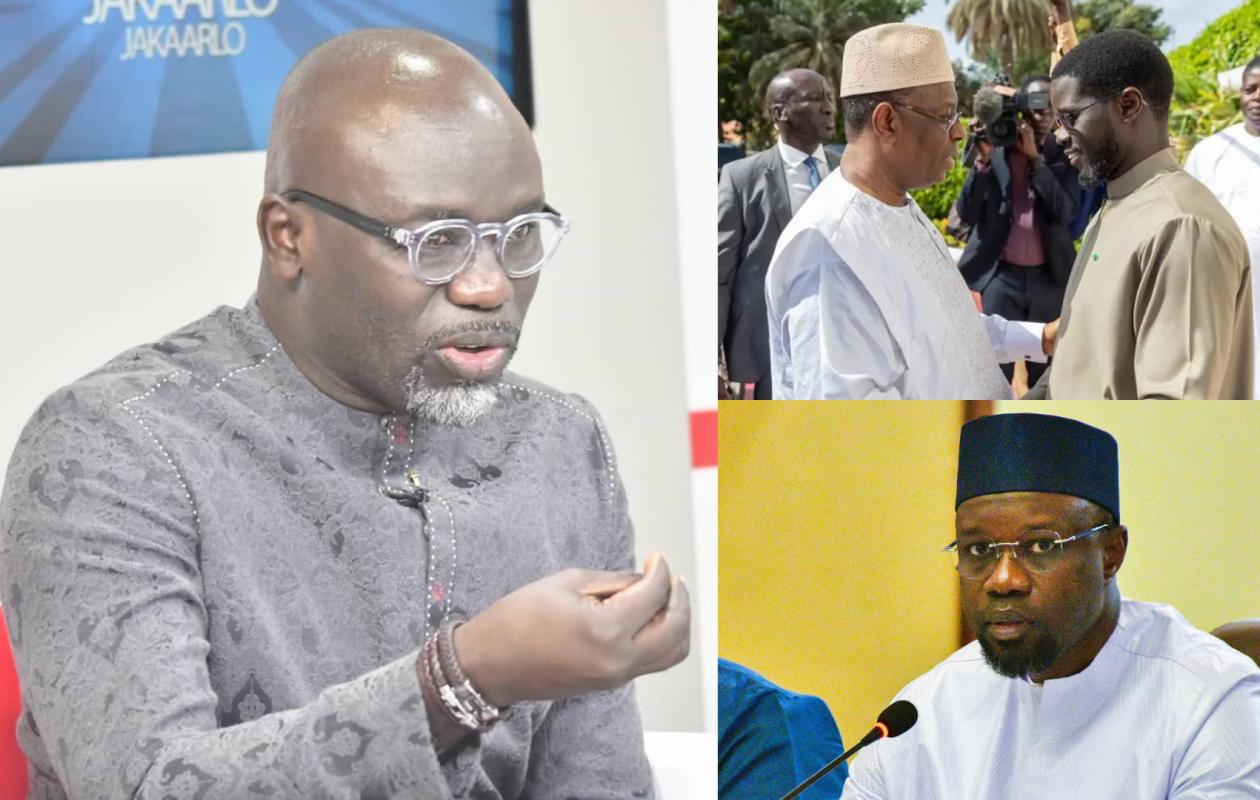
It is in this context that the announced meeting between President Bassirou Diomaye Faye and his predecessor, President Macky Sall, takes place.
This meeting, in itself, constitutes a reassuring signal. It reinforces Senegal's status as a mature democracy, capable of distinguishing the time of political competition from that of the Republic and the Nation.
As the official statement specified, President Macky Sall set the context for this audience; that of a sitting head of state receiving a former President of the Republic, now a candidate for one of the highest positions in multilateral diplomacy.
This clarification carries strong symbolic weight. It serves as a reminder that, beyond changes in power and disagreements, certain responsibilities fall within the higher interest of the Nation.
The wish of all Senegalese attached to our tradition of a civilized nation is that this meeting will lead to a common commitment to the international influence of Senegal, the defense of its strategic interests, as well as the promotion of dialogue, peace and cooperation between peoples.
Beyond this meeting, the President of the Republic remains challenged on his major responsibility to create the conditions for a political clarification that has become inevitable.
The crisis stemming from the breakdown at the highest levels of government has now taken root at the very heart of the institutions. The scale of the public pronouncements and the persistence of the tensions make this situation difficult to reconcile with the requirements of stability and the proper functioning of a state governed by the rule of law.
Following the decision of the Constitutional Council and the reactions it has provoked, notably from the President of the National Assembly, the question now arises as to the viability of such an institutional arrangement.
In this context, the dissolution of the National Assembly appears as one of the most serious hypotheses on the country's political agenda.
Such a decision would offer the sovereign people the opportunity to express their views on the new balance of power resulting from this rupture.
Should this hypothesis materialize, Senegal would be embarking on legislative elections of historical importance. These elections could pave the way for a new political configuration, more in line with current realities and capable of restoring the coherence, stability, and effectiveness of our institutions.
Beyond the actors, it is the entire political architecture of the country that could be profoundly reshaped.
The cycle that began in 2024 is probably coming to an end. Another one is beginning.
In this new phase, the issue will no longer be solely about individuals or majorities. It will be about the ability of republican political forces to formulate credible proposals around major national priorities: the consolidation of the rule of law, institutional stability, economic sovereignty, youth employment, industrial transformation, education, health, and national cohesion.
Senegal has strong institutions. It has already demonstrated, on several occasions, its ability to overcome crises while respecting the law and democratic principles.
It is now up to him to transform the current challenges into historic opportunities for renewal.
History is accelerating before our eyes. The decisions made in the coming weeks will have a lasting impact on the future of the country.
Now more than ever, political leaders are called upon to rise to the occasion. Beyond partisan interests, it is the future of Senegalese democracy that is at stake.
As is often the case in the history of nations, major crises become the matrix for major refoundings.
Senegal possesses the institutional, human, and democratic resources to succeed in this new stage of its history, provided that all actors demonstrate a sense of state duty, a spirit of responsibility, and the primacy of the national interest.
It is at this price that the turning point we are experiencing will open the way to a stronger, more stable Senegal, resolutely committed to the path of democratic, sovereign and sustainable development.

















Commentaires (5)
Participer à la Discussion
Règles de la communauté
💡 Astuce : Utilisez des emojis depuis votre téléphone ou le module emoji ci-dessous. Cliquez sur GIF pour ajouter un GIF animé. Collez un lien X/Twitter, TikTok ou Instagram pour l'afficher automatiquement.
Se connecter
Commentez avec votre profil, votre photo, et soyez averti des réponses.