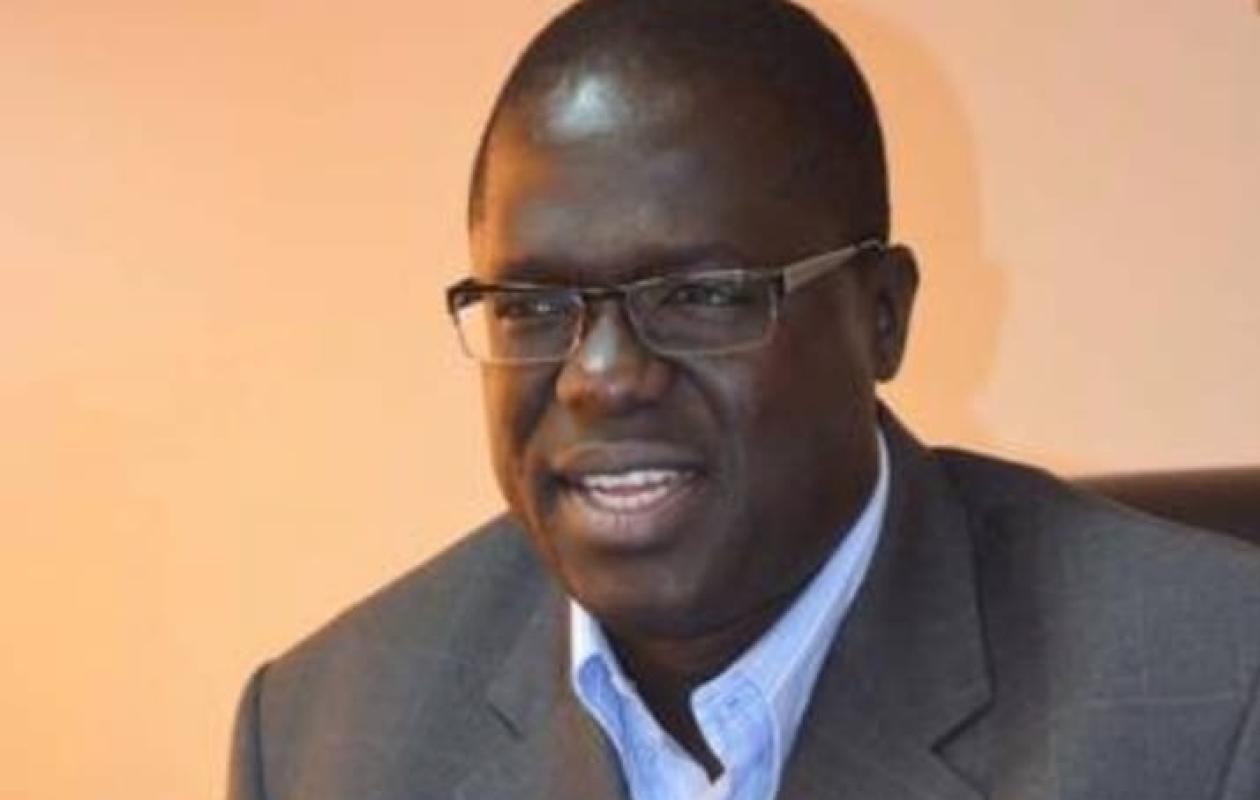
Refondation de l’architecture financière internationale : Quelles opportunités pour le Sénégal ? (par Pr Ahmadou Aly Mbaye)
In recent years, the configuration of the international financial system has undergone profound changes, influenced by evolving international geopolitics, particularly the rise of the BRICS. Over the years, these countries have significantly increased their share of trade, investment, and, most importantly, the sovereign debt of developing countries. The immediate consequence of this development is a gradual loss of influence for the G7 in favor of the G20. One already noticeable effect of the ongoing reform is the unprecedented increase in financing capacity for developing economies, as well as a narrowing of the scope of the Bretton Woods system, in favor of a broader ecosystem of multilateral development banks. Better use of appropriate economic and diplomatic levers should allow Senegal to benefit more fully from the new system.
Geopolitics and reform of the international financial architecture
Since the 2008 crisis, the Bretton Woods system, with its two pillars, the IMF and the World Bank, has been undergoing significant changes. The rise of China and other emerging developing countries has considerably altered the structure of the international financial market. Whether one considers official development assistance, foreign direct investment, or international financial flows, traditional donors, grouped within the Paris Club, have lost considerable ground to emerging donors, contributing to a global reshuffling of the cards.
In global trade, the BRICS' share, which was less than 8% in 2000, rose to almost 25% in 2026. China alone increased its share from approximately 4% to almost 15% during the same period. In just twenty years, China increased its share of global outward FDI from less than $1 billion to almost $200 billion today. When we now look at the debt structure of developing countries, the rise of the BRICS becomes even more apparent. According to IMF data, China has become the largest official bilateral creditor of more than half of low-income countries, with its share in the middle-income country reaching 43% of total debt. In Africa, the rebalancing in favor of China is even more pronounced. For example, in Côte d'Ivoire, China's share of the country's total debt represents 11%, compared to 4% for its closest competitor, France. For Senegal, we have respectively 8% for China and 5% for France.
The rise of the BRICS is also impacting the expansion of the international financial ecosystem. In recent years, the IMF and the World Bank have been significantly challenged by the emergence and expansion of other multilateral development banks (MDBs). Alongside those whose shareholding is primarily controlled by the G7 countries, other multilateral banks have emerged or grown, such as the New Development Bank (controlled by the BRICS) and the Asia Infrastructure Investment Bank (controlled by China). While 75% of African multilateral debt is still controlled by the World Bank and the IMF, this situation is likely to change rapidly in the coming years.
This reconfiguration of power dynamics between geopolitical blocs within global finance could not fail to impact debt management mechanisms for developing countries. For a very long time, the most important decisions concerning development financing, including the perennial issue of sovereign debt restructuring for developing countries, were made at the G7 level (USA, Europe, Japan) or within their satellite groups, such as the Paris Club. Now, it is the G20, which includes emerging economies in addition to the G7, that largely determines the rules of the game in global finance. The BRICS represent a significant force within the G20, with 7 of the 11 BRICS countries being members. Moreover, their share of developing countries' debt structure gives them considerable additional negotiating power.
What will now change in global architecture
The architecture established at Bretton Woods in 1944 rested primarily on two pillars: the IMF, responsible for monetary stability and balance of payments issues, and the World Bank, which gradually shifted its focus towards development. Today, the ecosystem is much broader. In addition to these two pillars, it includes other actors such as the BRICS countries and other emerging bilateral creditors like Turkey, bond markets, and a dense network of multilateral development banks.
The shifts in the balance of power within the system quickly necessitated consultations between the various blocs, with the aim of coordinating their interventions in an ecosystem that had become fragmented. While these consultations take place within the different blocs themselves, it is primarily within the G20 that the most significant reforms concerning the international financial architecture are conceived and implemented. These reforms address such complex issues as the volume of financing to be allocated to developing countries, the coordination of interventions by multilateral development banks, the harmonization of their standards and procedures, and their synergy in order to pool and optimize their resources, not to mention the framework for treating the debt of developing countries.
Since South Korea's G20 presidency in 2010, many steps have been taken to reshape the global financial architecture. Undeniably, Brazil's presidency in 2024 played a pivotal role in building a new global architecture. The proposed reforms include easier and faster access to international finance for developing countries, a greater share of financing in local currency, and the implementation of financial innovations, including hybrid capital, risk transfer, and the optimization of capital for developed banks.
Tangible results of these reforms include, notably, an increase in the financial flexibility of multilateral development banks (MDBs) of approximately $650 billion by 2025. Furthermore, new financial innovations are currently being implemented. For example, the African Development Bank (AfDB) signed an agreement in 2025 with the Private Investment Development Group (PID) to mobilize available funds from pension funds, sovereign wealth funds, and insurance company reserves to finance infrastructure and industrialization in Africa. MDBs have begun harmonizing their procedures and are developing co-financing portals, which covered 125 projects worth $95 billion in 2024.
Implications for Senegal
The changes observed in the international financial system are the result of a convergence of dynamics. There is a growing demand from taxpayers in most OECD countries for greater efficiency and transparency in their governments' international commitments. There is also the recurrence of international financial crises, which translate into significant economic difficulties worldwide. Finally, there is the refocusing of international geopolitics towards a better understanding of the economic weight of the BRICS nations, whose development banks play a crucial role in the new ecosystem.
The sovereignist stance adopted by the new Senegalese administration is reflected in the orientations of the new financial system, where official development assistance (ODA) is tending to give way to intergovernmental economic partnerships. For example, in 2025, ODA saw a 23% decrease, adding to the decline already noted the previous year. For African countries, the OECD projects an 11.6% decrease in ODA for 2026. At the last G7 meeting in Evian, member countries decided to further reinforce these trends by reducing the volume of ODA and concentrating it on the countries most in need.
If current trends continue, there will be less aid and much more reliance on alternative financing. This is where the main challenge lies for Senegal. Middle-income countries, with their deeper financial markets and greater capacity to develop bankable projects, are likely to continue to receive the lion's share of this alternative financing to official development assistance (ODA). Senegal will need to significantly upgrade its internal public management capacities if it is to break with the logic of aid and adopt that of economic partnership.
Diplomatically, Senegal must continue to make its voice heard at decision-making centers (G7, G20, and others), as it has successfully done over the past twenty years. It should join its voice with those of progressives within its institutions who are pushing for the system to provide more funding for structural transformation and economic development, and not just for specific projects.
By Professor Ahmadou Aly Mbaye



















Commentaires (4)
Participer à la Discussion
Règles de la communauté
💡 Astuce : Utilisez des emojis depuis votre téléphone ou le module emoji ci-dessous. Cliquez sur GIF pour ajouter un GIF animé. Collez un lien X/Twitter, TikTok ou Instagram pour l'afficher automatiquement.
Se connecter
Commentez avec votre profil, votre photo, et soyez averti des réponses.