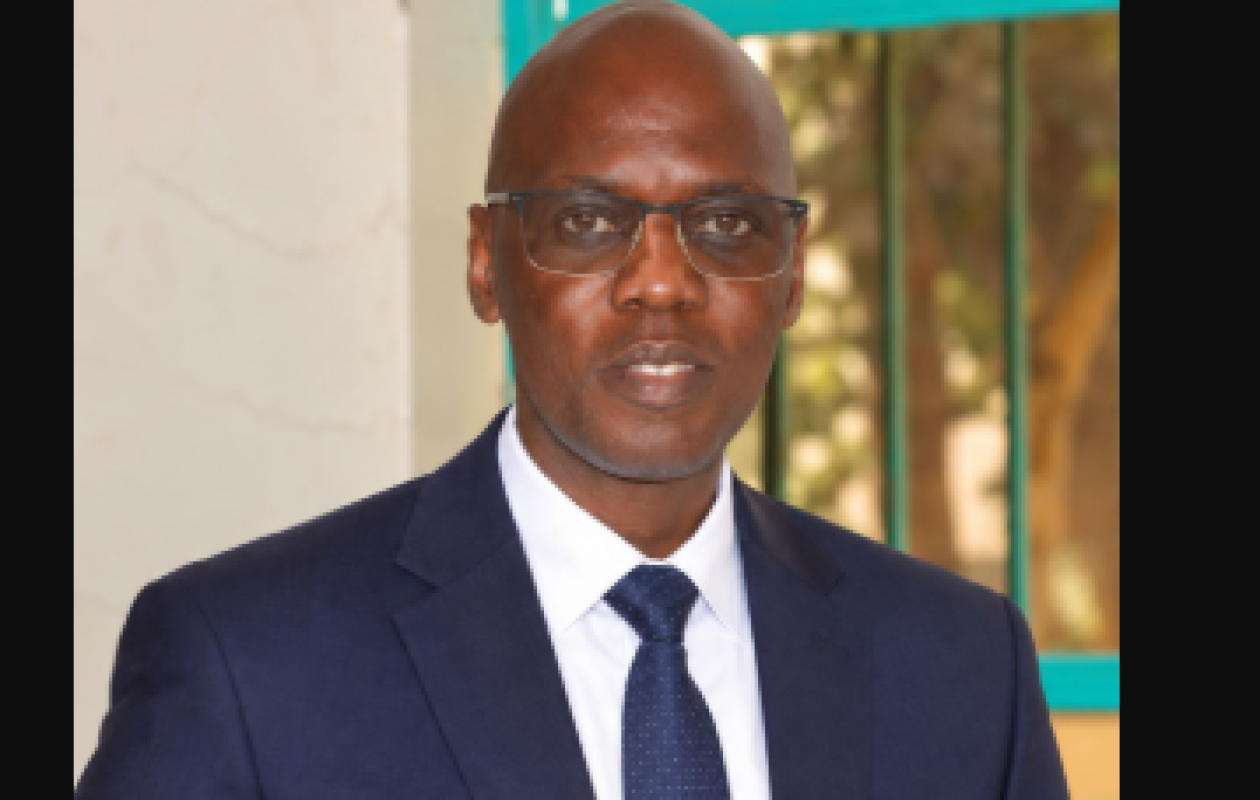
Taux BCEAO à 3 %, emprunts à 8 % : l'écart n'est pas une rente Réponse au Pr Amath Ndiaye ( Par Djiby SY )
Professor Amath Ndiaye is surprised that the government borrows at nearly 8% on the regional market when the BCEAO (Central Bank of West African States) lends to banks at 3%. The observation is accurate, but the diagnosis is not. On the same market, under the same key interest rate, Côte d'Ivoire was borrowing in August at a one-year rate of around 4%. The difference does not reflect the banks' appetite; it reflects the risk associated with our creditworthiness.
In a recent opinion piece, Professor Amath Ndiaye points out that at the last three Treasury auctions, on September 11 and 25 and October 9, the government paid an average of 7.91% for one-year bonds, 7.81% for three-year bonds, and 7.99% for five-year bonds, compared to a key interest rate of 3%. He argues that Senegal's financial difficulties are becoming a significant source of income for those financing its debt. He calls for community solidarity, which would translate into sustainable financing conditions.
The debate is legitimate: the cost of our debt has become a central issue in our public finances. But the comparison on which this reasoning is based is flawed, and the conclusion it suggests misses the mark. Data published by the BCEAO and UMOA-Titres demonstrate this.
Two rates that do not measure the same thing
The 3% rate is the minimum rate at which the BCEAO lends to banks, on a one-week basis, against securities pledged as collateral. It sets the price of very short-term liquidity; it says nothing about the risk of a borrower over one, three, or five years. In August, this liquidity traded at around 3.3% at the BCEAO's weekly auctions and at 3.7% on the one-week interbank market.
The State does not have access to this financing mechanism. The 2010 statutes of the BCEAO (Central Bank of West African States) enshrined the end of direct advances to the Treasuries: Article 36 prohibits any monetary financing of public Treasuries. States therefore finance themselves at market prices.
This price combines the cost of liquidity, a maturity premium, a credit premium that compensates for the risk of default, and a volume premium when the issuer makes significant demand on the market. Comparing 3% and 8% is like confusing the foundation with the structure.
Proof from Ivory Coast
The best test is to compare two states that borrow on the same market, under the same policy rate and according to the same rules.
At the August auctions, Ivory Coast paid 4.06% for one year, 6.48% for three years and 7.11% for five years; Senegal, 8.04%, 7.73% and 8.20%.
At one year, Côte d'Ivoire pays barely one percentage point more than the key interest rate; Senegal, five percentage points more. Niger, meanwhile, paid around 10% at three years in February. The market thus prioritizes these bonds: if it were to collect a premium on the BCEAO rate, Côte d'Ivoire would also pay it.
Ivorian interest rates rise with the maturity, from 4.06% for one year to 7.11% for five years, as is typical in any healthy market. At five years, the benchmark issuer of the Union is therefore paying over 7%. For this maturity, the majority of the difference with the policy rate stems from the maturity and the regional market; the premium specifically for Senegal barely exceeds one percentage point.
Senegalese interest rates, however, remain close to 8% regardless of the maturity. Investors are demanding the same rates for one-year and five-year bonds: they fear the risk associated with higher maturities.
The counter-test of March 2026
On March 16, the BCEAO lowered its key interest rate from 3.25% to 3.00%. From the end of March to the end of June, the one-year yield on Côte d'Ivoire fell from 5.20% to 3.47%. The yield on Senegal rose from 6.62% to 7.82%.
Monetary policy is therefore transmitted effectively, but only to those with strong credit ratings. In our case, the risk premium outweighs the reduction in the key interest rate. I therefore conclude that further easing by the BCEAO would hardly change our borrowing costs.
What subscribers pay
Investors don't price sentiment, but measurable risks. On August 28, Moody's downgraded Senegal's rating to Caa2, in both foreign and local currency. On September 4, S&P lowered it to CC in foreign currency and CCC in local currency, with a negative outlook. Moody's estimates our gross financing needs at approximately 25% of GDP in 2026, and the interest burden at 23.7% of government revenue.
Volume is also a factor. As of August 28, the Treasury had raised 2,075 billion FCFA on the public securities market since January, representing more than a fifth of all issuances by the entire Union during that period. A Caa2-rated issuer that returns to a limited pool of savings every two weeks must accept a price.
The question of scope remains. The government has excluded CFA franc debt from Senegal's Debt Treatment Plan (PTDS), a choice that protects the regional market. However, S&P justifies its negative outlook by the risk that this debt could one day be drawn into the operation if creditors contest the scope. Professor Ndiaye himself pointed this out on September 2nd: according to him, external creditors could demand a sharing of the burden, and negotiations with regional banks would then focus on a "voluntary extension of maturities, securities exchanges, or reprofiling." Subscribers have read the same thing, and they are charging for this risk.
Finally, the timeline. The September 1st agreement with the IMF is a services-level agreement. Its approval by the Executive Board remains contingent on corrective measures and financing assurances from partners. The markets are waiting for action, not announcements.
Solidarity is already at play
Professor Ndiaye is calling for community solidarity. It is already being demonstrated. On September 1st, our 2031 dollar-denominated Eurobond fell to 50.4% of its face value, a historic low. At the same time, the regional market continued to subscribe to our bonds at around 8%. Since the closure of international markets, it has been our primary source of market financing.
Demanding more would amount to imposing a price on banks that is less than the risk. This would shift the burden of Senegal's risk onto depositors and shareholders throughout the Union, and strengthen the link between banks and the State at the most dangerous time.
No monetary union, moreover, aligns the borrowing costs of its member states with the rate of its central bank. In November 2011, the ECB was lending at 1.25% while Italy was borrowing at over 7% for ten years.
What Professor Ndiaye is right to say
On three points, I agree with him. The burden is real: at nearly 8% for an inflation that the BCEAO expects to be 1% in 2026, the real rate is close to 7%, and interest already absorbs nearly a quarter of our revenues.
The regional market also lacks depth. When the benchmark issuer in the Union pays more than 7% for five-year bonds, it is, in my view, the market architecture that is at fault: a narrow secondary market and too few long-term institutional investors. This calls for market reforms, not appeals for generosity.
Finally, his conclusion is correct: only the restoration of sustainability and a credible program will bring about lasting lower rates. But it contradicts his diagnosis. While credibility determines the rate, the gap rewards risk, not unearned income.
This will lower our rates
The gap between 3% and 8% is not proof of a Union without solidarity; it is a barometer of our credibility. The stakes are considerable. Of the 2,075 billion FCFA raised by the Treasury at the end of August, each percentage point of interest rate represents nearly 21 billion FCFA in interest per year.
This point will not be won at the BCEAO level, nor through the goodwill of the banks. It will be won through four actions. First, swift approval of the program by the IMF Executive Board. Second, budget execution in line with the announced trajectory. Third, a reaffirmed and adhered-to scope of the PTDS (Strategic Development Plan), which alleviates subscribers' fears of an extension to debt denominated in CFA francs. Finally, complete transparency regarding the outstanding amount, the issuance schedule, and the maturities.
Every commitment fulfilled will be reflected in subsequent auctions. It is there, and nowhere else, that the reduction of our rates will be achieved.

















Commentaires (5)
Il disait qu'il est informaticien
Aujourd'hui. Il se réclame ingénieur économiste
Il est un vrai incompétent
Aller à la Sones pour demander le niveau de son incompétence
Ingénieur ?
Aller vérifier son CV
Trop d'imposteur et de menteur dans ce pays
Mauvais calcul.
Nous sommes dans la nasse maintenant, il faut en payer le prix
Oui à l’économie de marché, non au dogmatisme libéral ! Il ne s’agit ni de nier les risques liés à l’endettement public ni de remettre en cause les mécanismes du marché régional. Mais l’économie de marché ne doit pas devenir un dogme intangible. Les taux d’intérêt doivent rester économiquement justifiables, proportionnés aux risques réels et compatibles avec les objectifs de développement.
Une réflexion sur la moralisation et un meilleur encadrement des conditions de financement public mérite donc d’être engagée, tout en préservant la concurrence bancaire et l’accès du secteur privé au crédit. Si le pain, le carburant et même les loyers peuvent faire l’objet de mesures de régulation pour protéger les populations, pourquoi les taux d’intérêt appliqués aux États échapperaient-ils à toute réflexion sur leur encadrement ?
Par ailleurs, la solidarité et la communauté de destin qui fondent l’UEMOA devraient se traduire par des mécanismes institutionnels communautaires permettant d’atténuer les coûts de financement des États membres, particulièrement en période de crise. En contrepartie, les États doivent impérativement améliorer la gouvernance de leurs finances publiques, renforcer la transparence budgétaire, maîtriser leur endettement et garantir une utilisation efficace des ressources empruntées. La solidarité communautaire ne saurait être un encouragement à la mauvaise gestion. Elle doit reposer sur un principe de responsabilité partagée entre les États, les institutions communautaires et les acteurs du système bancaire.
Pr Amath NDIAYE
FASEG-UCAD
Participer à la Discussion
Règles de la communauté
💡 Astuce : Utilisez des emojis depuis votre téléphone ou le module emoji ci-dessous. Cliquez sur GIF pour ajouter un GIF animé. Collez un lien X/Twitter, TikTok ou Instagram pour l'afficher automatiquement.
Se connecter
Commentez avec votre profil, votre photo, et soyez averti des réponses.