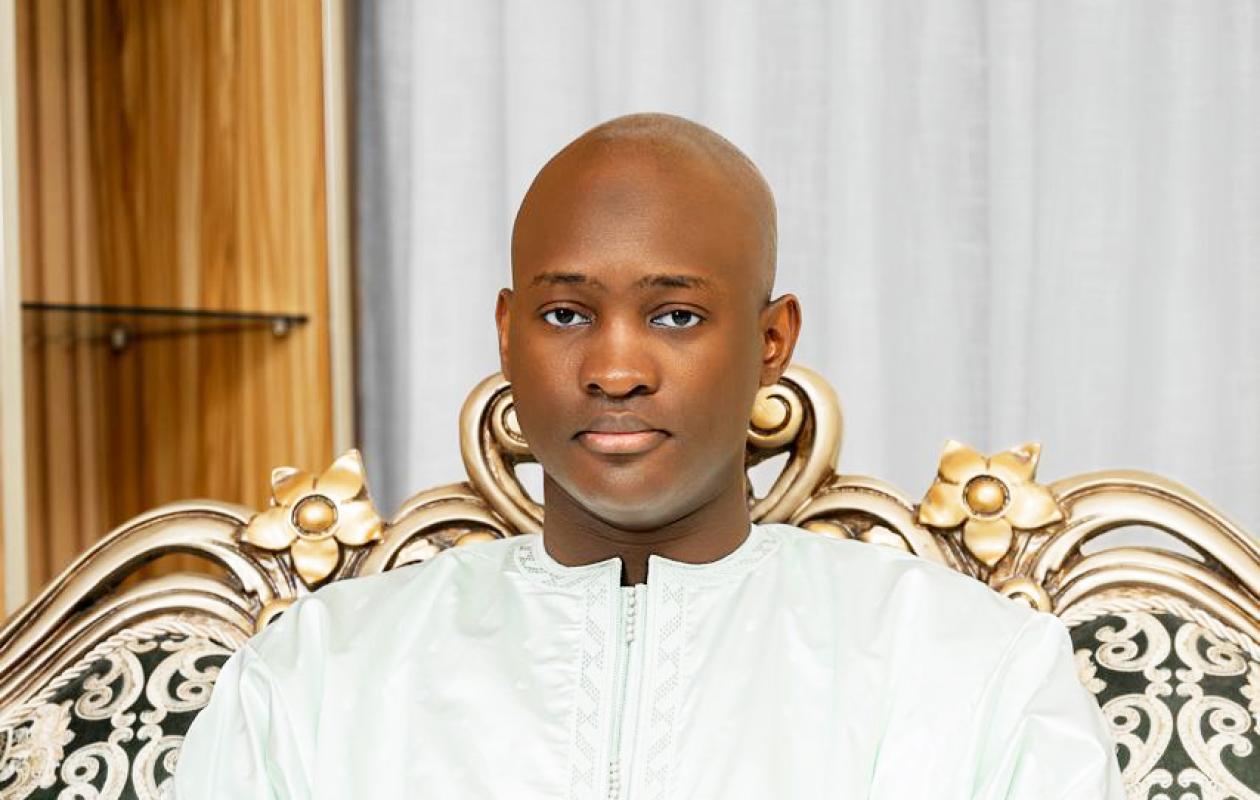
SÉNÉGAL AU PIED DU MUR : ÉVITER LE DÉFAUT DE PAIEMENT ET SAUVER L'AVENIR ÉCONOMIQUE DE LA NATION ! (Par Dr Cheikh Abdou Lahad MBACKE)
The alert published by Bloomberg on November 6, 2026 should concern every Senegalese person, beyond political affiliations and partisan considerations.
When Moody's determines that the proposed restructuring of Senegal's debt could be considered a default according to its criteria, we are no longer facing a simple cash flow problem. We are confronted with a fundamental question: the sustainability of our financing model and the financial credibility of our state.
A sovereign rating downgraded to Ca, a risk premium announced at 1,469 basis points and nearly $70 million in interest to be paid by December: these indicators, reported in the information relayed, should lead us to measure the full gravity of the situation.
However, it's important to be clear: Senegal has not officially declared a default. But the fact that a restructuring could be considered a default event by an international agency is already a major signal for investors and our financial partners.
SENEGAL CANNOT AFFORD A FURTHER CRISIS OF CONFIDENCE.
1. A financial crisis that demands institutional responsibility
The rejection of the 2026 amending finance law by the National Assembly on November 3, with 126 votes against, comes in a particularly delicate context.
The $2.2 billion program negotiated with the International Monetary Fund remains subject to approval by its board of directors and several preconditions.
It would therefore be dangerous to reduce this situation to a simple confrontation between the Executive and the parliamentary majority.
The National Assembly has a key constitutional role in overseeing government action and authorizing the budget. This role must be fully respected.
But institutional responsibility also implies that political differences do not permanently compromise the country's economic interests.
The President of the Republic, the Government and the National Assembly must understand that the current crisis calls for more consultation, transparency and responsibility.
The question is no longer who will be politically right. The question is how to protect Senegal's interests.
2. Move beyond confrontation to build a recovery strategy
I propose six priority measures.
First measure: establish a national dialogue on debt and public finances.
This dialogue must bring together the Government, representatives of the National Assembly, the opposition, independent economists, employers' organizations, social partners and representatives of civil society.
The objective would be to arrive at a shared diagnosis, a credible budgetary trajectory and a timetable for exiting the crisis.
Second measure: to engage in rigorous financial negotiations with creditors.
Restructuring should not be approached as a simple operation to postpone deadlines.
Senegal must seek the least damaging conditions for its economy: extending maturities, adjusting rates, providing grace periods where possible, and protecting the State's financing capacity.
It will also be necessary to ensure fair treatment between the different categories of creditors, without further weakening the regional financial market.
Third measure: restore trust with the IMF and financial partners.
The Government must present a precise timetable for the reforms, accompanied by verifiable indicators.
Audits of financial commitments need to be accelerated, complex financing operations, particularly Total Return Swaps, need to be clarified, and essential information on government commitments needs to be made public.
Transparency should not be a concession made to foreign partners. It must be a requirement for Senegalese citizens.
Fourth measure: to undertake a profound rationalization of public spending.
It is essential to conduct an audit of operating expenses, special funds, public agencies and programs whose economic efficiency has not been demonstrated.
Savings should primarily target non-essential spending, administrative duplication, and insufficiently justified expenditures.
On the other hand, spending on education, health, agriculture, water, energy and productive infrastructure must be protected.
Budgetary adjustments must not become an additional punishment for the most vulnerable populations.
Fifth measure: mobilize internal resources and revive national production.
Senegal cannot sustainably escape this situation by relying exclusively on external funding.
We must strengthen tax collection, combat fraud and unjustified exemptions, broaden the tax base and improve the performance of public enterprises.
At the same time, a productive recovery policy must support agriculture, industrialization, SMEs, local processing of natural resources and exports.
Economic sovereignty is not merely proclaimed in speeches. It is built through the capacity to produce, create wealth, and sustainably finance public policies.
Sixth measure: establish a national debt monitoring mechanism.
A quarterly dashboard accessible to citizens should present:
- The actual stock of public debt and state guarantees.
- Repayment deadlines over 12, 24 and 36 months.
- Off-balance sheet financial commitments.
- The interior and exterior arrears.
- The results of negotiations with creditors.
- The evolution of public revenues and the budget deficit.
Senegalese people have the right to know the financial situation of their country.
3. Protect the Senegalese people before protecting accounting balances
Behind the billions of dollars, basis points and international ratings, there are millions of Senegalese.
There are companies waiting for their invoices to be paid, entrepreneurs struggling to access credit, young people looking for work, households facing the high cost of living, and investors hesitant to commit their capital.
A particularly unfavorable default or restructuring could exacerbate financing difficulties, increase the cost of credit and reduce fiscal space.
Our recovery strategy must therefore include a genuine social component.
We must protect vulnerable households, preserve productive investments, and prevent the cost of the crisis from being borne primarily by populations who are not responsible for it.
4. A pact of responsibility to save Senegal's economic trajectory
I am calling for the establishment of a National Pact for Economic and Financial Responsibility.
This pact should be based on five commitments:
Full transparency regarding public finances.
Respect for the constitutional prerogatives of each institution.
Ongoing consultation between political and economic actors.
A sustainable and equitable debt strategy.
An economic recovery geared towards production, employment and social protection.
Senegal needs institutional stability, economic visibility, and a credible public voice.
We cannot ask investors to trust our country if our own institutions fail to build a framework for consultation around major economic decisions.
A NATIONAL RESURFACING OR THE RISK OF COMPROMISING SENEGAL'S ECONOMIC FUTURE
Our country has gone through difficult periods and still has considerable human, economic, agricultural, energy and strategic resources.
But these resources will only produce their effects if they are accompanied by a coherent vision, transparent governance and genuine discipline in the management of public finances.
I believe the time has come to move beyond political posturing and institutional confrontations.
The President of the Republic must initiate this process. The Government must be transparent. The National Assembly must fully exercise its prerogatives. Economic and social stakeholders must be involved in the search for solutions.
Senegal does not need a political victory of one side over another. It needs a collective victory over the economic crisis.
Debt is a matter of numbers, but its resolution is above all a matter of responsibility, method and vision.
Our economic sovereignty will only be credible if we are able to control our commitments, restore confidence and guarantee future generations a financially viable country.
The time for mutual accusations is over. The time for national responsibility has come.
Dr. Cheikh Abdou Lahad MBACKE
Doctor of Public Policy and Applied Macroeconomics
Specialist in negotiation and conflict management.

















Commentaires (5)
Pffff
Participer à la Discussion
Règles de la communauté
💡 Astuce : Utilisez des emojis depuis votre téléphone ou le module emoji ci-dessous. Cliquez sur GIF pour ajouter un GIF animé. Collez un lien X/Twitter, TikTok ou Instagram pour l'afficher automatiquement.
Se connecter
Commentez avec votre profil, votre photo, et soyez averti des réponses.