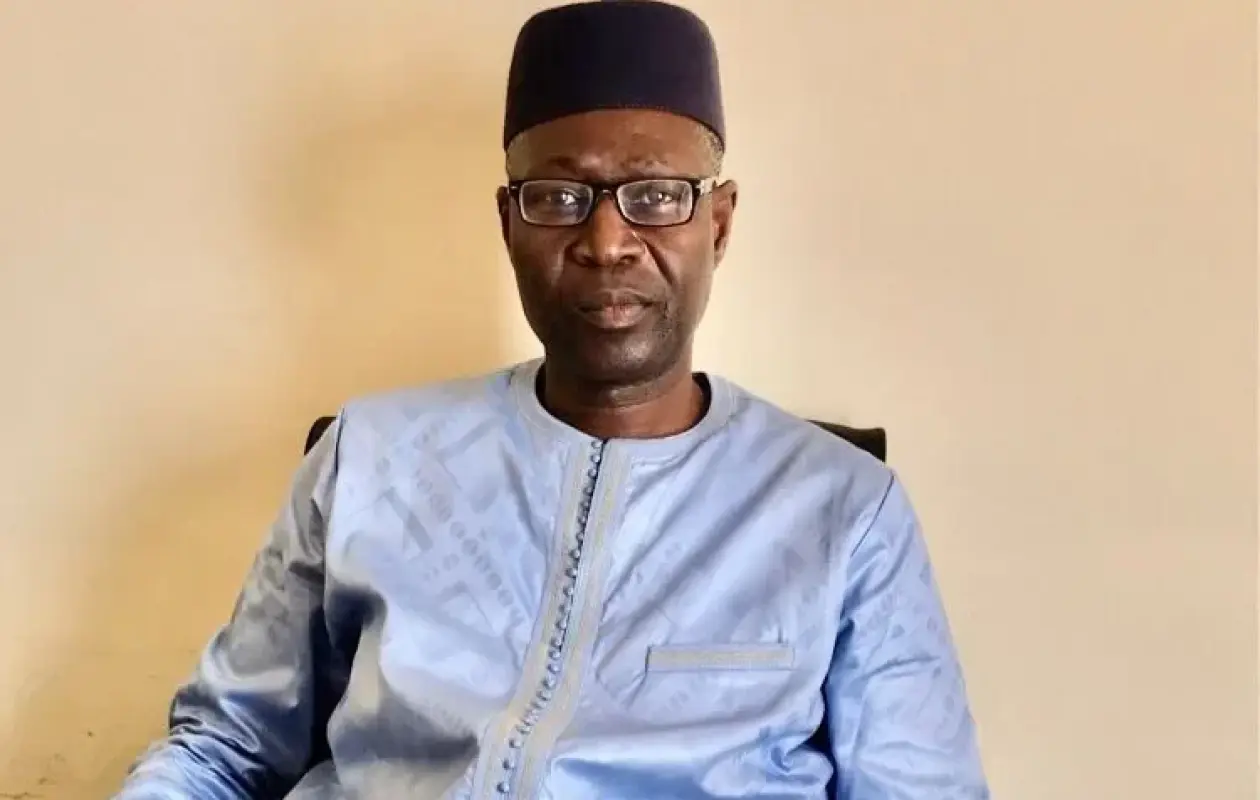
SÉNÉGAL : DETTE CACHÉE, DETTE NON DÉCLARÉE, DETTE ODIEUSE : QUE FAUT-IL RETENIR ? [PAR Pr Amath NDIAYE]
The debate on Senegal's public debt has given rise to the use of several expressions — hidden debt, undeclared debt, false statistical declarations (misreporting) or even odious debt — which do not cover the same realities.
The first three refer broadly to the same phenomenon: the existence of financial obligations that have not been properly recorded or declared in official statistics. The concept of odious debt, however, raises a different, more legal and political issue.
*What the Court of Auditors observed*
The Court of Auditors does not systematically use the expression "hidden debt". In its audit report published in 2025, it highlights loans and financial commitments that had not been properly recorded in the official state statistics.
It notes in particular:
a significant underestimation of the budget deficit;
loans contracted outside of the usual budgetary channels;
financial commitments not included in the official figures;
a level of public debt higher than that officially announced.
According to the Court of Auditors, public debt represented 99.67% of GDP at the end of 2023, compared to 74.4% of GDP in previous official statistics.
The gap is therefore around 25 points of GDP, or several trillion FCFA of commitments not recorded in official statistics.
The IMF explicitly refers to "hidden debt".
The IMF went further by explicitly using the concept of "hidden debt".
In March 2025, the IMF mission chief for Senegal, Edward Gemayel, confirmed the existence of approximately $7 billion of undeclared debt, or nearly 4,200 to 4,500 billion FCFA, accumulated between 2019 and 2024. This estimate largely confirms the findings of the Court of Auditors.
The IMF also indicated that:
The budget and debt data previously communicated were incorrect;
serious shortcomings existed in budgetary control;
Public and semi-public sector debt was expected to be reassessed at higher levels than those previously published.
This position was confirmed by the Managing Director of the IMF, Kristalina Georgieva:
“I want to begin by giving full credit to the Senegalese authorities for uncovering a major problem of false reporting. There was a hidden debt, and they brought it to light.” Source: Official IMF transcript – 2025 Annual Meetings
This statement shows that the expression "hidden debt" is officially used by the IMF.
Hidden debt and odious debt: two different realities
Unlike hidden debt, undeclared debt or misreporting, which refer to a problem of transparency and budgetary governance, odious debt refers to a question of the legitimacy of the debt.
A debt can be hidden without being odious. Therefore, the discovery of an undeclared debt does not automatically lead to it being classified as odious.
To date, neither the Court of Auditors nor the IMF has classified the debt in question as odious debt.
Furthermore, none of the reports published to date conclude that a system of embezzlement of public funds is at the root of the observed debt. The institutions primarily highlight problems with budgetary governance, transparency, and the accounting of financial commitments.
The audits revealed practices that led to an underestimation of the budget deficit and public debt, as well as a significant exceeding of the WAEMU's 70% of GDP threshold. However, the resources mobilized financed public investments whose achievements are visible and widely documented: the Regional Express Train (TER), the Dakar Bus Rapid Transit (BRT), the Community Development Emergency Program, overpasses, highways, and numerous economic and social infrastructure projects.
The debate highlighted by the Court of Auditors and the IMF therefore focuses primarily on the accuracy of public accounts, the quality of financial information, and compliance with budgetary procedures. At this stage, it does not address the existence of loans contracted against the public interest.
Therefore, the classification of the debt as odious appears difficult to accept in light of the currently available evidence.
My assessment as an economist
From an economic point of view, the expressions hidden debt, undeclared debt and misreporting basically describe the same reality: that of financial commitments which existed legally but which were not properly recorded in official statistics.
The difference is more a matter of vocabulary than substance. The Court of Auditors favors a technical approach, while the IMF uses the more direct expression "hidden debt" and refers to a problem of false statistical reporting.
However, the concept of odious debt falls into a different category. It requires demonstrating that the loans were contracted against the interests of the population and without any benefit to them. The evidence established to date by the Court of Auditors and the IMF does not allow for such a conclusion.
Professor Amath Ndiaye
FASEG-UCAD























Commentaires (19)
Participer à la Discussion
Règles de la communauté :
💡 Astuce : Utilisez des emojis depuis votre téléphone ou le module emoji ci-dessous. Cliquez sur GIF pour ajouter un GIF animé. Collez un lien X/Twitter, TikTok ou Instagram pour l'afficher automatiquement.