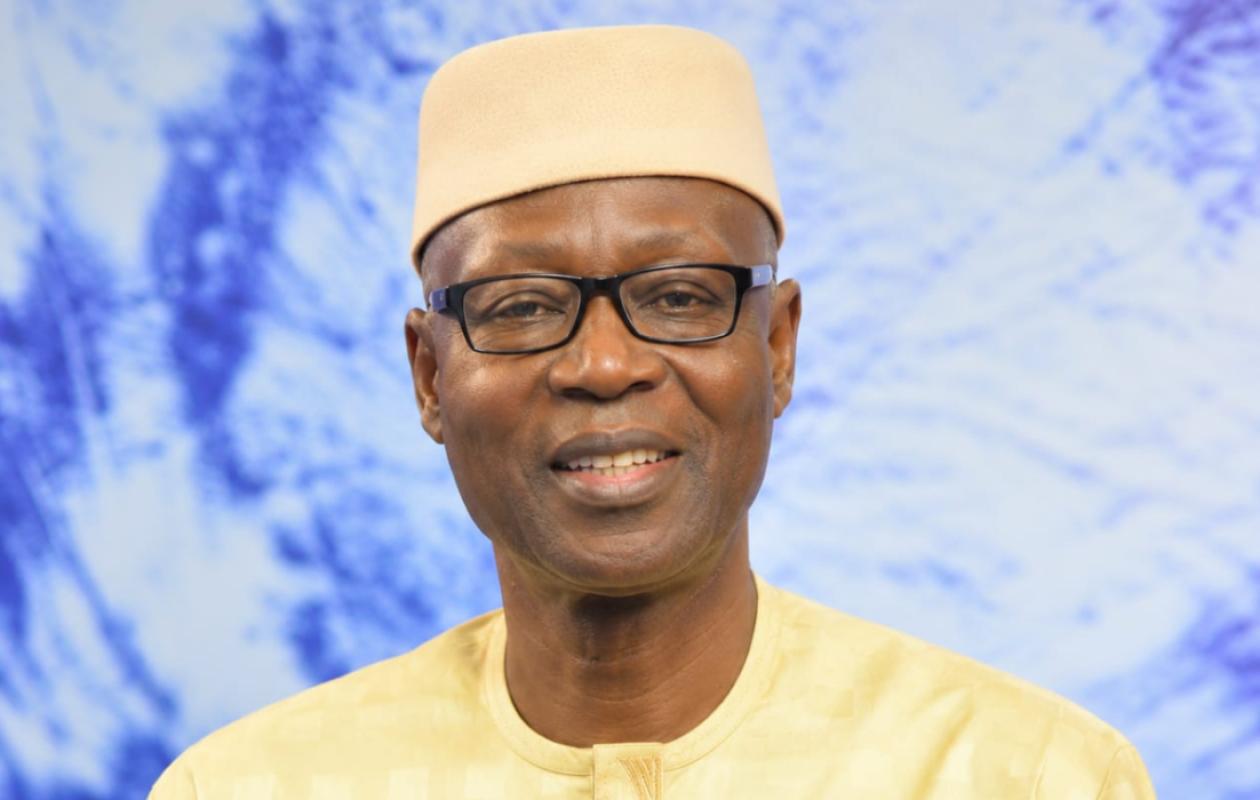
Sénégal : Et si la dissolution de l'Assemblée nationale ne mettait pas fin au blocage budgétaire?(Par Pr Amath NDIAYE)
Senegal is experiencing a worrying budgetary and financial crisis. The rejection of the 2026 supplementary budget law and the difficulties encountered with the 2027 budget raise the prospect of the National Assembly being dissolved as early as December 2nd.
This possibility raises a fundamental question: can Senegal withstand several more months without the expected funding from the IMF and without decisive progress in negotiations with its international creditors?
Elections no earlier than January 31, 2027
Article 87 of the Constitution authorizes the dissolution of the National Assembly after the first two years of its term. New elections must be held within 60 to 90 days of the publication of the dissolution decree.
In the event of a dissolution on December 2, 2026, elections could be held as early as Sunday, January 31, 2027, which is within the shortest constitutional timeframe.
We would then have to wait for the final proclamation of the results, the installation of the new Assembly and the clarification of the budgetary guidelines.
Even in this accelerated scenario, the normal resumption of the budgetary procedure could occur in February or March 2027.
Senegal would thus have lost two to three additional months, with no guarantee that the budget blockage will be resolved after the elections.
The first IMF disbursements could be postponed until May or June 2027.
On September 1, 2026, Senegal concluded a technical agreement with the IMF services for $2.2 billion, or approximately 1,243 billion FCFA, over three years.
This agreement remains subject to the approval of the IMF Executive Board, which requires, among other things, corrective measures, sufficient financing assurances and a credible recovery program.
Assuming that elections take place on January 31, 2027, that the new Assembly is installed in February and that a credible budgetary framework is quickly adopted, the first disbursements could occur, according to my central scenario, between May and June 2027.
In a more favorable scenario, they could begin as early as March or April if the technical negotiations progress sufficiently before the elections.
These estimates do not constitute an official IMF timetable. However, they show that Senegal could wait eight to nine months after the technical agreement of September 1st before receiving the first disbursements.
The risk of another parliamentary deadlock after the elections
Dissolution does not guarantee the disappearance of disagreements between the government and the National Assembly.
If the elections resulted in a majority opposed to the government's budgetary guidelines, with no possibility of compromise, the country could find itself in the same institutional deadlock after several months of transition.
This would be an economically catastrophic scenario: organizing new elections, losing several months and finding ourselves in a budgetary deadlock situation comparable to that of today.
The government could then face new difficulties in getting its budget adopted, in respecting the commitments made to the IMF and in carrying out the reforms necessary to restore public finances.
A different parliamentary majority does not necessarily mean paralysis. The key remains the ability of the institutions to agree on a credible economic program.
Negotiations with international creditors could stall.
Senegal has launched its Debt Treatment Plan (PTDS) to restore the sustainability of its public finances and reduce the debt service burden.
Negotiations with international private creditors can continue during the election period, but their outcome depends in particular on the credibility of the budget program supported by the IMF.
Eurobond holders will have to negotiate restructuring terms that may affect maturities, interest rates, and potentially the principal. Some have already expressed their opposition to capital reductions.
A prolonged delay in the IMF's approval of the program could complicate discussions and postpone debt treatment agreements.
Debt repayment deadlines will not wait for the elections
Senegal will have to continue to honor its financial obligations during this period.
An important deadline is scheduled for March 13, 2027, with the repayment of approximately 333 million euros of principal on a eurobond, plus interest.
It would occur just a few weeks after the earliest elections and before the first IMF disbursements in our central scenario.
At the same time, the state must finance wages, public services, energy subsidies and priority investments.
Access to the UEMOA regional market remains possible, but the rates demanded by investors are already particularly high.
The political calendar does not suspend either debt repayments or the state's daily financing needs.
A sovereign rating that has already been severely downgraded
On October 29, 2026, Moody's downgraded Senegal's foreign currency sovereign debt rating from Caa2 to Ca, reflecting an extremely high credit risk.
The agency anticipates significant losses for some creditors as part of the debt treatment.
A prolongation of budgetary uncertainties could accentuate investor distrust, keep eurobonds at heavily discounted prices and complicate the refinancing of the State.
The risk of default cannot therefore be ruled out, even if it is neither automatic nor inevitable.
Membership in the WAEMU is a factor of monetary stability and facilitates access to the regional market, without eliminating the risks associated with excessive debt burden.
A financial crisis that risks exacerbating social tensions
The expected economic growth for 2026 has been revised down to 2.7%, while the projected budget deficit has reached 7.6% of GDP. Energy subsidies have been reassessed at 790.3 billion FCFA.
In addition to this, there are payment arrears owed to companies, estimated at nearly 1,956 billion FCFA.
The continuation of cash flow difficulties could delay payments to businesses, weaken their operations, threaten jobs and lead to further cuts in public investment.
Workers, young people and low-income households would be particularly exposed, in a context already marked by purchasing power difficulties and social demands.
The danger is that a prolonged budgetary and financial crisis will lead to a worsening of the economic and social stagnation.
A call for political responsibility
Faced with these uncertainties and the dangers that threaten our economy, I call for greater maturity, patriotism and a sense of the nation's best interests from all our political leaders, without distinction.
Political differences are legitimate in a democracy, but they must not obscure the daily suffering of the people. Empathy for Senegalese citizens facing precarious living conditions, unemployment, and a lack of purchasing power must guide our decisions.
Senegal today needs responsibility, dialogue, and compromise. The nation's best interests must prevail over political rivalries.
Professor Amath NDIAYE, economist, FASEG-UCAD














Commentaires (3)
Méfiez vous des universitaires qui inondent la presse.
Ils sont loin d’être les plus compétents de leur domaine.
Allez écrire des articles et ouvrages scientifiques
Allez montrer votre pédagogie dans les amphithéâtres
L’arbitrage le plus plausible consisterait à protéger les dépenses prioritaires tout en reportant certains investissements, si les recettes disponibles et les échéances de la dette laissent peu de marge de manœuvre. Une nouvelle majorité pourrait, par exemple, préserver le financement des services essentiels et des chantiers dont l’arrêt serait coûteux, tout en échelonnant des projets dont le lancement peut attendre.
Cet arbitrage deviendrait possible à trois conditions.
- Une majorité prête à assumer les choix. Elle doit pouvoir s’accorder sur les dépenses à préserver et sur les projets à différer, y compris lorsque ces reports touchent les territoires de ses propres élus.
- Des économies qui se traduisent par une amélioration de la trésorerie. Reporter un projet ne libère des fonds pour l’année en cours que si des décaissements étaient effectivement prévus et peuvent être décalés sans coûts contractuels qui absorbent l’économie.
- Un budget qui tient avec des recettes prudentes. Le gouvernement doit montrer comment il financera les dépenses maintenues et quelles mesures il prendra si les recettes sont inférieures aux prévisions.
La portée de la dissolution dépend donc du blocage initial. Si un compromis finançable existait déjà et qu’il lui manquait des voix, les élections pourraient en permettre l’adoption. Si les recettes et les financements disponibles restent insuffisants après les reports, la nouvelle majorité devra encore choisir entre des économies supplémentaires, de nouvelles recettes ou un financement additionnel soutenable.
Dr, Diene
Participer à la Discussion
Règles de la communauté
💡 Astuce : Utilisez des emojis depuis votre téléphone ou le module emoji ci-dessous. Cliquez sur GIF pour ajouter un GIF animé. Collez un lien X/Twitter, TikTok ou Instagram pour l'afficher automatiquement.
Se connecter
Commentez avec votre profil, votre photo, et soyez averti des réponses.