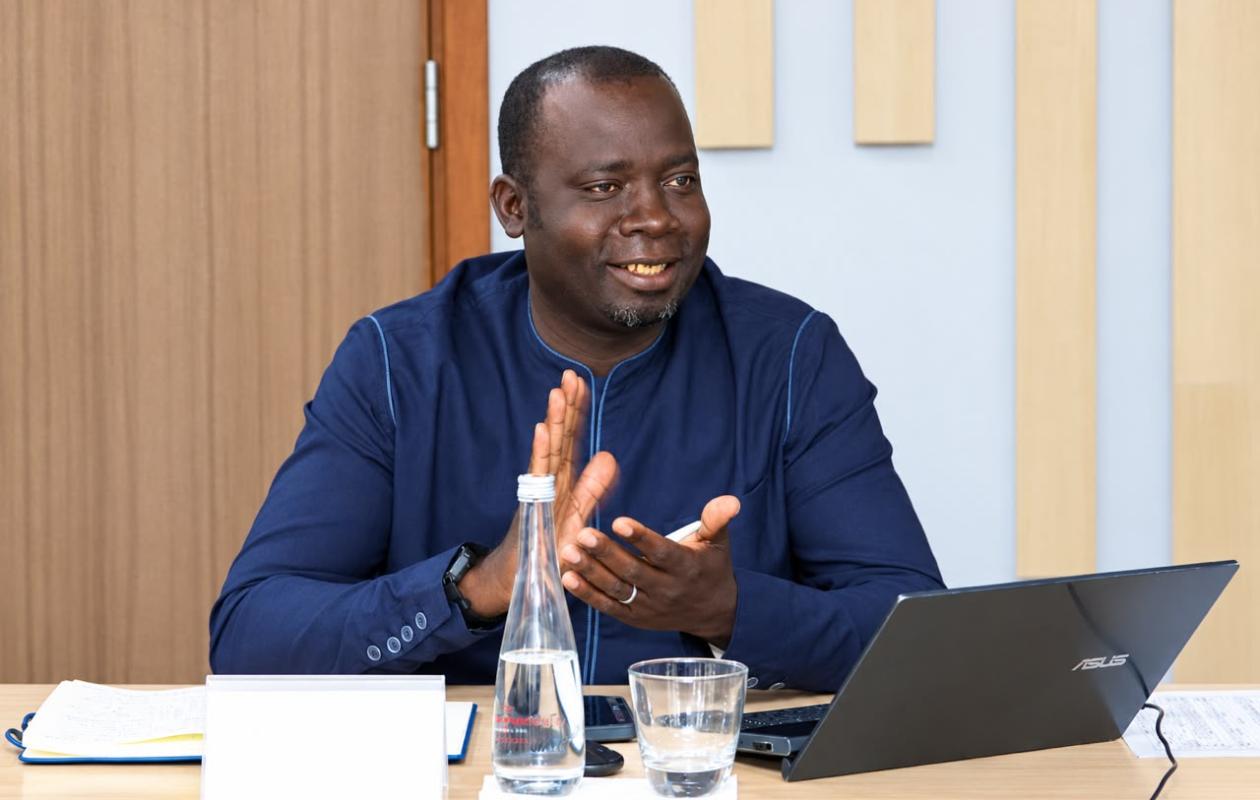
Sénégal : et si la véritable urgence était de produire notre propre intelligence ? (Par Pr Balla Diop Ngom)
In the tumult of figures, deficits, debt, budgetary trade-offs and political controversies, a more silent question deserves to be asked: what capacity do we still have to produce our own intelligence?
The question may seem abstract. In reality, it is profoundly political.
For a nation does not become sovereign simply by possessing resources. It becomes sovereign when it acquires the capacity to understand reality, to control its transformations, and to invent the instruments of its own future.
Senegal has universities, laboratories, engineering schools, researchers, and a large youth population. The authorities themselves recently reaffirmed the need to strengthen STEM, research infrastructure, innovation, artificial intelligence, and scientific funding mechanisms.
But between intention and power, there is still a chasm.
Sovereignty begins in the mind
For a long time, we thought of sovereignty in terms of territory, natural resources, energy, or currency.
Tomorrow, it will also be epistemic.
Those who produce knowledge produce a portion of our understanding of the world. Those who master technologies control a portion of the possibilities of reality. Those who control digital infrastructure, data, algorithms, advanced materials, and computing power hold an increasing share of the power.
Artificial intelligence is only accelerating this transformation.
We are entering an era where the line between knowing, calculating, predicting and acting is becoming increasingly blurred.
In this new historical configuration, systematically importing the technologies we depend on without developing the scientific capabilities to understand and reproduce them amounts to outsourcing part of our future.
Can a nation be sovereign without scientific sovereignty?
The question deserves to be asked directly.
Can a country that imports its machines, software, energy equipment, storage systems, scientific instruments and a large part of its critical technologies claim full and complete sovereignty?
The answer is obviously not absolute.
But it reveals a fundamental reality: political sovereignty without scientific capacity remains vulnerable.
Our problem is therefore not just to produce more graduates.
The goal is to build a system in which knowledge circulates all the way to production:
Education → Research → Innovation → Technology → Industry → Employment → Sovereignty.
It is this continuity that transforms knowledge into power.
Thinking of Senegal as a quantum system
Quantum physics offers us a fruitful intellectual metaphor here.
In a quantum system, entanglement refers to a form of deep correlation between states that cannot be described independently in their entirety.
Carefully transposed to the political and economic sphere, this idea invites us to look at our development differently.
Youth, science, industry and politics should not be four juxtaposed realities, but four correlated dimensions of the same national system.
A youth without scientific knowledge is an insufficiently structured energy.
Science without industry risks remaining confined to the academic world.
An industry without research remains technologically dependent.
A policy without knowledge risks governing in uncertainty.
Power emerges when these dimensions come into productive coherence.
From potential to reality
Senegal has researchers. It has students. It has resources. It has entrepreneurs.
What we still lack is sufficient institutional bridges between these worlds.
A discovery should be able to become a prototype.
A prototype must be able to become a business.
A technology company needs access to funding and the market.
And industry must in turn be able to fuel research.
This is how a true scientific ecosystem is formed.
The National Strategic Plan for Research and Innovation 2023-2032 had already set out this ambition by making research and innovation catalysts for industrialization and development.
The challenge now is to cross the threshold between conceptual architecture and productive materialization.
The political emergency
Therefore, we must ask a question that transcends political shifts and institutional disputes:
What kind of Senegal do we want to be in twenty years if we do not master the technologies that will structure the world in twenty years?
The answer should lead to a clear political choice: to make science, technology and innovation a strategic infrastructure of the Nation.
This means sustainably funding laboratories, developing engineering schools, strengthening STEM, supporting technological maturation, protecting and promoting intellectual property, attracting the scientific diaspora and creating real interfaces between universities, businesses and industries.
The goal is not to fund science in order to produce more publications.
The aim is to finance knowledge in order to produce more national capabilities.
The real change of state
Physics teaches us that a system can change state when certain critical conditions are met.
Senegal may be facing such a threshold.
We have the demographic energy.
We have resources.
We have a scientific community.
We have entrepreneurs.
We now have a growing awareness of the technological challenge.
But these elements must be consistent.
Only then will the potential be able to cross what could be called, metaphorically, the tunnel effect of development: to overcome the institutional, financial and technological barriers that today separate knowledge from production.
Our ambition should therefore not simply be to catch up with the world.
It should be about participating in its next scientific frontier.
Because the real question for Senegal may no longer be simply:
"What do we possess?"
But :
"What are we capable of understanding, inventing, and producing on our own?"
This is where 21st-century sovereignty begins.
Wealth can be inherited.
Knowledge must be constructed.
Technology must be mastered.
And power must be organized.
Senegal is not lacking in intelligence.
He now needs to build the system that will allow his intelligence to become a historical force.
Professor Balla Diop Ngom
Full Professor of Universities




















Commentaires (6)
Pourtant, derrière ces chiffres impressionnants, l’empreinte réelle de l’IA reste mal comprise : combien consomme un cluster de GPU Nvidia H100 ? Quelle différence entre le coût énergétique d’un entraînement de modèle et celui de millions de requêtes utilisateurs en inference ? Et surtout : quelles marges de manœuvre concrètes ont les organisations pour réduire l’impact, sans renoncer aux gains de productivité et d’innovation liés à l’IA ?
Les études publiées en 2025-2026 apportent enfin des ordres de grandeur fiables. Elles montrent qu’une requête vers un agent avancé type Claude consomme environ 1,1 Wh, que les tâches génératives sont nettement plus gourmandes que la classification, et que l’inference représente jusqu’à 80-90 % de la puissance de calcul totale utilisée pour l’IA. Elles documentent aussi les effets de tendance virale, comme les campagnes d’images génératives, capables de générer des milliers de MWh et des milliers de tonnes de CO₂.
Ce guide pilier synthétise les données les plus récentes et propose des leviers actionnables : choix de modèles plus sobres, optimisation d’architectures, localisation intelligente des workloads, suivi de la PUE (Power Usage Effectiveness), compression de modèles, réduction de la taille des réponses. Objectif : fournir aux décideurs, équipes data et responsables RSE un cadre opérationnel pour déployer l’IA de manière alignée avec leurs contraintes économiques et climatiques, dès maintenant.
Participer à la Discussion
Règles de la communauté
💡 Astuce : Utilisez des emojis depuis votre téléphone ou le module emoji ci-dessous. Cliquez sur GIF pour ajouter un GIF animé. Collez un lien X/Twitter, TikTok ou Instagram pour l'afficher automatiquement.
Se connecter
Commentez avec votre profil, votre photo, et soyez averti des réponses.