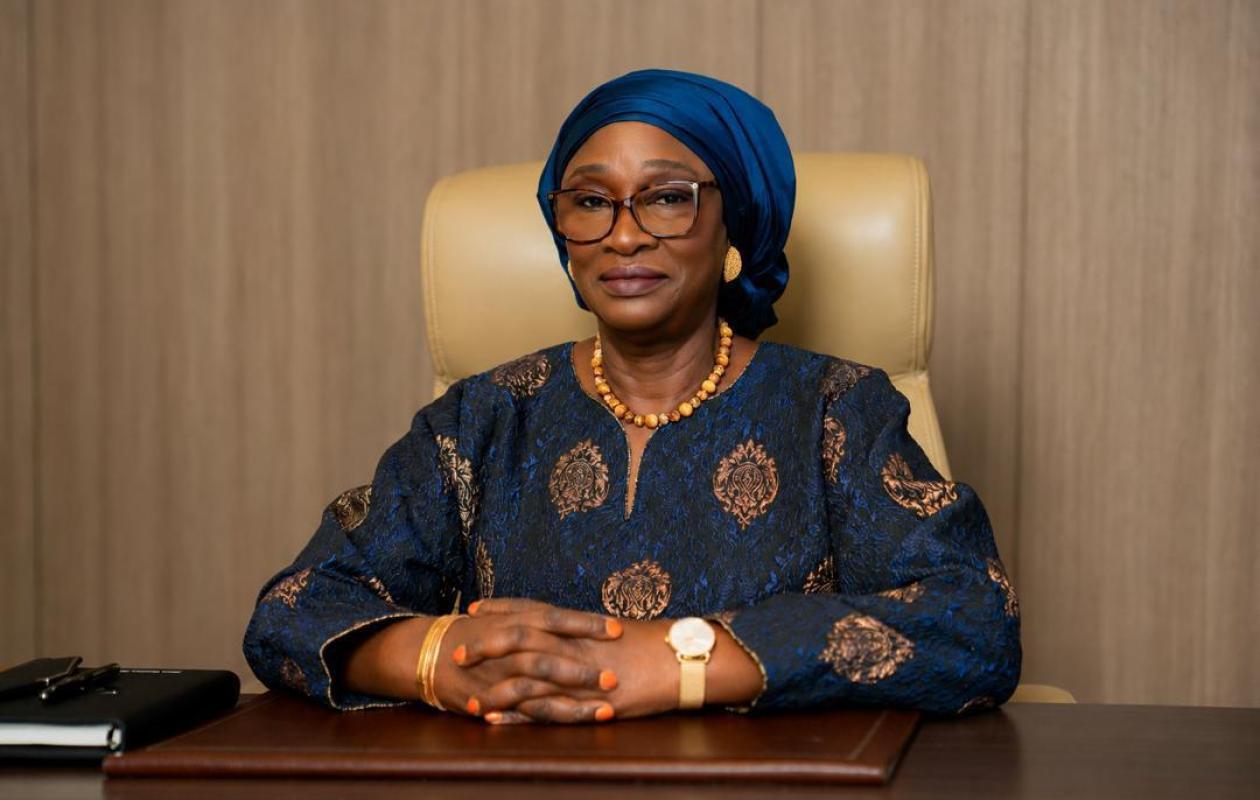
Sortir du Cycle L'ajustement : Une Lecture Critique Des Politiques du FMI Face à la Crise de la Dette Sénégalaise (Par Yassine Fall, ancienne ministre)
When a government devotes more resources to servicing its external debt than to educating its children and caring for its sick, or to providing access to essential basic services such as drinking water, sanitation, energy, and transportation, the issue is not merely financial: it is a question of justice. This dual nature—technical and normative—structures the following analysis. Sovereign debt, at its worst, is a mechanism by which the development ambitions of the poorest states are constrained before they even begin, natural wealth is converted into collateral for the benefit of external creditors, and the fiscal space necessary for protecting health, education, and social welfare is absorbed before it reaches the populations it was intended to serve.
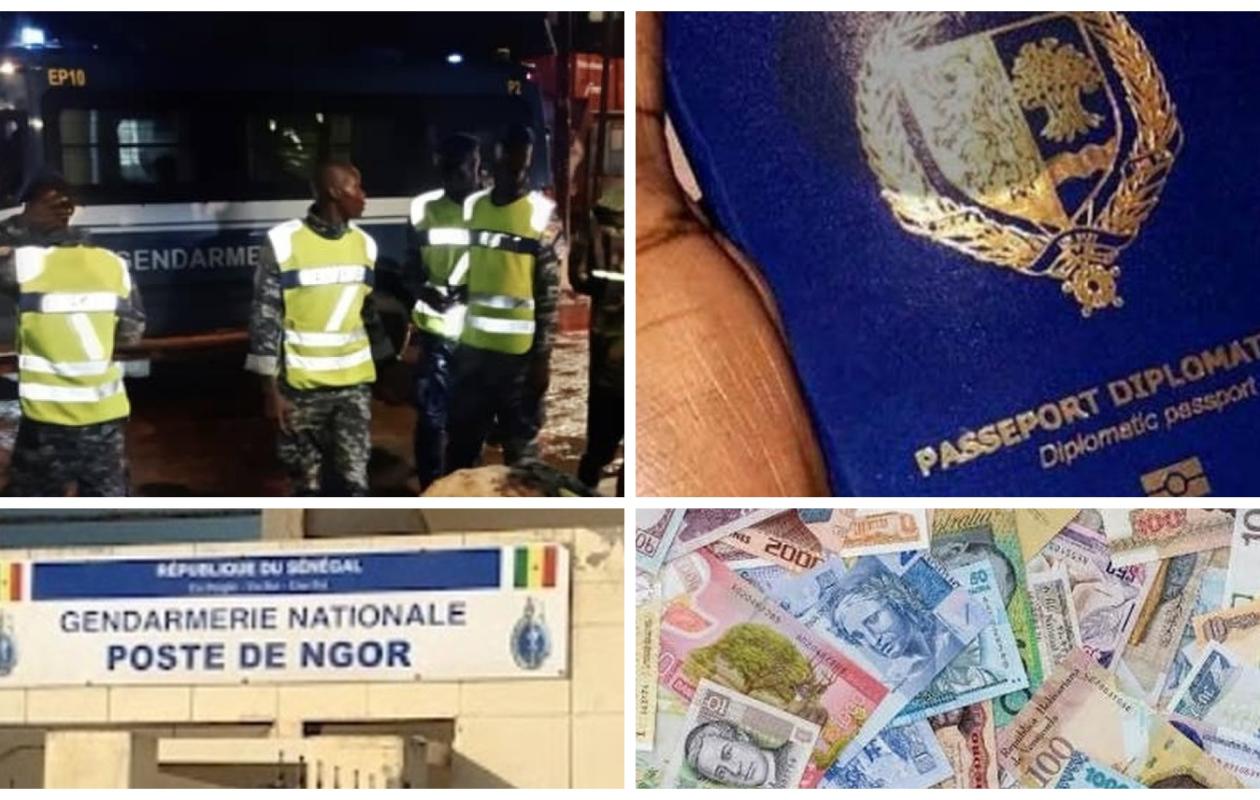
On September 1, 2026, the IMF and the Senegalese authorities announced a service level agreement for a new Extended Credit Facility (ECF) of approximately $2.2 billion over thirty-six months, intended to support the 2026-2029 economic and financial reform program. This agreement comes after nearly two years of suspension of the previous IMF program, a suspension triggered by the discovery in 2024 of hidden debt equivalent to approximately 25% of GDP under the Macky Sall administration — bringing the recognized public debt to over 130% of GDP, one of the highest ratios on the continent.
This paper offers a dual interpretation. On the one hand, it situates the restructuring agreement within the continuity of a well-defined orthodox framework of adjustment—fiscal consolidation, priority given to accounting sustainability, and governance conditionality of reforms—whose history, including recent history, demonstrates the structural limitations for dependent, export-oriented economies. On the other hand, it proposes an alternative analysis—odious debt theory, structuralist development economics, and critiques of financialization—to question not only the modalities of the program but also its very architecture: who decides, on what assumptions, and for the benefit of which development trajectory?
The conclusion is not a blanket rejection of external financing, but a plea for a different sequence: debt treatment rather than restructuring (which happens to be the new guise of structural adjustment), in exchange for a hypothetical debt treatment; audit and accountability before new conditionality; budgetary leeway for productive investment rather than catch-up taxation; and above all, anchoring any negotiation in a regional and continental balance of power rather than in a structurally unbalanced and biased bilateral tête-à-tête.
In September 2024, the new government formed following the change of power in April 2024 revealed the existence of undeclared financial commitments made under the previous administration. The subsequent audit by the Court of Auditors, validated by an IMF mission in March 2025, established that the actual budget deficit for 2023 reached 12.3% of GDP—compared to the initially declared 4.9%—and that the outstanding hidden debt represented approximately 25.3% of GDP over the period 2019-2024.
This revelation had three immediate consequences: the suspension of the $1.8 billion IMF program concluded in 2023; two successive downgrades of the sovereign rating by Moody's; and a drop of about 35% in the value of Senegalese eurobonds on the London market, effectively closing access to international capital markets.
Lacking external funding—approximately 600 billion FCFA expected was not disbursed in 2025—the state turned massively to the WAEMU regional market, issuing nearly 2,225 billion FCFA in government securities at an average yield of 6.3%, supplemented by approximately 1,800 billion FCFA in syndications and derivative instruments (Total Return Swaps) whose exact terms remain partially opaque. The share of domestic debt in the total outstanding amount thus rose to approximately 75% in 2025, a shift that reflects both a decline in relative financial sovereignty—less direct external conditionality—and a significantly higher interest cost than on concessional markets.
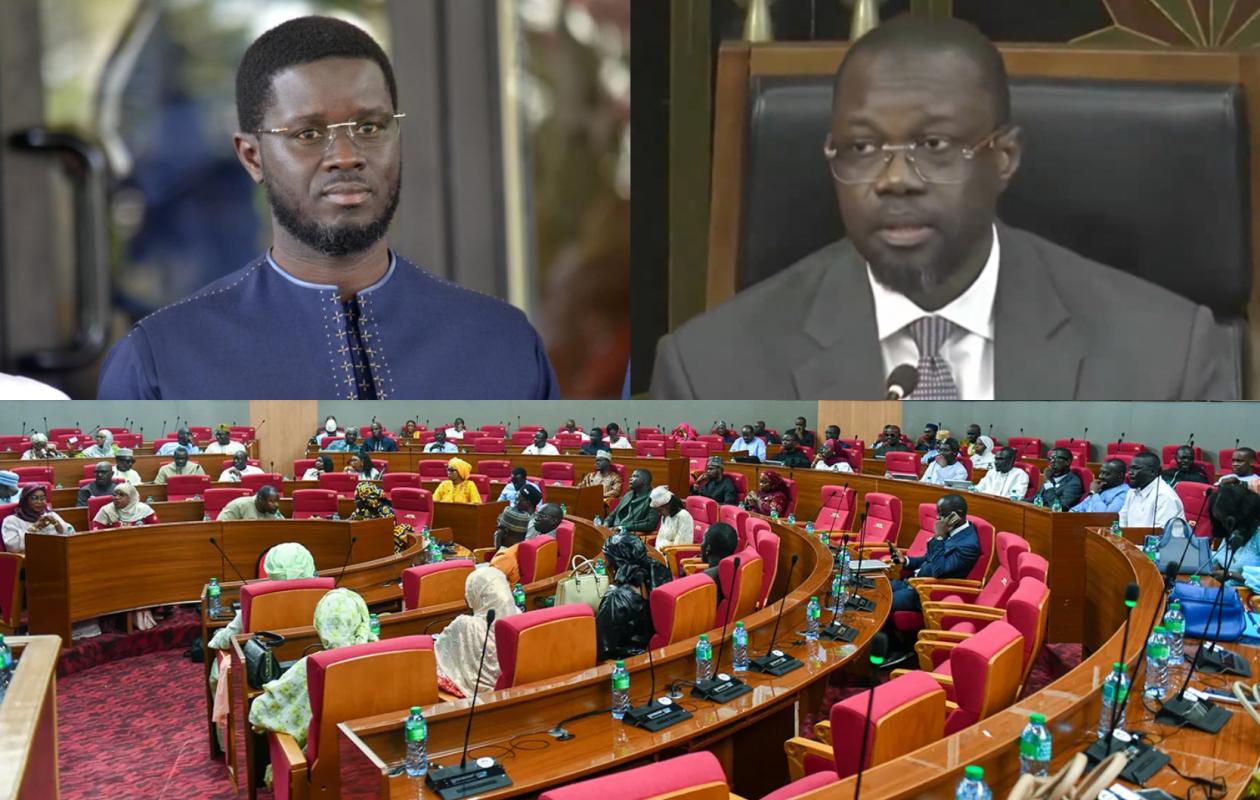
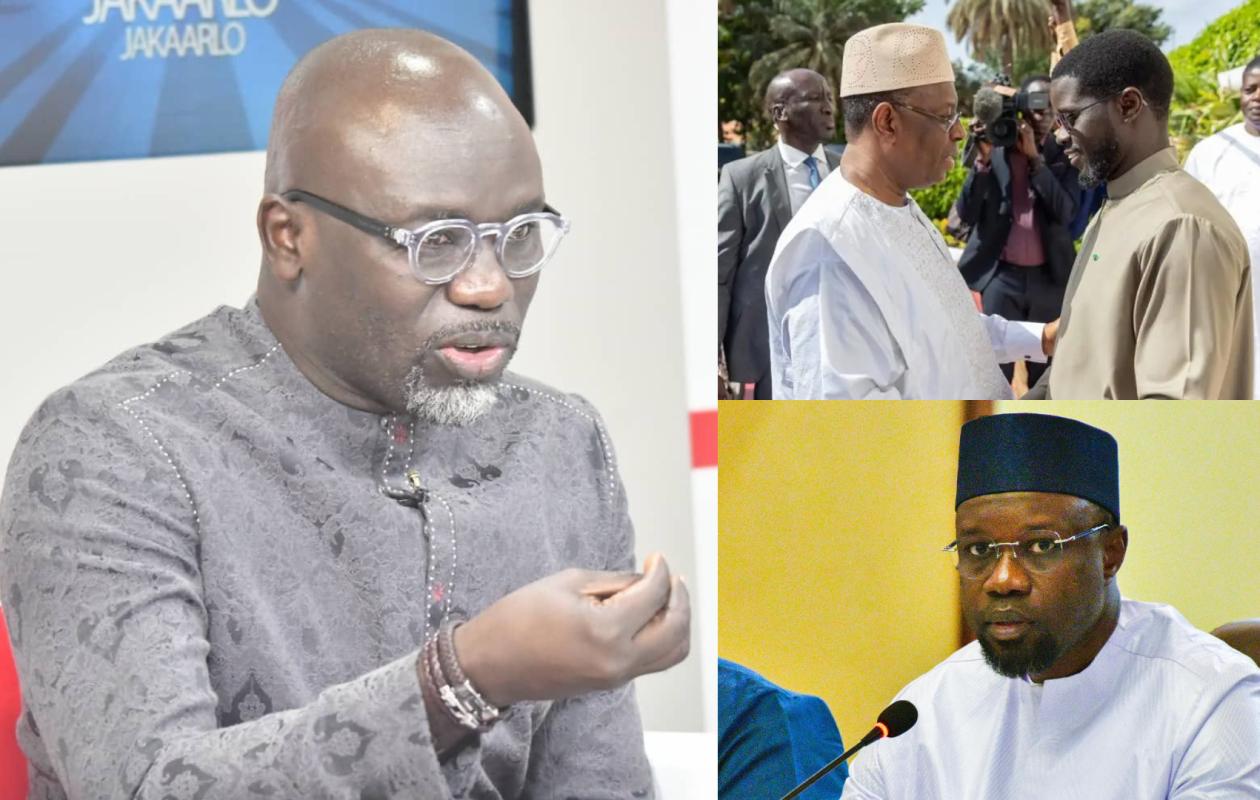
The negotiation process with the IMF did not take place in a political vacuum. The dismissal and subsequent election of Prime Minister Ousmane Sonko to the presidency of the National Assembly—after he had described debt restructuring as a "disgrace"—illustrates a central tension: the technical room for maneuver of the negotiators is constrained by a domestic political economy that rightly refuses to treat the debt as a mere accounting adjustment variable.
The service level agreement announced on September 1, 2026, concerns an expanded credit facility of 475 percent of Senegal's quota ($2.2 billion), subject to approval by the IMF Executive Board and conditional on "decisive corrective measures" within the framework of the misrepresentation procedure, as well as obtaining financing assurances from Dakar's partners. The authorities have, in parallel, announced their intention to seek debt treatment through an enhanced version of the G20 Common Framework.
A point of analytical caution— the agreement remains, at this stage, a service level agreement, not a disbursement agreement. The recent experience in Senegal (the November 2025 mission remained without a final agreement for almost a year) suggests that we should not assume swift approval by the Board of Directors or that the underlying macroeconomic parameters will not be renegotiated.
The situation in Senegal illustrates what can be called a democratic betrayal of debt: citizens, who had been assured that their country was a model of macroeconomic stability, received a monumental bill, accumulated in secret for years. This is the very definition of a breach of the democratic contract. This dimension is not peripheral to the economic analysis of the crisis—it is its political foundation. It calls into question the very legitimacy of the commitments.
contracts and the responsibility of the institutions that validated them with great carelessness and without any diligence.
The start of production at the Sangomar oil field in 2024 and the gradual launch of the Grand Tortue Ahmeyim (GTA) gas project are profoundly altering Senegal's macroeconomic landscape, but in ambivalent ways. On the one hand, the expected hydrocarbon revenues theoretically expand fiscal space and improve, in the eyes of creditors, debt sustainability indicators. On the other hand, they are stimulating renewed appetite in international financial markets for Senegalese sovereign bonds—which, paradoxically, could facilitate access to new loans. Oil revenues thus risk being captured before they have even had the opportunity to create economic independence.
The central question is the governance of these revenues: will they be used to repay existing debt, finance the current budget, capitalize a long-term sovereign wealth fund, or fund structural investments in productive and social sectors? The answer will determine whether natural resources constitute a genuine lever of sovereignty or a new source of vulnerability. Ghana's experience is instructive in this regard: oil revenues did not prevent a debt crisis that led to a painful restructuring in 2023-2024, illustrating that natural resource rents, without a protective institutional framework, can exacerbate external exposure rather than mitigate it.
A sovereign governance framework for hydrocarbon revenues should articulate several objectives: the establishment of a stabilization fund, priority investment in productive and social sectors, and the gradual reduction of the most costly external debt.
Citizen participation and parliamentary control of these mechanisms are essential to prevent oil revenues from becoming an additional vector of capture and dependence.
The orthodox framework that underpins IMF programs is based on an architecture that needs to be understood.
The IMF defines debt sustainability as a country's ability to service its debt without subsequent major adjustments or restructuring, based on a set of assumptions regarding growth, primary deficits, and real interest rates. The Fund itself organizes the calculation of debt sustainability using its own methodology.
The IMF's doctrine requires that adopted policies be "economically and politically feasible"—a precautionary clause that implicitly acknowledges the risk of self-destructive austerity. This arrangement leaves the responsibility for managing a potential crisis to the signatory government, while the Fund, not the debtor country, is responsible for the final decision on what is deemed feasible. This is the first point of structural friction, documented in the very exchanges between Dakar and Washington in 2025-2026.
Three empirical elements deserve to be noted. First, Senegalese growth remains driven by a sluggish non-oil sector — 2.2% in 2025, before a partial rebound to 4.7% in the first quarter of 2026 — which weakens the fiscal yield assumptions of the restructuring program.
Secondly, rising domestic debt, at rates of 6 to 6.3 percent, increases debt servicing costs to an extent that budgetary discipline alone cannot offset in the medium term. Thirdly, the very timing of the process—suspension of the program in 2024, exploratory mission at the end of 2025, service level agreement in early September 2026, and Council approval still pending—illustrates the cost, in terms of uncertainty, of prolonged negotiations within the existing institutional framework.
The terminology of "restructuring" used today by the IMF is not neutral. Where previously there was talk of debt relief or cancellation—formulations championed, among others, by the Jubilee 2000 movement—the Bretton Woods institutions now favor the term of
“Restructuring.” This lexical choice presupposes that debt is a technical factor to be managed, not a historical power dynamic to be transformed. By designating what can be modified—the repayment conditions: due dates, interest rates, and more rarely the nominal value of the principal—it immediately excludes the legitimacy of the debt itself, the history of its accumulation, and the questions of citizen governance, economic justice, and climate justice that it raises.
This framework has a direct implication for African negotiators: it forces them to operate within a technical register defined by the creditors, where the only admissible questions concern the terms of repayment rather than the legitimacy of the obligation itself. It structurally silences arguments relating to odious debt, unequal loan terms, the lack of diligent oversight by creditors, or uncompensated climate losses. Senegal, a substantial portion of whose debt was contracted covertly and without democratic consent between 2019 and 2024, nevertheless possesses strong arguments on these points—arguments that the very term "restructuring" tends to sidestep even before negotiations begin.
Furthermore, the restructuring always takes place within the framework of an IMF program, meaning that fiscal adjustment conditions precede and govern any debt treatment. This sequence—adjustment first, potential debt treatment later—is precisely what heterodox critics challenge. This sequence shifts the immediate cost of the crisis onto the population, while creditors and international financial institutions continue to receive their payments. Reframing negotiations around shared responsibility rather than solely focusing on the debtor's budgetary discipline is an analytical and political prerequisite for any sovereign exit strategy.
The international debt regime, as it currently stands, creates structural incentives that favor hidden debt. No lender is legally required to verify that the borrowing government has the appropriate democratic authorization. There are no international standards requiring prior parliamentary approval for government guarantees. There are no legal consequences for creditors who facilitate concealment. The doctrine of odious debt—which would absolve populations of the obligation to repay debt contracted without their consent and against their interests—has never been codified in binding international law. It is this architecture of creditor impunity, as much as the corruption of decision-makers, that structurally enables scandals like the one revealed by the audit of the Senegalese Court of Auditors.
The most systematic intervention against the IMF's prescriptions for Senegal in 2026 came from economist Ndongo Samba Sylla at the international debt conference held in Dakar. His central argument was theoretical: the IMF programs ignored the fundamental distinction between debt contracted in national currency and debt contracted in foreign currency. A state that borrows in its own currency retains real financial sovereignty—its central bank can act as lender of last resort, and the risk of outright default is structurally limited, as illustrated by Japan, which is indebted to the tune of more than 230% of its GDP in yen without ever having defaulted. Senegal, on the other hand, borrows in dollars and euros, without control over the currencies it must repay, which constantly exposes it to the dual risk of refinancing and insolvency. For Sylla, applying the same budget convergence rules to Senegal as to sovereign economies over their currency constitutes a major analytical inconsistency in the IMF doctrine.
Sylla draws a concrete proposal from this: the creation of a national currency issued by a national central bank—outside the CFA franc, or failing that, with the consensus of the WAEMU—would allow the country to capture its external deficit (which he estimates at around 4.5 trillion CFA francs) as public revenue rather than as foreign currency outflows, rendering budgetary austerity largely superfluous. He contrasts Senegal's trajectory with the cases of Botswana and Libya, two countries that have never borrowed from the IMF or issued Eurobonds, precisely because they have maintained effective control over the revenue from their natural resources—diamonds and oil. His formula summarizes the thesis: austerity is not only catastrophic in its effects, it is simply unnecessary once sound reforms to the international payment system are implemented.
Regarding projects financed in foreign currency—Sylla refers to certain major infrastructure investments financed in foreign currency (TER, BRT) as "Ponzi schemes," while the revenues are collected only in CFA francs—a currency imbalance which, according to his calculations, will bring Senegal's external debt service to $9.5 billion for the period 2024-2026 alone, more than over the entire twelve years of the previous regime. He therefore advocates for a citizen audit of the debt and an internal IMF investigation into the period 2011-2023.
Beyond theoretical criticism, Ndongo Samba Sylla and British economist Peter Doyle—a former IMF official and author of a widely discussed resignation letter highlighting the institution's internal failings—jointly questioned the very quality of the Fund's oversight of Senegal. According to their recalculations, the country's actual public debt at the end of 2023 amounted to 18,558 billion CFA francs, or 99% of GDP, compared to the 74% initially reported in the program's performance criteria. This massive revision, they argue, should have been detected by the IMF's periodic reviews; its absence for several years constitutes either incompetence—difficult to believe on the part of an institution with such analytical capabilities—or a form of collusion with the reporting authorities.
The normative implication of this criticism is direct: the institution that is about to condition a new disbursement of $2.2 billion on "decisive corrective measures" from Dakar should, according to Sylla and Doyle, start by correcting its own failures of due diligence before imposing new budgetary discipline on a country already suffering from the consequences of that same failure.
Sylla and Doyle's argument regarding the failure of oversight must be taken to its logical conclusion: if the IMF could not ignore the true state of Senegal's public finances, it is precisely because its Articles of Agreement require it to do so. Article IV of the Fund's Constitutive Agreement mandates the IMF to conduct ongoing bilateral surveillance of the economic and financial policies of each member state. As such, the IMF has privileged access to budget data, dedicated resident teams, mandatory annual consultations, and quarterly program reviews. A 25-point GDP discrepancy between officially validated figures and actual figures—persistent over several consecutive years, from 2019 to 2024—is not an accidental omission. At the very least, it represents a systemic failure to fulfill its contractual responsibilities. At most, it constitutes a form of institutional collusion with authorities who falsified their declarations.
This question is not merely a matter of academic debate. It has a direct normative implication: an institution that has failed in its primary oversight role cannot present itself as the sole arbiter of reforms, impose new conditions on a country, and demand...
“Decisive corrective measures” by the Senegalese side alone—without accounting for its own role in the genesis of the crisis. In international law, the principle of the responsibility of international organizations—codified by the International Law Commission in the Articles on the Responsibility of International Organizations (ARIO, 2011)—recognizes that an organization can incur responsibility when its organs contribute, through action or omission, to an internationally wrongful act or to harm caused to a member state. The IMF’s inadequate monitoring of Senegal’s debt precisely creates this space.
The Greek precedent is instructive. The IMF's Independent Evaluation Office (IEO) acknowledged, in its 2016 assessment of the institution's role in the eurozone crisis, that the Fund's teams had underestimated the recessionary effects of the conditionalities imposed on Greece, and that certain decisions had been made under political pressure from European creditors rather than on the basis of rigorous technical analysis. This partial and belated acknowledgment has at least set a precedent: the Bretton Woods institutions can be held accountable for their analytical choices and oversight failures before their own independent evaluation mechanisms. Senegal must demand that a similar exercise be conducted for the period 2011-2023.
In concrete terms, this implies two demands that the Senegalese government should include in the ongoing negotiations. First, the activation of a review by the IMF's Internal Oversight Body (IOB) on the quality of the oversight exercised over Senegal during the period of hidden debt accumulation, and on any institutional pressures or failures that enabled it. Second, the explicit condition that no new governance conditionality be presented as a unilateral obligation of Senegal without formal recognition of the Fund's shared responsibility in overseeing the data that distorted the entire previous financing framework. Demanding accountability from the IMF is not an act of institutional hostility—it is the condition for a relationship of respect and reciprocity, which alone can form the basis for a credible and legitimate program in the eyes of the Senegalese people.
The American economist Jeffrey Sachs, whose remarks were publicly quoted by former Prime Minister and current President of the National Assembly Ousmane Sonko during their meeting in Addis Ababa, succinctly summarizes the critique of the IMF's political economy: "The institution does not aim for the development of debtor countries, but rather to maintain them in disciplined poverty." On a technical level, Sachs has long contested the sovereign rating model applied to Africa. He believes
This structurally outdated model is incapable of integrating the continent's real growth potential. Sachs rejects the practice of keeping countries under IMF programs for decades, when the Fund's own statutes provide for "temporarily available" financing for cyclical shocks, not a mechanism of permanent dependency.
Sachs also situates his critique within the continuum of historical precedents of massive debt relief—Germany in 1953, Indonesia in 1969, and more recently Poland and Egypt—to argue that a genuine recovery for several over-indebted African economies requires a profound reduction in their debt stock, combined with structural domestic reforms, rather than perpetual rescheduling accompanied by repeated adjustment programs. This is the approach that should be emphasized, should the government not request a cancellation, and should not opt for a one-off restructuring. The idea is to advocate, at a minimum, for a twenty- to thirty-year moratorium on debt service, allowing time to build a path of endogenous growth.
The doctrine of odious debt, formulated by Alexander Sack between the two world wars and revived by contemporary literature on debts contracted without benefit to the population or democratic consent, offers a framework directly relevant to the Senegalese case: the hidden loans between 2019 and 2024, representing approximately a quarter of GDP, were neither declared, nor debated, nor authorized under the conditions of transparency required for the democratic legitimacy of a sovereign commitment. Treating this debt as a governance problem to be corrected by future adjustment, rather than as a matter of responsibility to be resolved—including with regard to creditors and the complicit and failing oversight of the IMF itself—shifts the burden of adjustment onto the population rather than onto the decision-makers and institutions involved and responsible.
The doctrine of odious debt actually raises three minimal democratic questions that any audit procedure should institutionalize: Was the debt legal—contracted in accordance with the applicable constitutional and legislative procedures? Was it legitimate—approved by the people's representatives and directed toward the general interest? Did it serve the people—did it generate jobs, public services, and productive infrastructure that effectively benefited the population? These three questions are not radical; they are democratic minimums. The Senegalese Parliament, together with civil society, must immediately create the institutional conditions enabling a structured citizen-led debt audit based on these three principles.
Finally, a more fundamental criticism, which Sylla and Sachs also address from different angles, concerns the very architecture of the negotiation. The G20 Common Framework, which the Senegalese authorities have announced they intend to use in an "improved" form, remains a mechanism constructed and arbitrated by bilateral and multilateral creditors rather than by a neutral international body for resolving sovereign insolvency. The Jubilee 2000 movement, and subsequently heterodox economists, social justice activists, and international organizations, have developed further proposals for sovereign debt restructuring mechanisms (SDRM). As long as the debtor country negotiates debt restructuring with its own creditors, without an independent arbitrator or a binding international legal framework—and as long as its currency remains pegged to an external mechanism, as Sylla points out regarding the CFA franc—formal sovereignty over national economic policy coexists with substantial dependence on decisions made outside the national territory. It is this distinction—between superficial sovereignty and real sovereignty—that is crucial.
— which must organize any critical evaluation of the new agreement.
This distinction deserves to be rigorously defined. Formal sovereignty refers to a government's legal authority to sign an agreement—it is rarely challenged. Substantive sovereignty refers to the actual capacity to make significant choices regarding development strategy.
of industrial policy, resource governance, and social priorities. Conditionality systematically erodes the latter without formally affecting the former: it excludes the industrial policy instruments that all currently wealthy countries have freely used during their own development—tariff protection, strategic public enterprises, capital flow controls, and targeted sectoral subsidies. Resource-backed financing commits extractive revenues before they can be channeled toward productive transformation. Late-stage restructuring freezes social budgets precisely when investment in recovery is most needed. Each of these mechanisms reduces the space for real sovereign choice without formally violating its appearance: the government still signs all the documents, but the range of choices actually available has been dramatically reduced.
The comparison between the IMF's treatment of Argentina and that of African countries in debt distress is one of the most striking indicators of the structural asymmetries in the international financial system. In 2018, Argentina received the largest credit line ever granted by the Fund: $57 billion under the Macri government's standby agreement. When this program failed and Argentina found itself unable to repay the IMF itself, the institution did something unprecedented in 2022: it restructured its own debt, rescheduling the repayment of its own loans—something it has never done for any African country.
Recent African cases stand in stark contrast to this approach. Zambia, in default since November 2020, waited until 2023 for an agreement among creditors—three years of uncertainty and market exclusion—and the final result was deemed insufficient in terms of effectively reducing the debt stock. Ghana, which defaulted on its external debt in December 2022, negotiated a restructuring in which private creditors (Eurobond holders) initially refused to assume a fair share of the cost, prolonging uncertainty and increasing the conditions imposed on the population. Ethiopia, for its part, illustrates the limitations of a G20 Common Framework without an independent arbitrator or a binding timetable for creditors: the delays cost the Ethiopian economy far more in market access and uncertainty than the restructuring delivered in actual debt relief. These three cases illustrate an empirical truth: the G20 Common Framework, as it currently operates, consistently produces insufficient results for African countries.
These asymmetries can be explained by four structural factors.
The lesson for Senegal is twofold. First, the IMF's supposedly inviolable principles—preferred creditor status, universality of conditions, and the impossibility of restructuring the Fund's own debt—are political conventions, not technical constraints. They are applied differently depending on the debtor country's geopolitical position. Second, Senegal's strategy in the coming months cannot rely on a bilateral meeting with the IMF: it must involve broader discussions at both the national and regional levels, mobilizing key institutional actors, but drawing lessons from the Ghanaian, Zambian, Ethiopian, and other cases to collectively influence the terms of the G20 Common Framework and advocate for a less asymmetrical arbitration mechanism.
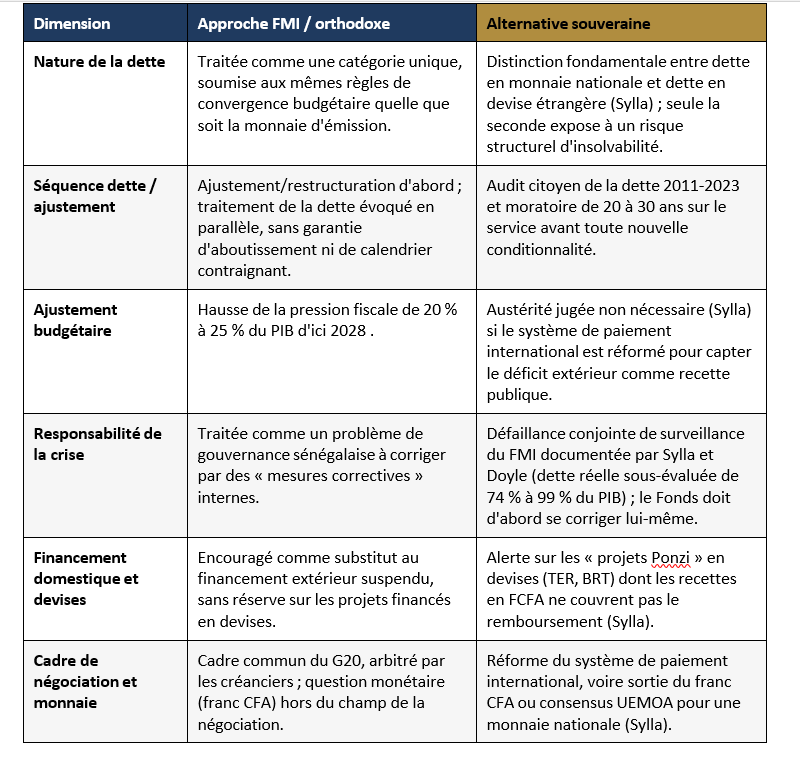
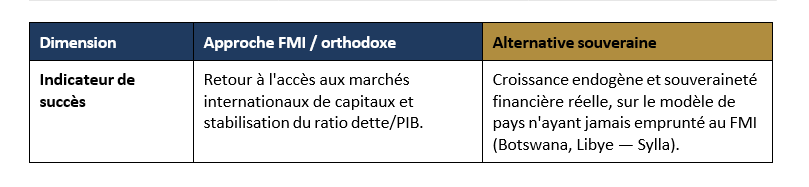
The following points do not involve rejecting multilateral financing, but rather renegotiating the terms under which this financing is provided.
Replace the linear tax trajectory (20% → 25% of GDP) with a differentiated trajectory by sector, primarily targeting extractive activities and high wealth rather than mass taxation.
The service level agreement of September 1, 2026, marks a step forward, not a resolution. It reopens the potential for access to multilateral financing within a negotiation framework that remains, for the most part, defined by the creditors. This interpretation should usefully lead to a strong governmental and citizen commitment to negotiate by proposing a critical and sovereign response to the restructuring. Such an approach would send a strong signal to the IMF Executive Board, which is expected to issue a decision in the coming months. The alternative would be to shift the focus from fiscal discipline to solutions that will make the Senegalese economy more aligned with the urgent social needs of accessing basic necessities and the requirements for structural transformation of the economy.
In July 1987, Thomas Sankara addressed the Organization of African Unity with a structural argument about debt: “Creditors coordinate, borrowers do not.” The Paris Club, bond committees, and international financial institutions represent a system of coordination built on decades of legal practice and institutional memory. Borrowers have confronted them alone—country by country—starting from scratch with each new negotiation. Sankara was assassinated three months after this speech. His call for a united front remained unanswered institutionally for thirty-eight years. The Borrowers’ Platform, established in 2026, is the first response to this call. What becomes of it depends on the willingness of member states to use it with the urgency that the situation demands.
The Senegalese experience—an audit by the Court of Auditors that revealed what years of official reports had concealed—is part of a longer history of activism. In the late 1990s, the African coalition that helped build the Jubilee2000 movement—the global campaign for the cancellation of the unpayable debts of the poorest countries—created the political conditions for the HIPC initiative. This initiative brought real relief to millions of people, but with conditions that constrained the development choices that the relief was supposed to enable. The case for cancellation had been won. The fight for genuine sovereignty over what comes next has never ended.
The Borrowers' Platform must fulfill at least three structural functions:
A united front for debt justice is not simply a matter of negotiating power dynamics. It is about the right of peoples to govern their own economic future—namely, what is borrowed in their name, to demand that it be legal, legitimate, and in their service, and to insist that debt serve the people rather than the other way around. Thomas Sankara called for this front in 1987. The Platform now exists. The precedents are documented. The principles are clear. The stakes are commensurate with what is at risk: lives, rights, and futures.
Speech at the Dakar International Debt Conference: distinction between national debt and foreign debt, critique of the CFA franc, proposal for monetary reform.
Ndongo Samba Sylla, communications reported by DakarActu and SenePlus, May 2026
Joint questioning of IMF monitoring of hidden Senegalese debt and recalculation of the debt/real GDP ratio at the end of 2023.
Ndongo Samba Sylla and Peter Doyle, opinion piece reprinted in L'AS, March 2025
Fall, Yassine. “Towards a Common Front for Debt Justice.” Closing address, International Conference on the Debt Crisis in Senegal, King Fahd Palace, Dakar, May 13, 2026. Published in the editorial series of the Expert Meeting and International Conference organized by IDEAS-Africa Network (IDAN), Dakar, May 11–13, 2026.
Critique of sovereign ratings applied to Africa and plea for deep debt relief rather than perpetual rescheduling.
Jeffrey D. Sachs, “It can be done” 2025-2026
IMF press releases and statements (Georgieva, October 2025; Vera Martin, September 2026) on the progress of the program and the conditions of the service level agreement.
International Monetary Fund, imf.org
Analysis of the political economy of the Senegalese debt crisis and its implications for sovereign development.
Tricontinental: Institute for Social Research, “Senegal on the Edge of Collapse”, 2026
Numerical data on domestic financing, total return swaps and debt structure 2025-2026.
FDL Policy Note 31, “A Strategic Compass for Navigating Senegal's Debt Crisis”, January 2026
By Yassine Fall, Economist, Former Minister of Foreign Affairs and Justice of Senegal














Commentaires (22)
Elle sait rien de ce qu'elle copie pour coller, ni rien sur le sujet.
Quelle production IAntellectuelle ! C'est IAncroyable
Merci IAcine!
Voici les vérités qui permettent de comprendre que le FMI comme solution pour le développement d'un pays africain est une fausseté. Et ce sera toujours faux.
Tant que le monde, et le monde entier, n'utilisera pas comme seules monnaies l'or et l'argent métal, tout autre argent utilisé n'aura jamais une valeur certaine. La valeur actuelle des monnaies du FMI est imposée par les guerres des USA et de l'OTAN. Ce que le FMI et tous les groupes, clubs et banques autour, prêtent comme argent n'a de valeur que celle que leurs guerres imposent de force. C'est aussi simple que ça. Tant qu'ils imposeront et gagneront des guerres dans le monde, leur argent aura la valeur qu'ils imposeront. Or, eux-mêmes savent qu'ils ne gagneront pas éternellement ces guerres et ils ne peuvent pas vivre eternellement de guerres. Il leur faut donc transformer ce qu'ils ont comme valeurs incertaines (valeurs par guerres forcées) en valeurs certaines et les sécuriser. Et les valeurs certaines sont l'or, le métal argent, les minérales, les ressources naturelles, les terres, les actions dans les sociétés nationales. C'est donc là tout le rôle du FMI: convertir leurs valeurs incertaines en valeurs certaines qui ne dépendent plus des guerres eternelles dans des pays cibles. Et il faut un travail en amont pour transformer ces pays en cibles.
Quand on comprend cela, et qu'on entend certains de nos politiciens, c'est impossible de s'empêcher de voir un idiot débiter des sornettes, ou alors un vrai hypocrites qui prend ses auditeurs pour des idiots.
Participer à la Discussion
Règles de la communauté
💡 Astuce : Utilisez des emojis depuis votre téléphone ou le module emoji ci-dessous. Cliquez sur GIF pour ajouter un GIF animé. Collez un lien X/Twitter, TikTok ou Instagram pour l'afficher automatiquement.
Se connecter
Commentez avec votre profil, votre photo, et soyez averti des réponses.