
Souveraineté économique : dépasser le débat sur la seule propriété (Par Oumar Remy TOURÉ)
Economic sovereignty is not measured by the number of state-owned enterprises. It is measured, above all, by a nation's capacity to create wealth, jobs, technology, and added value within its own territory. It is by this criterion that we must approach the currently heated debate surrounding the Chemical Industries of Senegal (ICS).
This debate is legitimate. It touches on fundamental issues: the control of our natural resources, fairness in the distribution of the value created, and the credibility of the state in the eyes of international partners. But it deserves to be addressed with the clarity and rigor that a matter of this importance demands, and not with the simplistic arguments that have proliferated on social media in recent weeks.
Putting the facts in their proper place
Contrary to what some sources claim, the State of Senegal has never held 100% of ICS's capital and therefore could not, by definition, "relinquish" it. It currently holds 15% of the shares. An option to increase its stake to 30% is included in the initial contract between the State and the company, and the government is preparing to exercise it. This is therefore not a relinquishment of broader sovereignty, but rather the exercise of a contractual right already negotiated—in a context where the State does not, at this stage, have the financial capacity to buy back all the shares without jeopardizing its budgetary stability or postponing other national priorities.
This clarification is not a technical detail: it changes the very nature of the debate. We are not discussing an abandonment of sovereignty, but the pace and methods of its strengthening.
What international experience teaches us
Recent economic history offers useful points of reference. Norway, often cited as an example of successful economic sovereignty, did not build its model on a systematic nationalization of its strategic sectors, but on strong state participation, demanding governance and structured partnerships with international private actors.
Morocco, through the OCP Group, has built one of the world's leading phosphate producers not by excluding foreign capital, but by combining massive investments, local processing, and a controlled opening to international markets. The United Arab Emirates has followed a similar trajectory, relying on foreign capital and technology transfers to build its national champions, without ever losing sight of its strategic interests. Even China, despite its highly state-controlled economy, has built its industrial power on a combination of strategic public control and openness to foreign investment and technology.
What these trajectories show is that the real issue is not solely one of capital ownership. It is one of strategic control, economic performance, and the ability to sustainably create value within the national territory.
The true cost of full nationalization
Fully nationalizing a strategic company requires mobilizing considerable financial resources, assuming all industrial and commercial risks, and guaranteeing the long-term investments necessary for its modernization. In the case of ICS, these risks are not theoretical: they concern a capital-intensive sector, exposed to the volatility of international phosphate and fertilizer markets, and requiring constant technological investment.
The challenge, therefore, is not simply about ownership. It is about control, influencing governance, and making the best possible use of our national resources. When the state strengthens its stake in a strategic company, obtains guarantees of solid governance, protects employment, secures investments, and ensures that more value is created locally—through processing, for example, rather than simply exporting raw materials—it fully exercises its economic sovereignty, without necessarily owning all of the capital.
A sovereignism of trajectory, not of posture
Nothing in this approach precludes a future strengthening of the state's position. Economic sovereignty is not fixed in a single form: it is a trajectory that adapts to the country's actual capabilities as these are consolidated. Nothing prevents the state from increasing its stake beyond 30% in the coming years, provided that the financial resources and governance guarantees allow it.
21st-century economic patriotism does not systematically pit the public and private sectors against each other. It builds balanced, demanding partnerships that serve the national interest. Senegal needs a strong, attractive, and competitive economy, capable of mobilizing all energies—public and private, national and international—to accelerate its progress toward Vision Senegal 2050.
Public debate always benefits from being grounded in facts, figures, and the greater good of the nation, rather than in emotion or simplistic solutions. Economic sovereignty is not isolation. It is the capacity of a state to effectively defend its interests in an interconnected global economy—with clarity, method, and a long-term perspective.
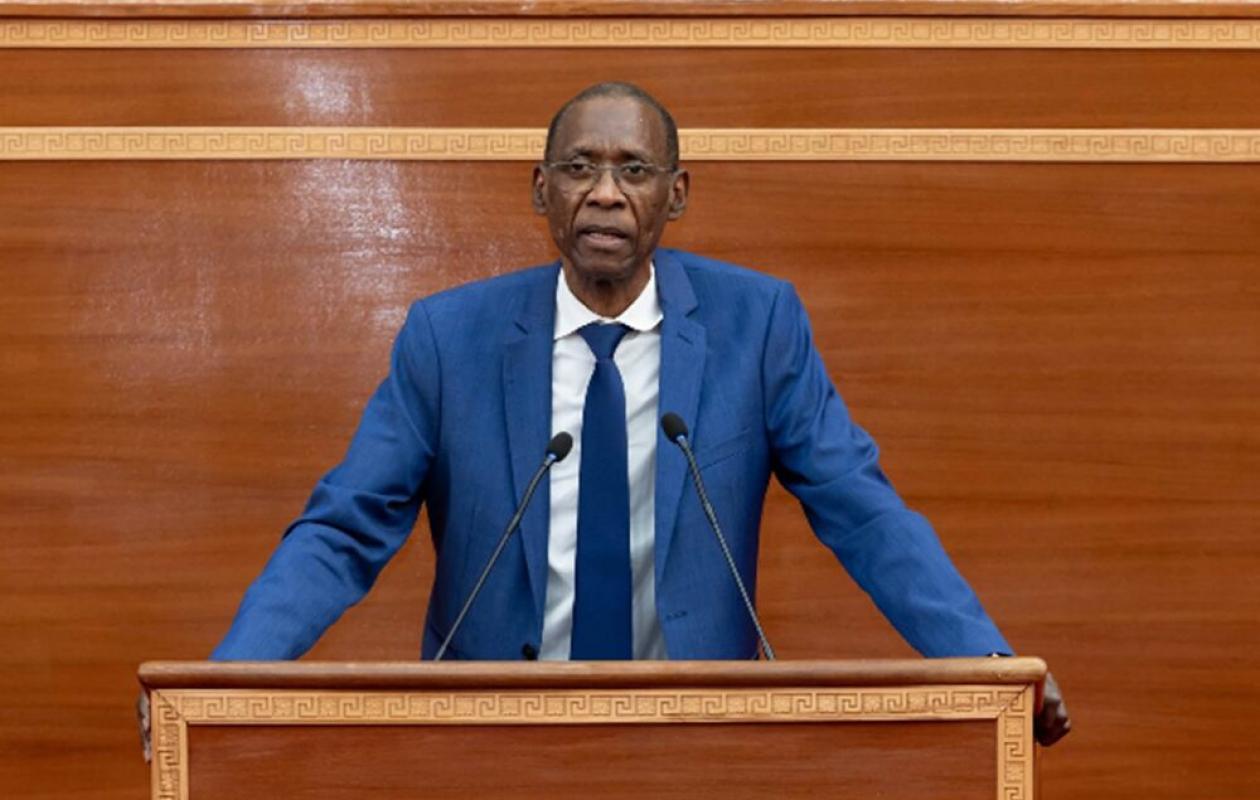
Oumar Remy TOURÉ, General Manager, APROSI















Commentaires (4)
Participer à la Discussion
Règles de la communauté
💡 Astuce : Utilisez des emojis depuis votre téléphone ou le module emoji ci-dessous. Cliquez sur GIF pour ajouter un GIF animé. Collez un lien X/Twitter, TikTok ou Instagram pour l'afficher automatiquement.
Se connecter
Commentez avec votre profil, votre photo, et soyez averti des réponses.