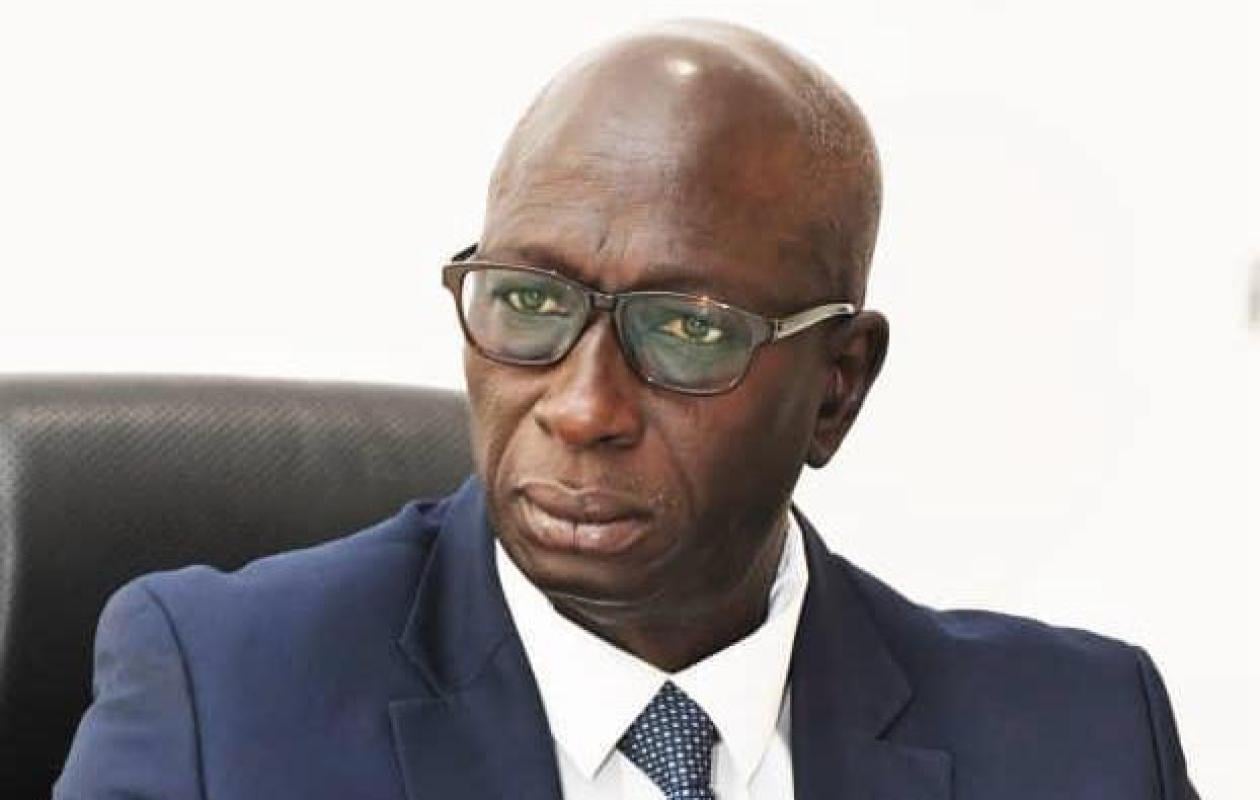
Un État ne doit jamais dire « nous n'avons pas d'argent » : L’école du guichet contre l'école du chantier (Par Malick SONKO)
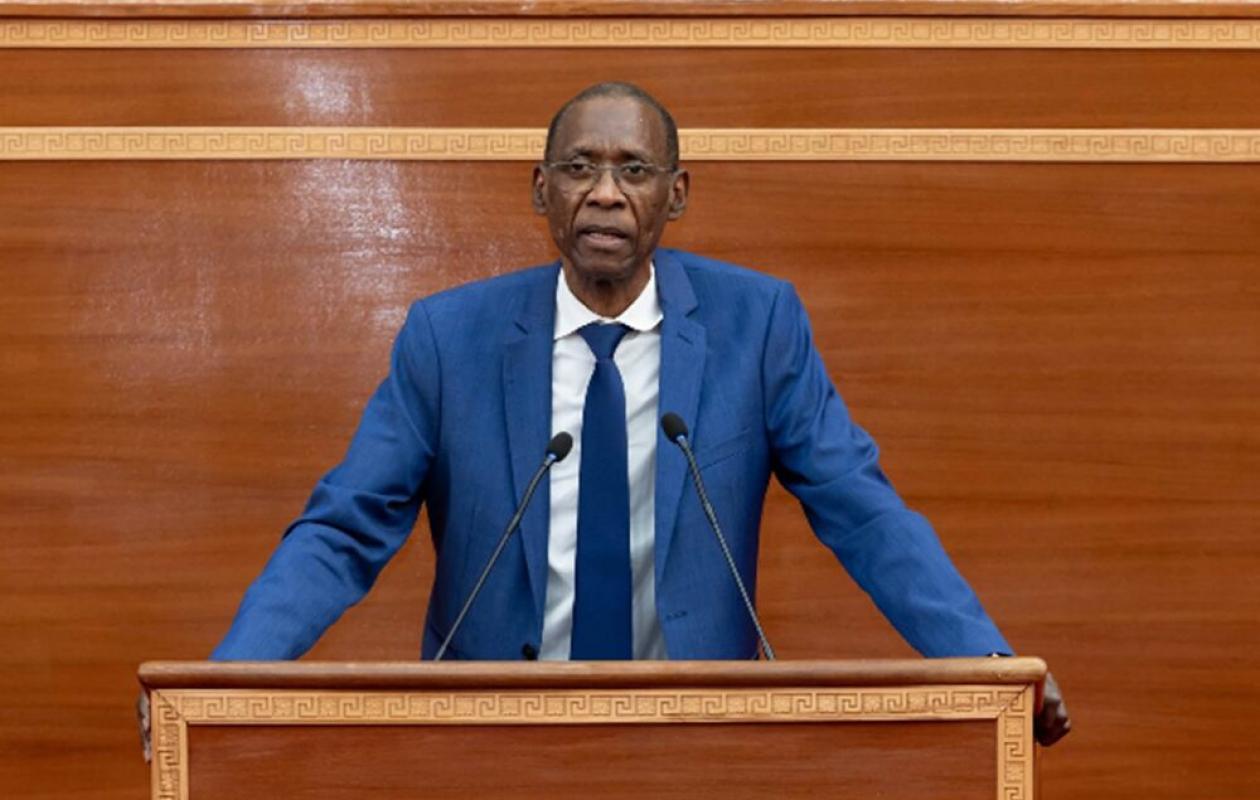
“Everything is ready, we want to start the work, but we don’t have the money.” With this statement, made on September 8, 2026, before the National Assembly, Prime Minister Al Aminou Lo summarized, during his General Policy Statement, the fate of the new Ziguinchor bridge and, at the same time, a certain conception of the state: a poor, heavily indebted country with a small, almost recessionary economy, whose only policy is to pay what it can and postpone the rest. “Amou niou xalis”: we don’t have the money. Following the same logic, he lamented that the five to ten billion dollars of investment planned for hydrocarbons could not be mobilized in the short term. A stark observation for a manager like the current Prime Minister; a starting point for a developer. This is the fundamental difference between an orthodox civil servant and a public manager, between an accountant and a financier.
The Prime Minister's background, shaped by the Saint-Louis Military Academy and a long administrative career at the Central Bank of West African States (BCEAO), commands respect; it also undoubtedly sheds light on this rigid and imported conception of the State. However, there are two ways to govern a country seeking development. The first focuses on the finances: you count what comes in, you pay the debts, you finance what you can, and you postpone the vital priorities of the population to the next fiscal year. This is the reflex of the teller, who only deals with what's in the till. The second way of governing starts with the need: you identify the resource capable of meeting it, you create the necessary financial engineering to support it, and the money comes because its arrival has been orchestrated.
While Senegal needs the rigor of the former to maintain the foundations of the state, it will only develop with the audacity of the latter.
The Prime Minister placed his statement under the authority of Max Weber and the ethics of responsibility. Fine. But responsibility, when faced with a vital infrastructure project essential for opening up isolated areas and upon which the safety of thousands of users and the continuity of the national territory depend, does not consist of simply acknowledging the lack of resources. It consists of making them available. Especially when it is a matter of absolute urgency.
Let's remember what we're talking about. Inaugurated in February 1979, the Émile Badiane Bridge spans the Casamance River for some 640 meters and has been, for nearly half a century, the main link between the southern capital and the rest of the country. The structure is cracked, its reinforcement bars are exposed, and it vibrates when heavy trucks pass over it; vehicles have fallen into the river there in 2019, 2021, and again in 2026. For more than five years, the "L'Heure est grave" (The Situation is Serious) collective has been warning of a tragedy that Casamance cannot afford to experience again.
Let's take stock of the announcements that followed. In January 2024, the government announced a 120 billion CFA franc rehabilitation project. Nothing. The same government announced fifty billion CFA francs allocated to the Economic and Social Recovery Plan. Nothing. A groundbreaking ceremony was promised for 2025, then for July 2026. Still nothing. And on December 22, 2025, in Tanaff, the President of the Republic himself announced an allocation of 25 billion CFA francs to start with domestic funds, without waiting for external financing deemed hypothetical. Hmm! Nine months later, the head of his government declared that there was no money. What happened to this allocation?
My long experience in senior government, first at the Presidency under President Abdoulaye Wade and then with President Macky Sall, reinforces my belief that an emergency like the Ziguinchor bridge requires immediate funding, especially when the coffers are empty. How? The method was taught to me by a man I served under at the highest level, from 2015 to the present day. A mathematician and civil engineer specializing in bridges and roads who became an investment banker before serving as a minister, he found himself facing the same equation four times: a vital need, an empty coffers. Four times, he didn't wait. His name is Doudou Ka, and he was born in Ziguinchor, which is not insignificant to our discussion.
In 2002, President Wade sought to provide Senegal with its first highway, between Dakar and Diamniadio, and entrusted the project to APIX. Its director general recruited a young financial engineer, Doudou Ka, from Sonatel, appointing him as technical advisor in charge of the economic and financial structuring of major projects and tasking him with developing the financial framework for Senegal's first highway. The state lacked the resources for the project, whose cost would exceed 380 billion CFA francs. After reviewing highway concessions worldwide, Ka submitted to the government a model that was unprecedented in Senegal at the time: a public-private partnership, a project company, equity provided by the private partner, debt held by this company, and a revenue stream created to repay it—tolls—over a thirty-year concession. The contract was signed on July 2, 2009, with the Eiffage group: the first toll highway concession in the West African Economic and Monetary Union (UEMOA). Senegal did not have a single kilometer of highway before 2009; it operates 320 today and aims for 520 by 2029.
On September 26, 2002, the Joola sank off the coast of Gambia, claiming over 1,800 lives. The Casamance region lost its vital link to Dakar and remained dependent for three years on Gambian cooperation to reach the rest of the country. The state simply couldn't afford to buy a new ship overnight.
The answer wasn't to wait: from his Moroccan investment bank, BMCE Capital, where he headed the energy, transport, and infrastructure division, Doudou Ka structured a Senegalese-Moroccan joint venture, SOMAT, which urgently chartered and brought up to standard a first vessel he had retrieved from Indonesia, the Wilis. Simultaneously, he arranged financing for a new vessel built in a German shipyard, which would become the Aline Sitoé Diatta. On November 11, 2005, the route reopened; he then assumed the administrative and financial management of the operating company, SOMAT. Necessity had found its answer. Need had created the entity.
In 2005, Senegal wanted a new international airport but lacked the funds to pay for it. Doudou Ka, in his capacity as Director of the Investment Division at BMCE Capital, advised the government and devised a previously untapped revenue stream: the Airport Infrastructure Development Fee (RDIA). Established by decree on February 28, 2005, under the government of Prime Minister Macky Sall, it is levied on each ticket and allocated not to the state budget but to a project company created specifically to receive it, AIBD SA. From this single source of funding, nearly €575 million in loans were raised from the African Development Bank (AfDB), the Islamic Development Bank (IDB), the French Development Agency (AFD), the West African Development Bank (BOAD), and other lenders; the national budget provided only a marginal contribution.
Fifteen years later, appointed at the end of 2020 to head AIBD SA, he takes up this engineering and pushes it further.
Between 2021 and 2023, he structured, in conjunction with the State, the financing for the aeronautical maintenance center, the Civil Aviation Academy (including the rehabilitation of the runway at the Thiès airbase and the purchase of 17 aircraft for training young pilots), the new airports in Saint-Louis, Ziguinchor, and Matam, the new presidential pavilion in Yoff, as well as the rehabilitation of the airports in Tambacounda, Kédougou, Cap Skirring, and Sédhiou. The principle is clear: a project is not financed with the money one has; it is financed with the money that the properly structured project generates and attracts.
Unfortunately, by 2024, most of these projects, launched and more than 60% paid for, had been halted. The country is now left with only the burdens: a debt to repay, infrastructure and equipment deteriorating without use, damaged partner trust, and a sub-regional position ceded to others. Suspending a project that is already two-thirds paid for is more expensive than completing it.
Finally, it's worth recalling that in 2013, SMEs constituted over 90% of the economic fabric but received only 10% of bank credit, for an unmet demand estimated at 500 billion CFA francs per year. The government didn't have 500 billion to lend. Instead, it established a guarantee fund, FONGIP (which, like FONSIS and BNDE, was created using the same structure), which became operational in less than nine months. Initially endowed with 14 billion CFA francs in equity, it was based on a simple premise: leverage. The idea was that every franc of public guarantee would mobilize at least three francs from the banks. Five years later, over 60 billion CFA francs in loans had been disbursed to some 5,300 very small businesses and 1,200 SMEs. In May 2026, its managing director estimated that 107 billion in bank loans had been mobilized, 147 billion in investments had been made, and 132,000 jobs had been supported. A guarantee fund is the exact opposite of the phrase "we don't have the money": it is the institution through which a state that doesn't have all the money can nevertheless make investment happen.
Why not apply the Doudou KA method to the project to build a new bridge in Ziguinchor? In my opinion, we must first consider the infrastructure not as a constraining expense, but as an asset. It carries the north-south axis, the Dakar-Bissau-Conakry corridor. An asset of this nature is financed as such. If we know how to build an airport or a highway while containing the debt through newly created revenue, we can therefore build a bridge.
The Prime Minister quoted Judge Kéba Mbaye: "The Senegalese people are tired." He is right to point this out. But what are they tired of? Of hearing, with every statement, that the country is poor, indebted, small, and forced into austerity because of supposedly hidden debts, as if this observation were a substitute for economic and social policy.
A poor country is precisely one that cannot afford the luxury of waiting. In a strategic state, as it itself describes itself, public action is measured not by what one possesses, but by what one controls. By learning from various other financing models, there is a pool of apolitical knowledge and expertise that the government must be able to draw upon to drive the implementation of other major projects.
So there are two schools of thought. The one at the counter or the accountant's, which says: come back when the coffers are full. And the one on the construction site, which says: here's how we're going to fill them. Casamance already paid the price for negligence one evening in September 2002. It's not asking for compassion or promises; it's asking for a structured financial plan, a precise timetable, and a signing date. A state doesn't say, "We don't have any money." A state says, "Here's how we're going to find it."
Malick SONKO
- Former Chief of Staff to the Minister of Air Transport and Airport Infrastructure Development
- Former Special Advisor to the Minister of Economy, Planning and Cooperation
- Former Executive Director in charge of Administration and Strategy at AIBD
- Former Technical Advisor to President Abdoulaye Wade
- Former Secretary General of ASPIT
- Former Chairman of the Board of Directors of the former FONDEF (3FPT)








Commentaires (21)
Doudou Ka n’a pas besoin de polémiques permanentes pour exister. Son parcours, son expérience et son engagement parlent pour lui. Ceux qui ont des accusations sérieuses à formuler n’ont qu’à laisser les institutions compétentes faire leur travail, plutôt que de transformer les réseaux sociaux en tribunal.
L’avenir politique se construit avec des projets, de la compétence et une vision. C’est sur ce terrain que nous attendons le débat.
Le PGS avance. La dynamique continue. Rien ne pourra arrêter une conviction portée par le travail et l’ambition de bâtir un Sénégal plus grand. 🇸🇳
Au-delà des sensibilités et des appartenances politiques, il faut saluer les réflexions qui mettent en avant des solutions concrètes pour le développement de notre pays, particulièrement pour la Casamance et le projet du nouveau pont de Ziguinchor.
Un texte documenté, argumenté et surtout porteur d’une conviction forte : un État ne doit pas seulement constater ses contraintes, il doit aussi savoir mobiliser les ressources et les intelligences nécessaires pour répondre aux urgences de la Nation.
Bravo pour cette contribution au débat. Le Sénégal a besoin de plus d’idées, de compétence et de propositions concrètes.
Félicitations encore, cher Malick.
Doudou Ka n’a pas besoin de polémiques permanentes pour exister. Son parcours, son expérience et son engagement parlent pour lui. Ceux qui ont des accusations sérieuses à formuler n’ont qu’à laisser les institutions compétentes faire leur travail, plutôt que de transformer les réseaux sociaux en tribunal.
L’avenir politique se construit avec des projets, de la compétence et une vision. C’est sur ce terrain que nous attendons le débat.
Le PGS avance. La dynamique continue. Rien ne pourra arrêter une conviction portée par le travail et l’ambition de bâtir un Sénégal plus grand. 🇸🇳
Et sur ce terrain, il faut avoir le courage de reconnaître une chose : Doudou Ka possède une expérience et une expertise qui méritent d’être prises au sérieux.
Son parcours montre qu’il ne s’est jamais contenté de dire : « nous n’avons pas d’argent ». Il a cherché des mécanismes permettant de mobiliser les ressources, de structurer des financements et de faire émerger des infrastructures stratégiques.
C’est justement cette culture de l’ingénierie, de l’anticipation et du résultat que le Parti pour le Grand Sénégal (PGS) entend remettre au cœur de l’action publique.
Le PGS ne défend pas Doudou Ka par simple fidélité politique. Nous défendons une vision du Sénégal : un Sénégal qui ne subit pas ses contraintes, mais qui transforme ses potentialités en opportunités ; un Sénégal qui ose investir, construire et préparer l’avenir.
Le débat sur le pont de Ziguinchor illustre parfaitement cette différence de conception. Face à une urgence nationale, il ne suffit pas de constater que les caisses sont contraintes. Il faut mobiliser l’intelligence financière, les compétences nationales et les partenaires capables de faire aboutir le projet.
Doudou Ka a démontré qu’il sait penser ce type de mécanismes. Le PGS porte aujourd’hui cette même exigence : passer du constat à l’action, de la contrainte à la solution, et de la promesse au résultat.
La Casamance mérite un pont sécurisé. Le Sénégal mérite des infrastructures à la hauteur de ses ambitions. Et notre pays a besoin de dirigeants capables de transformer les problèmes en projets et les projets en réalisations.
C’est cela, la politique que nous défendons au PGS.
C’est cela, l’ambition portée par Doudou Ka.
Un Sénégal plus grand, plus audacieux et surtout capable de construire son propre avenir.
Le combat continue. Le PGS est en marche.
L’intervention de Malick Sonko a le mérite de remettre les choses à leur place : un État sérieux ne doit pas se contenter de dire “nous n’avons pas d’argent”. Il doit chercher les mécanismes, mobiliser les partenaires, structurer les financements et trouver les solutions.
C’est exactement cette logique que Doudou Ka défend.
Et c’est également celle du Parti pour le Grand Sénégal (PGS) : nous refusons la politique du fatalisme, des excuses et de l’immobilisme. Nous voulons une politique fondée sur la compétence, l’anticipation, l’ingénierie et surtout les résultats.
Pour la Casamance, notamment pour Ziguinchor, le débat est simple : nous ne demandons pas des discours, nous demandons des solutions. Le pont doit être financé, réalisé et livré dans des délais crédibles.
À ceux qui cherchent à minimiser Doudou Ka, nous répondons simplement : on peut combattre un homme politiquement, mais on ne peut pas effacer son expérience ni ses compétences par des accusations ou des slogans.
Doudou Ka a une vision. Le PGS porte cette vision. Et nous continuerons à la défendre avec conviction.
Le Sénégal a besoin d’hommes capables de transformer les contraintes en solutions. C’est cette ambition que nous portons.
Le PGS est en marche. Et le combat pour un Grand Sénégal continue.
À ceux qui passent leur temps à dénigrer Doudou Ka, nous posons une question simple : quelles solutions proposent-ils ? Critiquer est facile. Construire, financer et réaliser des infrastructures demande de la compétence, de l’expérience et une véritable vision.
Doudou Ka, lui, a toujours défendu une approche fondée sur l’ingénierie, la mobilisation des ressources et la transformation des contraintes en opportunités. On peut contester ses choix politiques, mais on ne peut pas effacer son expertise à coups d’invectives et de procès d’intention.
Le débat sur le pont de Ziguinchor est révélateur. Quand un État dit qu’il n’a pas d’argent, la vraie question n’est pas de chercher un coupable à insulter. La vraie question est : comment trouve-t-on les financements ?
C’est précisément là que se mesure la différence entre ceux qui commentent les problèmes et ceux qui cherchent à les résoudre.
Le PGS ne demande à personne de croire Doudou Ka sur parole. Nous demandons simplement que son expérience soit jugée sur ses compétences, ses propositions et sa capacité à porter une vision pour le Sénégal.
À ses détracteurs, donc, un conseil : moins de bruit, plus de propositions. Moins d’attaques personnelles, plus de solutions. Moins de procès d’intention, plus de débat sur les idées.
Parce qu’au final, les Sénégalais ne construiront pas leur avenir avec des insultes sur les réseaux sociaux. Ils le construiront avec des compétences, des financements, des projets et des résultats.
C’est cette politique que défend Doudou Ka.
C’est cette exigence que porte le PGS.
Pendant que certains parlent, nous travaillons sur les solutions. Pendant que certains cherchent à salir, nous continuons à construire une vision.
Le PGS est en marche. Et rien ne pourra arrêter une dynamique portée par la conviction, le travail et l’ambition de bâtir un Sénégal plus grand.
Participer à la Discussion
Règles de la communauté
💡 Astuce : Utilisez des emojis depuis votre téléphone ou le module emoji ci-dessous. Cliquez sur GIF pour ajouter un GIF animé. Collez un lien X/Twitter, TikTok ou Instagram pour l'afficher automatiquement.
Se connecter
Commentez avec votre profil, votre photo, et soyez averti des réponses.