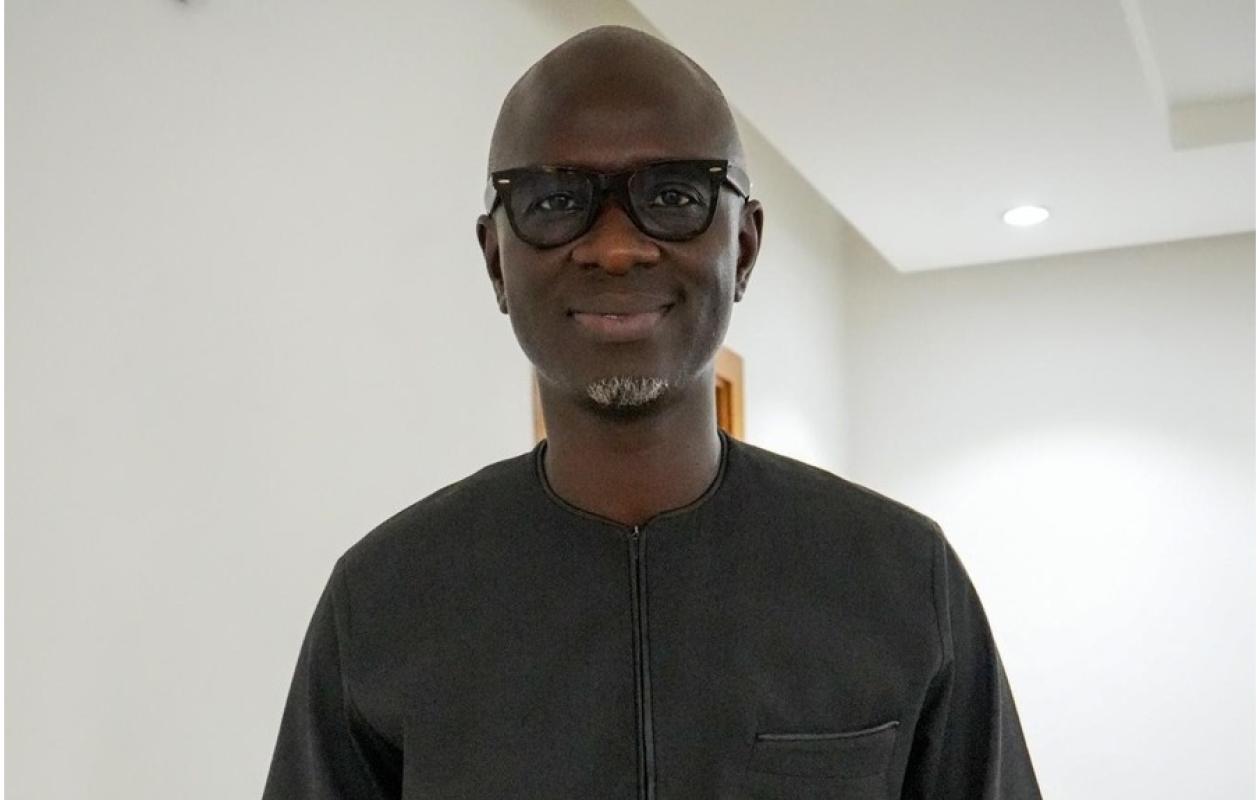
Une inondation ne se résume jamais à de l'eau dans une rue (par Alassane MBAYE)
It can prevent a child from going to school. It can delay an employee, close a business, interrupt an activity, or prevent a family from accessing an essential service.
It can also force residents to leave their homes and call into question, in just a few hours, years of effort and investment.
But when we talk about floods, we sometimes tend to consider only the visible consequences.
But the real question is also that of our level of vulnerability.
Because while rain is a natural phenomenon, the damage it causes is often amplified by our choices in planning, construction and urbanization.
A recent testimony from a Senegalese professional returning from China particularly caught my attention.
As heavy rain fell on the city, he observed that the water disappeared almost immediately from the roads thanks to infrastructure designed to absorb and evacuate it efficiently.
His observation was simple: heavy rainfall exists everywhere, but its consequences largely depend on how territories are designed and managed.
This observation warrants reflection.
In many African territories, natural drainage areas have gradually disappeared due to urbanization. Historically flood-prone areas have been developed. Inadequate or aging sanitation networks now have to meet needs far exceeding those for which they were originally designed.
Meanwhile, the population is increasing, neighborhoods are becoming denser, and infrastructure sometimes struggles to keep up with this pace.
The risk of flooding then becomes a systemic risk.
When a road is closed, it is not just traffic that stops. It affects the movement of workers, the supply of goods to businesses, access to healthcare, the functioning of schools, and the continuity of public services.
When a business temporarily ceases operations, it's not just immediate financial losses that occur. It also means lost revenue, precarious jobs, and the potential disruption of an entire economic chain.
And when populations live each year with the uncertainty linked to floods, it is also their safety, their health and their ability to plan for the future that are at stake.
The true cost of the floods therefore far exceeds the material damage observed after the waters recede.
It includes economic losses, social disruptions, health impacts, environmental degradation and reconstruction costs that weigh on communities in the long term.
Faced with this reality, we must move towards a genuine culture of risk management.
In the business world, a risk is not dealt with only when it occurs. The aim is to identify it, understand its vulnerabilities, measure its potential impacts, and prepare the necessary measures to ensure business continuity.
Our territories must be able to benefit from this same logic.
This requires a better understanding of exposed areas, preserving natural water flow patterns, strengthening critical infrastructure, integrating risks into urban projects, and investing more in prevention.
Because the question is not just how to evacuate the water when it arrives.
The real question is how to build cities capable of withstanding shocks, protecting populations and continuing to function even in crisis situations.
Prevention is an investment.
But the lack of prevention almost always costs more.
A country's development is not measured solely by its ability to build new infrastructure.
It is also measured by its ability to protect these investments against risks that threaten their operation and sustainability.
The floods will probably not disappear.
On the other hand, we can significantly reduce their consequences if we make resilience, anticipation and risk management a collective priority.
Because ultimately, protecting our territories means protecting our economy, our jobs, our infrastructure and above all the women and men who make them thrive.
Alassane MBAYE
Defense and security expert
Founder and Chairman of the Board of the Vigilus Group





















Commentaires (5)
Participer à la Discussion
Règles de la communauté
💡 Astuce : Utilisez des emojis depuis votre téléphone ou le module emoji ci-dessous. Cliquez sur GIF pour ajouter un GIF animé. Collez un lien X/Twitter, TikTok ou Instagram pour l'afficher automatiquement.
Se connecter
Commentez avec votre profil, votre photo, et soyez averti des réponses.